Showing posts with label Abigail's Atlantis. Show all posts

Monday, March 9, 2015

To Kill a Mockingbird: The Master Class of Novel Writing?

Image from 1962 film version of To Kill a Mockingbird.

With the recent announcement of the impending publication of Harper Lee's Go Set a Watchman, which features a grown-up version of the Scout character she introduced in To Kill a Mockingbird (1960), I was inspired to revisit the latter. According to Slate.com, this Pulitzer Prize winner is part of the curriculum in 3/4 of American public schools and sells about a million copies a year. All told, the book has sold 30 million copies in more than 40 languages (Crash Course Literature 210). The 1962 movie version was nominated for Best Picture and garnered Gregory Peck an Academy Award for Best Actor.

Unsurprisingly, some critics made it their mission to knock the book as overrated. They're wrong. In fact, some of the criticisms of the book are precisely what make it great. For example, Scout, who ranges from ages 6 to 9 during the book, serves as a first-person narrator. However, the sophistication of her language, storytelling, and awareness feel more like an adult. Despite the inconsistency of the approach, it gives the novel an added dimension of allowing the reader to view the story through a child and adult's eyes simultaneously.

Another criticism concerns the potentially disjointed nature of the vignettes about the townspeople. Rather than distract from the primary stories around Boo Radley and Tom Robinson, these seemingly superfluous stories immerse the reader in Maycomb, Alabama. In addition, each of Scout's (and her brother Jem's) encounters leads to another lesson handed down from their father, Atticus, about not judging other people.

The novel also has characters painted in one-dimensional strokes, from the noble heroics of Atticus to the without-any-redeemable-quality nature of Bob Ewell. However, these polarizing characterizations of good and evil remind readers how a child oversimplifies perceptions - and serve as warnings for us to not do so as adults.

In my own writing, I can only dream of achieving half of what Mockingbird accomplishes. Harper Lee paints her characters and the town with such vivid language that the reader is transported to that place and time. Scout's sense of exploration and child-like curiosity is fully embraced even as she is exposed to ugly truths about racism and prejudice.

These are all qualities which play into my current project, Abigail's Atlantis, about a 12-year-old girl coming to grips with the transition from childhood to adulthood. While the language and perspective I employ may occasionally feel too adult, that's precisely the point. Like Mockingbird, I want to capture that in-between state of sometimes seeing things as a child and at other times as an adult. If I can make the same mistakes as Mockingbird with even a modicum of the same ability, I'll consider my book a success.


Monday, December 1, 2014

National Novel Writing Month Winner, 2014

Woo hoo! For the second time, I've become a National Novel Writing Month (NaNoWriMo) winner. For those not in the know, NaNoWriMo is, as it says on its website, "a fun, seat-of-your-pants approach to creative writing. On November 1, participants begin working towards the goal of writing a 50,000-word novel by 11:59 PM on November 30."

I first dipped my toe into the NaNoWriMo pool in 2012, successfully scribing my rough draft of what became Otter and Arthur and the Round Table, my sequel to my middle-grade fiction Otter and Arthur and the Sword in the Stone.

I gave it another stab in 2013, but came up just short on my word count as I toiled away on Abigail's Atlantis, a still unfinished middle-grade fiction. The story bounces back and forth between a twelve-year-old girl's summer working with her grandfather at a sea turtle rescue center and a twelve-year-old boy's life in modern-day Atlantis. The latter may or may not be all in Abigail's head.

Although I'm not done with that book, when November 2014 rolled around, I couldn't resist taking another shot. I'd been hit with a recent brainstorm - an adult historical fiction based on the real life of blues singer Robert Johnson. Let's hope that 2015 sees the completion of that book, and/or Abigail's Atlantis. In the meantime, thanks to NaNoWriMo for providing the catalyst for me to jump in and crank out rough drafts of my hopefully someday completed novels.

Thursday, November 14, 2013

Penguins and Portals: Chris Baty Discusses the Origins of NaNoWriMo

image from shenandoahliterary.org

For those not in the know, November is National Novel Writing Month, aka NaNoWriMo (learn more at NaNoWriMo.org). I participated last year and wrote the first draft of my just-published Otter and Arthur and the Round Table.

The idea is to write a very rough draft of a 50,000-word novel in the month of November. I'm participating again this year with the intent of penning the rough draft of Abigail's Atlantis, my story of a 12-year-old girl who visits her grandparents at Topsail Island, North Carolina, for the summer. She helps her grandfather at the sea turtle rescue center where he works - and finds what she thinks is a connection to a modern-day Atlantis.

The point of this post, however, isn't just to plug my projects, but to talk about NaNoWriMo. I had the privilege last night of being one of roughly sixty people to see Chris Baty, the founder of NaNoWriMo. Originally from Prairie Village, Kansas, he was back in town to offer a history of how the organization came about and where it has gone.

images from jocolibrary.org and eiseverywhere.com

He started it in San Francisco in 1999. He tapped his friends to help with his crazy new idea and 21 people signed on board. It was up to 140 by the next year and ballooned to 5000 by the third year. Now in its 15th year, there are more than 300,000 participants as well as 1000 classrooms.

Baty possesses the rare talent of being a writer who also knows how to engage an audience. He talked about his own love of books and how they inspired his imagination. He shared how he loved The Lion, the Witch, and the Wardrobe as a kid and would go into the closet at home and search for a portal.

He relayed this experience to writing and how that opens a portal to one's own mind. He also joked about interviews with authors where they are asked questions like, "Where did you come up with the idea for the penguin?" and how the response was inevitably, "The penguin found me." As silly as he said that sounded, he realized how true it was once he began writing. Once the penguin found him, he knew the writing portal was open and would never close again.

Thanks, Chris Baty, for opening the portal for so many of us. Let the penguins rule!

Found: One Penguin. Considered Armed with the Ability to Inspire.

image from clker.com


Tuesday, January 17, 2012

The One and Only Ivan: Making Characters Unique

With seven Newbery-award-winning books under my belt already, I finally read the 2013 winner, The One and Only Ivan, by Katherine Applegate.

image from betterinbulk.net

I've joked in previous posts that clearly the trick to winning a Newbery is to write a book about a tween or teen uprooted from his or her home because of some family tragedy. Applegate's book puts a spin on this formula - a gorilla named Ivan is uprooted from his home because of some family tragedy.

Ivan has been part of a mall circus exhibit, the Exit 8 Big Top Mall and Video Arcade, for 27 years. He has accepted his fate, but when Ruby, a baby elephant arrives, Ivan decides this is no place for an animal to spend its life. He concocts a plan. He is going to free Ruby so that she can grow up in a zoo with other elephants.

Applegate creates a unique character by telling the story from the first-person perspective of a gorilla. To that end, she has written in a short, choppy style with chapters rarely lasting more than a couple pages, and sometimes just a couple sentences.

The lesson for my own writing is to find a way to make a character unique. That isn't always as easy as writing from the persective of a gorilla, but uniqueness can be achieved because of a character's unique circumstances or unique perspective. In Otter and Arthur and the Sword in the Stone and its in-progress sequel, I have been able to tell the story of King Arthur from the perspective of a mouse. As I write my next story, Abigail's Atlantis, my challenge is to find what makes the main character unique.

It is the challenge all writers must undertake - give readers a new experience through the uniqueness of the character, the circumstances, or perspective. After all, if the story isn't unique, what is the point in telling it?


Tuesday, September 30, 2008

The Graveyard Book: Location, Location, Location

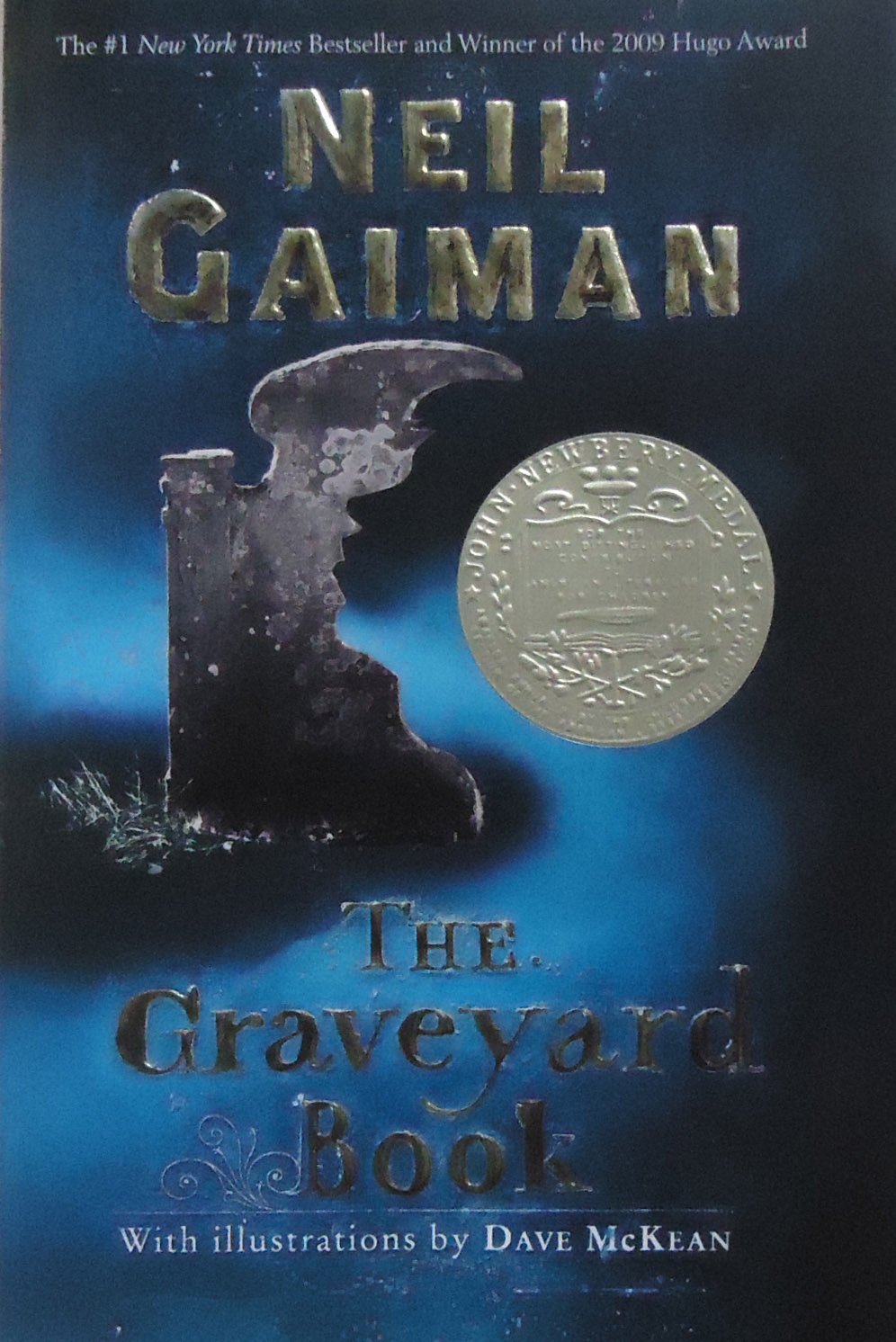
I've knocked off yet another book in my continuing endeavor to read the Newbery award-winning books. This time around it is Neil Gaiman's The Graveyard Book (2010). As with the previous Newbery books I've read, I focused on what I can learn in my own writing from this book.

The opening of the book leaves a toddler abandoned thanks to a grisly murder scene. He wanders out of his out, losing his diaper along the way, and ends up at the local graveyard. While the scenario is preposterous, it sets up one of the more interesting settings I've read in the Newbery winners so far. The boy (nicknamed "Bod" for "Nobody") ends up raised by a collection of interesting ghosts and undead creatures. While he appreciates his home, he longs for a life among the living - and he wants to find out what happened to his family.

However, we are left wondering through most of the book why Bod's family was murdered and when the answer comes, it is abrupt and unsatisfying. As for Bod's dream of a life outside the confines of tombstones and crypts, this is also undermined by the author. Gaiman clearly relishes describing the world of the dead and ends up making the world from which Bod wishes to retreat more interesting than the one to which Bod dreams of going.

Thus the lesson I learn about writing is to make setting and location an important part of the book, but not one which overwhelms the story. My latest project, tentatively titled Abigail's Atlantis, will delve into the ocean and the famous lost underworld city. It will become crucial to make sure that while I try to capture the wonder and awe of such a fabled location, I don't do it at the expense of creating a moving and involving story.


Tuesday, August 30, 2005

Criss Cross: Unanswered Dreams of Longing for Something Big to Happen

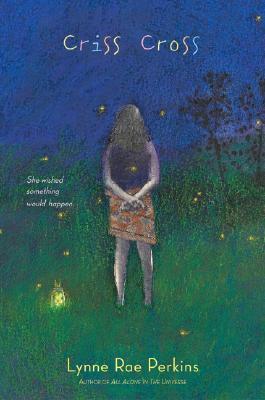
My latest read in my quest to plow through the Newbery award winners is Criss Cross (2005) by Lynne Rae Perkins. It ranks as one of my least favorites so far.

I'd like to think I'm smart enough to see the merits of a book targeted toward kids, but I'm apparently missing something - like characters, a plot, and action.

The book primarily tells the story about Debbie, a teenager who is wishing for something big to happen as her summer kicks in. It doesn't take long before the reader is also wishing for something big to happen. But nothing does.

In fact, by the second chapter, the story shifts to Hector. At this point, the reader is thrown into confusion over who the main character of the story is even going to be. When we get side tangents delving into the circle of other teens surrounding Debbie and Hector, the result is a muddied storyline where I found myself having to read back to keep characters straight.

In the end, the story leaves its audience with this unsatisfying reality: "Maybe it was another time that their moments would meet. Maybe it would happen in a few days, or next week. Maybe it would happen when they were fifty. But just now they had missed, and the jet trails of the crisscrossing moments left an awkward vacuum in their wake."

Slice of life is okay; many a quality story is built on such a concept. Following teenagers through a summer of hanging out is fine, too - if we see real struggle and not just a few unrequited crushes here and there. Ultimately, Perkins has left an awkward vaccum in the wake of her readers. Like Debbie, I wished for something big to happen, but it never did.

The latest book I'm writing, Abigail's Atlantis, tackles a similar task of following both a female and a male character as they are just entering young adulthood. Criss Cross will help me keep in mind that I need to draw the two characters with clear-cut dreams and ambitions and give them strong stories in which to pursue them. Is it too much to hope that I can be more successful at doing so than a Newbery-winning book?


Sunday, February 1, 2004

Kira-Kira: What Gives a Book Its Glitter?

image from vimeo.com

On the first page of Kira-Kira the main character, Katie, explains that the word means "glittering" in Japanese. As the book jacket says, Katie sees the world as glittering through the eyes of her older sister, Lynn. It doesn't take a genius at sketching out plots to guess that this is a sure sign that something will happen to Lynn. In the interest of not spoiling the book, however, I will leave it at that.

Instead my focus is on how to give a book its glittering quality. What makes it special? What makes it stand out above others? Certainly good writing, solid characters, and an intriguing story all contribute. There is, however, another ingredient which really makes a book shine. Imagination.

I believe a book is better when it has a fantastical element to it. What do I mean by that? Well, I'm a sucker for a very realistic story - with a twist. Craft a solid tale which feels real and throw in something quirky and you've got a good chance of hooking me. I cite John Irving's A Prayer for Owen Meany as an example. It is one of my favorite books precisely because it creates a believable world around a have-to-see-him-to-believe-him character.

This leads me to the challenge of Kira-Kira. As regular followers of this blog know, I'm on a mission to read all the Newbery winners. Kira-Kira won the Newbery in 2005. For me, however, it lacks glitter. It is a well-written story, but it feels so real that it reads more like an autobiography than fiction. It may be that author Cynthia Kadohata isn't writing from personal experience at all. Maybe she imagined all the events in the book. My take, though, is that too much reality is, well, too much. I want something magical, something imaginary, something fantastical. I want the glitter. What do you think?

Monday, August 25, 2003

The Tale of Despereaux - and How to Tell More Than One Tale at a Time

Full disclosure: The odds were stacked against Kate DiCamillo's The Tale of Despereaux (2003), before I ever cracked it open. How could I give an honest review when I'd seen the movie version first? That wasn't even the biggest problem. The basic story is about a mouse seeking adventure even as his family warns him against it - the same concept behind my Otter and Arthur books.

Then again, this was the winner of the 2004 Newbery medal. In fact, she's one of the few two-time winners, just nabbing the award again in 2014 for Flora and Ulysses. I'd also read her Mercy Watson series with my son and we loved them.

For those unfamiliar with the story, Despereaux is a mouse who neither looks nor behaves like he's "supposed" to. He's unnaturally small, has unnaturally large ears, and has an unnaturally over-sized curiosity. Against the basic mouse code, he interacts with a human - the Princess Pea - and gets banished to the castle dungeon, betrayed by his own family "ratting" him out.

A rat, Roscuro, figures prominently in the story as well. However, one hopes the rat might take a similar path as Despereaux and want to rise above his kind. He doesn't. Similarly, Miggery Sow, a not-so-bright orphan girl who dreams of being the princess, proves to be of less redeemable character.

The book divided into full sections devoted to each of the above characters. This proves its biggest flaw as we care about Despereaux's fate much more than Roscuro or Miggery Sow. While the stories all weave together in the end, the explorations into the latter two characters feels like a distraction initially. I'll have to watch the movie again, but I don't remember this being a distraction for me there.

In my own writing, my Otter and Arthur series focuses in on a mouse whose quest for adventure leads him to befriend King Arthur. However, the story remains focused at all times on Otter, as it is completely told from his perspective.

On the flip side, however, my latest novel, Abigail's Atlantis, weaves two stories together. The challenge is to get the reader to care about two main characters in two different stories. What have I learned about doing so after reading Despereaux? People have to care about the characters. A character who is drawn too unsympathetically can lose an audience. In Despereaux, the reader is curious about what will happen to these characters, but their stories are slightly underminded with a certain sense of "these characters deserve whatever's coming to them." With Abigail's Atlantis, it is important that readers root for both of my main characters. As such, I will strive to craft a story where people care about my characters.


Wednesday, December 31, 1997

Out of the Dust: The Importance of Research

image from childrensbookalmanac.com

Karen Hesse's Out of the Dust (Scholastic Press, 1997)is my most recent read in my quest to conquer all the Newbery-award-winning books. At the onset, I was pretty certain I wasn't going to enjoy it. The book is written in verse and I'm not big on reading poetry. However, I quickly became engrossed in the story. It helped that there wasn't a rhyming, sing-songy pattern to the writing and I was able to read it mostly as prose.

The story is set in the Dust Bowl during the depression. As is often true of a good story, this one worked for me because it did such an excellent job transporting me to a particular time and place. I still have to point out that in the well-established Newbery tradition, this book focuses on an orphaned coming-of-age girl. At least this book makes the loss of Billie Jo's mother a part of the story.

For my own writing, the lesson I take away is the importance of research. Hesse wasn't even alive during the depression or the Dust Bowl era. For this book to work, though, she clearly had to do a phenomenal amount of research so that it felt authentic.

With my latest project, Abigail's Atlantis, research becomes pivotal on two fronts. 12-year-old Abigail learns all about sea turtles while visiting her grandparents at Topsail Island for the summer. That brings about its own amount of research, but on top of that I am learning about Atlantis because of the parallel Atlantis-set storyline which will mirror Abigail's.

When researched properly a story - like Out of the Dust - becomes intriguing because the setting feels completely natural and real in the context of its story. In fact, while an author should have the basic story in mind from the onset, the writer should welcome whatever twists and turns the research may add to the story. It will make the journey more authentic.


Tuesday, December 31, 1996

The View from Saturday: Making Your Story a Fresh Idea

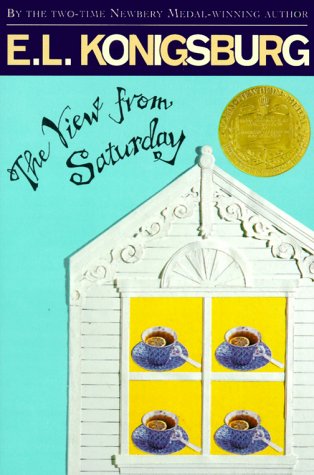
Uh oh. On page 31 of E.L. Konigsburg's The View from Saturday (Atheneum Books for Young Readers, 1996), I was hit with a sense of dread by two lines: "He was talking about turtle nests. Turtles had brought Grandpa and Margaret together."

Konigsburg's book tells the story of the four sixth graders who comprise Mrs. Olinkski's Academic Bowl team at Epiphany Middle School. The book explores how the four friends ended up together by devoting a chapter to each of their back stories. Twelve-year-old Nadia's back story involves a trip to Florida to see her dad - and spending time with her grandfather and his new wife on the beach looking for sea turtle nests.

So why would this cause dread? Because my latest project is the story of a twelve-year-old girl who goes to spend the summer with her grandfather looking for sea turtle nests.

Certainly there are differences. My book, Abigail's Atlantis, will focus on many different aspects of the sea turtle's habits and use it as the context for the entire story arch, not just integrate it into a single character's one-chapter back story. Still, there's a sense of discouragement when the idea you thought was original turns out not to be.

For anyone who has read through my journey through the Newbery Award winning books, they know I've harped on how often orphans are at the center of these books. The key, of course, is that the task of any writer is to bring a fresh spin or perspective to a story, even if it is one which has been told before.

In writing two King Arthur-themed books so far (Otter and Arthur and the Sword in the Stone, Otter and Arthur and the Round Table), I have had to work hard to navigate this path. With Abigail's Atlantis, I already was tasked with coming up with a fresh spin on another topic. Now I have to find a way to give a new look to the sea turtle side of the story as well as the Atlantis side.

Note: for those who haven't read the book, this video collection of seemingly disjointed images and quotations won't make a lot of sense. However, in context, they capture the main themes and plots of the book.


Thursday, May 19, 1994

Walk Two Moons - and the Art of Telling Two Stories

image from wikipedia.com

Walk Two Moons (1994), by Sharon Creech, is a Newbery medal recipient which - like seemingly every other Newbery winner - focuses on a girl coping with an absentee parent. I wish I could stop railing on this, but I'd like to see the Newbery committee acknowledge other challenges in the lives of teens and tweens. Anyway, that shouldn't be part of my commentary on Walk Two Moons.

Here's the description of the book at SharonCreech.com:

"Walk Two Moons is the story of thirteen-year-old Salamanca Tree Hiddle from Bybanks, Kentucky, whose only wish is to be reunited with her missing mother. As Sal travels with her Gram and Gramps across the country to Idaho, she tells them the “extensively strange story” of her friend Phoebe Winterbottom, Phoebe’s disappearing mother, and the potential lunatic that comes knocking. Sal also reveals to the reader another story — her own."

As my latest project, Abigail's Atlantis, also strives to tell two stories simultaneously, I was intrigued by the novel's structure of having one story unfold within another. Gram and Gramps are quirky, lively, and heartwarming - and eager to hear their granddaughter's tale as they trek across country to let Sal discover why her mom left. The book does an admirable job jumping back and forth between the stories. Sal's telling of Phoebe's story is really Sal's way of expressing her own fears and doubts and wonders.

My biggest qualm with the book is its need to build the story around characters keeping secrets. Even though Sal's father and grandparents know what happened to Sal's mom, they don't tell her. If they were honest with Sal, the premise of the book largely falls apart. As is usually the case, they do so in the name of protecting her, but I had a hard time not just seeing it as a ploy for writing the book.

As such, I learned some important lessons as a writer. Two stories can be intertwined very successfully together. However, it is important to recognize that techniques like having characters keep secrets can leave a reader thinking, "Why didn't they just tell her?" I want to tell a story that doesn't leave the reader asking, "Well, if this happened, wouldn't that kill the entire story?"


Monday, September 30, 1991

Shiloh...and the Moral Choices Characters Face

image from barnesandnoble.com

Phyllis Reynolds Naylor's Shiloh (1991) is a classic "boy and his dog" tale. This Newbery-winning (see a full list here) book delves into the moral struggles faced by Marty, an 11-year-old boy, when he rescues an abused dog. Because the dog doesn't belong to him, faces the dilemma of having stolen someone else's property and hiding this from his parents (he keeps the dog in a fenced-in area out in the woods).

Naylor does a nice job shaping ethical quandries to which children can relate - and doesn't get preachy about what is right and wrong. Instead, Naylor provides good food-for-thought in contemplating just what are the right courses of action when faced with not-so-easy choices.

In my own writing, I've focused lately on the struggles of pre-teen characters through Abigail's Atlantis. The dual story delves into the lives of Abigail, a 12-year-old girl spending the summer with her grandparents, and Kai, a 12-year-old boy in modern-day Atlantis. While not facing moral dilemmas, both characters struggle with how to fit in with the worlds around them. They end up facing hard decisions about doing what feels right to them.

In that sense, Marty, Abigail, and Kai all face the greatest challenge of all - making hard decisions about what feels right to them. As an adult writer, the greatest challenge in penning middle-grade fiction is to properly capture that dilemma - to accurately tap into that feeling of being too old to still be considered a child, but too young to be considered an adult.


Sunday, March 31, 1991

The Midwife's Apprentice: The Role of Mentor and Student in Writing

image from byu.edu

Karen Cushman's The Midwife's Apprentice (Clarion Books, 1995) won the Newbery medal in 1996. For anyone who's followed along on my journey through the Newbery winners, you won't be surprised by my eye roll here. This is yet another orphan story.

The orphan in question is a girl who starts out with the less than hospitable nickname "Brat" but gives herself the name "Alyce" later in the story. Her tale is set in Renaissance-era England, starting with her inauspicious "home" sleeping near the dung heap. She is taken in by the local midwife, Jane. While Alyce learns to become her apprentice, the relationship leaves her feeling more worthless than worthwhile so she eventually sets out on her own.

The mentor-student relationship is almost as common a theme in Newbery books as the orphan concept. It makes sense; a child without parental guidance must seek supervision in some manner. However, I am tiring of the unlikable teachers with which these main characters are so often saddled. It isn't that the mentors must be likable characters, but it is important that the main character transforms as a result of the relationship. Sadly, in a story like this, the character does grow, but would have done so faster and more successfully under someone else's tutelage.

The lesson I take from this book as I work on Abigail's Atlantis is the relationship between 12-year-old Abigail and her grandfather. While I present him as slightly gruff, he is also intended to be likable. The important factor to keep in mind is to make sure that there is some conflict which pushes Abigail and the action forward. That, however, does not have to be a sour relationship with a mentor figure.

Wednesday, August 31, 1983

Dear Ms Cleary - Thanks for Reminding This Writer About Writing in Youth Voice

image from thesmartkitchenblog.org

Sixth grader Leigh Botts has to write a report on an author. Naturally he chooses Mr. Henshaw, an author with whom he'd already established correspondence. When Leigh sends Mr. Henshaw a series of questions, Mr. Henshaw replies back with questions for Leigh.

In Beverly Cleary's Newbery winning book, Dear Mr. Henshaw (1983), the reader is given insight into the mind of Leigh by glimpsing into the letters he writes to Mr. Henshaw and the journal he starts keeping at Mr. Henshaw's suggestion.

Because the entire book is written in this style, it is crucial that the reader believes that a pre-teen boy is writing this and not a well-established author trying to assume a character's voice. Fortunately, it works. Cleary's writes with simplistic language - occasionally with deliberate misspellings - and captures what feel like the real thoughts and concerns of a twelve-year-old boy.

Leigh worries about things that could plague any kid his age - having his lunch stolen, making friends, and when will he see his dad again. The mix of the more trivial with the big issues like wanting a relationship with his largely absentee father give a nice insight into the character.

As always, I read this book with an eye on what I can learn as a writer. While Newbery's typically have a pre-teen at the heart of the story, most don't truly tell the story from that character's perspective. Instead, an adult narrator is telling the story on behalf of the child. As I work on Abigail's Atlantis, my current middle-grade fiction, this is a crucial consideration. While Abigail is not the narrator of the story, she is the pre-teen character at the heart of the action and it is crucial that readers feel like they are truly getting insight into how Abigail thinks and feels.


Friday, October 21, 1977

The Bridge to Terabithia: Connecting the Real World to Fantasy

First posted 6/16/2020.

Bridge to Terabithia

Katherine Paterson

First Publication: October 21, 1977


Category: children’s novel


Sales: 4.24 million

Accolades:

About the Book:

Surprisingly few Newbery winning books have been made into movies. The Bridge to Terabithia is one of them. The 2007 Disney movie tweaked the original story. In the book, 10-year-old Jess and his friend Leslie imagine Terabithia as a kingdom in the woods. The book, however, does little to detail that kingdom while the movie makes it into a more visual, seemingly real place.

The general argument is always supposed to be that the book is better than the movie. However, the book-version of Terabithia leaves something to be desired. There are relatively few scenes which let the reader get any sense of just how magical Terabithia is. I was left wanting full-fledged chapters about the kids' imaginary adventures but got little more than a few paragraphs sprinkled throughout the book. The movie, however, clearly builds on the fantasy element of Terabithia, as one can see in the trailer alone:

As always, my point in reading the Newbery books (I'm up to 25 now) is to see what I can learn as a writer. What talents in storytelling and style and characterization can I bring to my own writing based on what these award-winning authors have done?

My first lesson is to elaborate on where Paterson fell short. My in-progress Abigail's Atlantis relies heavily on making Atlantis feel like a very real place and that requires enveloping a reader in caring about what it looks like and what happens there. I didn't get that with Terabithia.

On the other hand, the story is more about the friendship between Jess and Leslie. She enters Jess's life as the new girl from the city, a rival - the one person who can run faster. While no one else becomes friends with her, eventually she and Jess unite over their makeshift shed in the woods which they dub "Terabithia." It represents the imaginative and creative spirit which brings the two together as friends - and the place where Jess will go to deal with the tragedy at the climax of the book.

On that note, Paterson does an excellent job of creating real characters which the reader cares about. I root for Jess and Leslie as the outsiders, the artists, the dreamers. I care about these characters in their real-world scenarios and the problems they faced. I just wish I could have fallen in love with the supposed-to-be-magical land of Terabithia which connected them to each other in the first place.


Resources and Related Links: