Showing posts with label Penguin Classics. Show all posts

Saturday, January 31, 2026

Geoffrey Chaucer The Canterbury Tales

First posted 1/31/2026.

The Canterbury Tales

Geoffrey Chaucer


First Publication: 1387-1400


Category: collection of stories


Sales: ?

Accolades (click on badges to see full lists):

About the Book:

The Canterbury Tales began “as an ambitious project by the versatile English courtier, diplomat, philosopher, and author Geoffrey Chaucer in the 14th century.” AZ It “follows a group of people on their pilgrimage to the Cathedral of Saint Thomas á Becket. The Prologue introduces all of the pilgrims in great detail, and through these descriptions Chaucer provides the entire spectrum of social classes and professions of his time.” AZ

“When the group stops at an inn and the innkeeper introduces a competition for a free dinner, the pilgrims begin telling each other stories that reflect their stations, genders, purity, corruption, humor, tragedy, cynicism, and innocence. From the noble Knight and his Squire to the spunky Wife of Bath, from the antagonistic Miller and Reeve to the Prioress, Nun, and Pardoner, Chaucer reveals for modern readers a wonderfully vivid picture of medieval life in an impressive array of literary styles that uphold his reputation as the father of English literature.” AZ

“Beyond its importance as a literary work of unvarnished genius, Geoffrey Chaucer’s unfinished epic poem is also one of the most beloved works in the English language – and for good reason: It is lively, absorbing, perceptive, and outrageously funny. But despite the brilliance of Chaucer's work, the continual evolution of our language has rendered his words unfamiliar to many of us.” BN

“These humorous tales about fictional pilgrims made an important contribution to English literature at a time when court poetry was written in either Anglo-Norman or Latin.” TG


Resources and Related Links:

Wednesday, October 29, 2025

Today in History (1881): Portrait of a Lady published

First posted 11/11/2025.

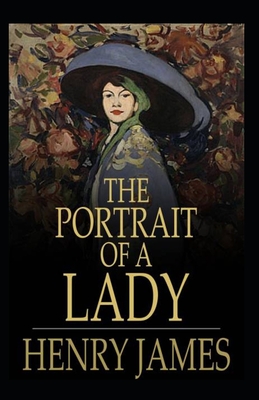
The Portrait of a Lady

Henry James

First Publication: October 29, 1881


Category: romance novel


Sales: ?

Accolades (click on badges to see full lists):

About the Book:

The Portrait of a Lady is “regarded by many as Henry James’ finest work.” BN It is “a lucid tragedy exploring the distance between money and happiness.” BN “In this portrait of a ‘young woman affronting her destiny,’ Henry James created one of his most magnificent heroines, and a story of intense poignancy.” BN It also treats in a profound way the themes of personal freedom, responsibility, and betrayal.” WK

His “mastery of psychology has never been more elegantly expressed nor more gripping than in his tale of Isabel Archer,” TG “a beautiful, spirited American” BN who “is brought to Europe by her wealthy aunt Touchett.” BN The novel “reflects James’ continuing interest in the differences between the New World and the Old, often to the detriment of the former.” WK

Isabel quickly attracts the attention of the neighbor, Lord Warburton, who proposes. She rejects him as well as Caspar Goodwood, “the charismatic son and heir of a wealthy Boston mill owner.” WK Isabel believes that marriage would mean she would sacrifice her freedom and independence.

When her uncle dies and leaves much of his estate to Isabel, she opts to travel. She meets Gilbert Osmond, an American expatriate, in Florence. She is drawn in by his charm and accepts his marriage proposal. However, “beneath his veneer of civilized behaviour” BN is “overwhelming egotism and lack of genuine affection for his wife.” WK Gilbert turns out to be “the ultimate cold fish and one of literature's most repellent villains.” TG An ambiguous ending leaves the reader wondering if Isabel will leave Gilbert or stay with him.


Resources and Related Links:

Tuesday, July 1, 2025

This Month in History (1848): Vanity Fair published

First posted 11/11/2025.

Vanity Fair

William Makepeace Thackery

First Publication: July 1848


Category: novel/satire on classism


Sales: 1 million

Accolades (click on badges to see full lists):

About the Book:

“Filled with hilarious dialogue and superb characterizations, Vanity Fair” BN deconstructs “the notions of literary heroism of his era” AZ amidst “a wonderfully satirical panorama of upper-middle-class life and manners in London at the beginning of the nineteenth century.” BN It “is a richly entertaining comedy that asks the reader, ‘Which of us is happy in this world? Which of us has his desire? or, having it, is satisfied?’” BN

The story centers around Becky and Amelia, who “have just completed their studies at Miss Pinkerton’s Academy for Young Ladies and are beginning to embark upon the world. The simple-minded nature of Amelia, who comes from a wealthy family, is contrasted with the strong-willed nature of Becky, who will stop at nothing to climb the social ranks of English society.” AZ

“Becky must use all her wit, charm and considerable sex appeal to escape her drab destiny as a governess. From London’s ballrooms to the battlefields of Waterloo, the bewitching Becky works her wiles on a gallery of memorable characters.” BN

“The novel takes its name from John Bunyan’s Pilgrim’s Progress…in which a town called Vanity is depicted to represent man’s sinful attachment to worldly things. Set against the backdrop of the Napoleonic Wars, Vanity Fair is Thackeray’s classic satire of the societal trappings of Victorian England, self described as a novel without a hero.” AZ


Resources and Related Links:

Wednesday, January 1, 2025

This Month in History (1759): Candide published

First posted 11/11/2025.

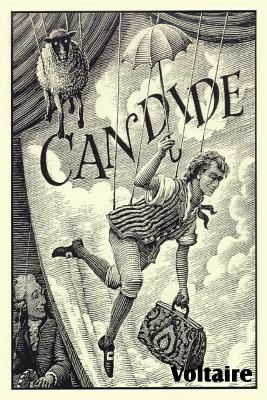
Candide

Francois-Marie de Voltaire

First Publication: January 1759


Category: novella/satire


Sales: ?

Accolades (click on badges to see full lists):

About the Book:

“Caustic and hilarious,” AZ Candide ranks as “one of the finest satires ever written.” BN It “savagely skewers…[optimism] as a shamefully inadequate response to human suffering. The swift and lively tale follows the absurdly melodramatic adventures of the youthful Candide, who is forced into the army, flogged, shipwrecked, betrayed, robbed, separated from his beloved Cunégonde, and tortured by the Inquisition.” BN Candide decides that “contrary to the teachings of his tutor, Dr. Pangloss – all is perhaps not always for the best.” BN

“Indeed, it seemed to be quite the opposite. In brilliantly skewering such naïveté, Voltaire mercilessly exposes and satirizes romance, science, philosophy, religion, and government – the ideas and forces that permeate and control the lives of men.” AZ

When he is reunited with Cunégonde, they retire, along with Dr. Pangloss, to a farm in Turkey where Candide opts for a new approach – cultivating one’s own garden, a “philosophy that rejects excessive optimism and metaphysical speculation in favor of the most basic pragmatism.” BN

“Filled with wit, intelligence, and an abundance of dark humor, Candide is relentless and unsparing in its attacks upon corruption and hypocrisy – in religion, government, philosophy, science, and even romance. Ultimately, this celebrated work says that it is possible to challenge blind optimism without losing the will to live and pursue a happy life.” BN


Resources and Related Links:

This Month in History (1767): The Life and Opinions of Tristram Shandy final installment published

First posted 11/12/2025.

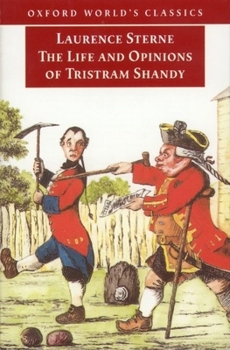
The Life and Opinions of Tristram Shandy

Laurence Sterne

First Publication: December 1759 to January 1767


Category: humorous novel


Sales: ?

Accolades (click on badges to see full lists):

About the Book:

The Life and Opinions of Tristram Shandy, Gentleman was originally published in England in nine volumes acoss five installments from 1759 to 1767. The “great comic novel contains some of the best-known and best-loved characters in English literature – including Uncle Toby, Corporal Trim, Parson Yorick, and Dr. Slop – and boasts one of the most innovative and whimsical narrative styles in all literature.” AZ

The “ingeniously structured novel (about writing a novel)” BN “provoked a literary sensation.” BN “At once endlessly facetious and highly serious” AZ it is “rich in playful double entendres, digressions, formal oddities, and typographical experiments” BN and “fascinates like a verbal game of chess.” BN

It “is the most protean and playful English novel of the eighteenth century and a celebration of the art of fiction.” BN “Its inventiveness anticipates the work of Joyce, Rushdie, and Fuentes in our own century.” BN


Resources and Related Links:

Sunday, December 1, 2024

This Month in History (1891): Tess of the d’Urbervilles published

First posted 11/12/2025.

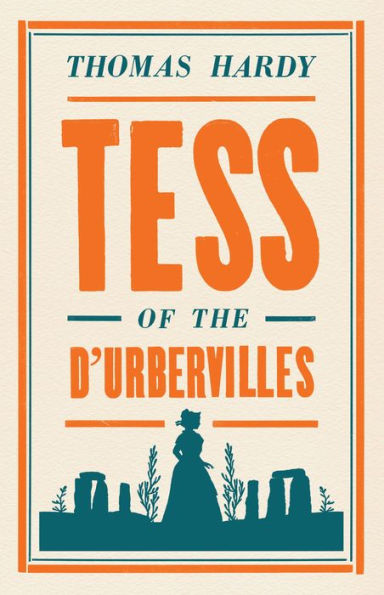
Tess of the d’Urbervilles

Thomas Hardy

First Publication: serialized fom July to December 1891 in The Graphic


Category: Victorian era social novel


Sales: ?

Accolades (click on badges to see full lists):

About the Book:

“This classic novel is a timeless exploration of love, morality, and the struggle for identity in Victorian England.” AZ When first published, the book received a mixed reception because it challenged the sexual morals of the time. The titular character “emerges as a tragic heroine, incapable of escaping the hypocrisy of Victorian society.” TG

Tess is “a young woman living in rural Victorian England. After learning of her family’s noble d’Urberville lineage, Tess sets out to restore her family’s fortunes.” AZ She spurns the advances of Alec d’Urberville, “a seductive yet dangerous man from her family’s past,” AZ eventually returning home. However, she is “disgraced by an illegitimate child” AZ and “tainted with shame and guilt.” AZ

When she meets Angel Clare, “an idealistic young man from a well-off family,” AZ she falls in love. Scared about how he’ll accept her past, she initially rejects his marriage proposals. When she eventually relents, she reveals her secret to him and he bolts for Brazil. By the time he gets his act together and returns, it’s too late.


Resources and Related Links:

Thursday, November 14, 2024

Today in History (1883): Treasure Island published

First posted 11/11/2025.

Treasure Island

Robert Louis Stevenson

First Publication: November 14, 1883


Category: adventure novel


Sales: ?

Accolades (click on badges to see full lists):

About the Book:

“One of the most enduringly popular adventure tales, Treasure Island began…as a serialized adventure entitled ‘The Sea-Cook’ in the periodical Young Folks.” AZ “Originally considered a coming-of-age story and is noted for its atmosphere, characters, and action,” WK it has become “the most popular pirate story ever written in English, featuring one of literature’s most beloved bad guys.” BN

“Rich in atmosphere and character, Treasure IslandWK “has been hugely influential on “popular perceptions of pirates, including such elements as treasure maps marked with an ‘X,’ schooners, the Black Spot, tropical islands, and one-legged seamen bearing parrots on their shoulders.” WK

“The story is told through the eyes of young Jim Hawkins, the cabin boy of the Hispaniola,” BN “who discovers a map of Treasure Island among an old sea captain's possessions – and then follows it.” TG “The action-packed adventure tells of a perilous sea journey across the Spanish Main [and] a mutiny led by the infamous Long John Silver” AZ “who is one moment a friendly, laughing, one-legged sea-cook…and the next a dangerous pirate leader!” BN He’s just one of “a host of sinister characters charged with diabolical intentions.” AZ

“The unexpected and complex relationship that develops between Silver and Jim helps transform what seems at first to be a simple, rip-roaring adventure story into a deeply moving study of a boy’s growth into manhood, as he learns hard lessons about friendship, loyalty, courage and honor – and the uncertain meaning of good and evil.” BN


Resources and Related Links:

Thursday, June 25, 2020

Homer The Odyssey

First posted 6/20/2020; updated 7/6/2020.

The Odyssey

Homer

First Publication: 800 B.C.


Category: historical/epic poetry


Sales: 45 million

Accolades (click on badges to see full lists):

About the Book:

The Odyssey is the original collection of tall traveler’s tales. Odysseus, on his way home from the Trojan War, encounters all kinds of marvels from one-eyed giants to witches and beautiful temptresses. His adventures are many and memorable before he gets back to Ithaca and his faithful wife Penelope.” AZ

The epic poem “retells the events of the war between Greece and the city of Troy, focusing on Achilles' quarrel with Agamemnon.” BN “Helen, queen of Sparta and the most beautiful woman in the world, is kidnapped by Paris, a Trojan prince. Hungry for revenge, the Greek Army lays siege on Troy. For nine long years they are unsuccessful – until they come up with a plan for their greatest-ever attack on the city. For victory or death, the two armies will collide for the final time.” BN

“We can never be certain that both these stories belonged to Homer. In fact, ‘Homer’ may not be a real name but a kind of nickname meaning perhaps ‘the hostage’ or ‘the blind one’. Whatever the truth of their origin…these tales… developed around three thousand years ago, may well still be read in three thousand years’ time.” AZ

“Its symbolic evocation of human life as an epic journey homewards has inspired everything from James Joyce’s Ulysses to the Coen brothers' film, O Brother Where Art Thou?TG


Resources and Related Links: