Showing posts with label Guardian. Show all posts

Wednesday, October 29, 2025

Today in History (1881): Portrait of a Lady published

First posted 11/11/2025.

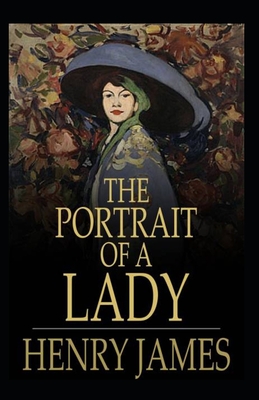
The Portrait of a Lady

Henry James

First Publication: October 29, 1881


Category: romance novel


Sales: ?

Accolades (click on badges to see full lists):

About the Book:

The Portrait of a Lady is “regarded by many as Henry James’ finest work.” BN It is “a lucid tragedy exploring the distance between money and happiness.” BN “In this portrait of a ‘young woman affronting her destiny,’ Henry James created one of his most magnificent heroines, and a story of intense poignancy.” BN It also treats in a profound way the themes of personal freedom, responsibility, and betrayal.” WK

His “mastery of psychology has never been more elegantly expressed nor more gripping than in his tale of Isabel Archer,” TG “a beautiful, spirited American” BN who “is brought to Europe by her wealthy aunt Touchett.” BN The novel “reflects James’ continuing interest in the differences between the New World and the Old, often to the detriment of the former.” WK

Isabel quickly attracts the attention of the neighbor, Lord Warburton, who proposes. She rejects him as well as Caspar Goodwood, “the charismatic son and heir of a wealthy Boston mill owner.” WK Isabel believes that marriage would mean she would sacrifice her freedom and independence.

When her uncle dies and leaves much of his estate to Isabel, she opts to travel. She meets Gilbert Osmond, an American expatriate, in Florence. She is drawn in by his charm and accepts his marriage proposal. However, “beneath his veneer of civilized behaviour” BN is “overwhelming egotism and lack of genuine affection for his wife.” WK Gilbert turns out to be “the ultimate cold fish and one of literature's most repellent villains.” TG An ambiguous ending leaves the reader wondering if Isabel will leave Gilbert or stay with him.


Resources and Related Links:

Saturday, April 26, 2025

Today in History (1925): The Trial published

First posted 11/11/2025.

The Trial

Franz Kafka

First Publication: April 26, 1925


Category: philosophical fiction


Sales: ?

Accolades (click on badges to see full lists):

About the Book:

The Trial was written in 1914 but wasn’t published until 1925, after Franz Kafka’s death. The short novel “exemplifies the term ‘Kafkaesque.’” AZ “Whether read as an existential tale, a parable, or a prophecy of the excesses of modern bureaucracy wedded to the madness of totalitarianism, Kafka’s nightmare has resonated with chilling truth for generations of readers.” BN

It “captures the confusion and distress of suffering persecution by an unseen, unknown and irresistible force. Blending reality and absurdity, violence and hope, this story has endured for a century for good reason.” BN It raises “provocative, ever-relevant issues related to the role of government and the nature of justice.” AZ

It is both an “engrossing” AZ and “terrifying tale” BN “about the human condition plunges an isolated individual into an impersonal, illogical system.” AZ Josef K. is “a respectable bank officer who is suddenly and inexplicably arrested.” BN He endures “a maze of nonsensical rules and bureaucratic roadblocks” AZ in his effort to defend himself of an undisclosed charge on which he can get no information.


Resources and Related Links:

Wednesday, January 1, 2025

This Month in History (1767): The Life and Opinions of Tristram Shandy final installment published

First posted 11/12/2025.

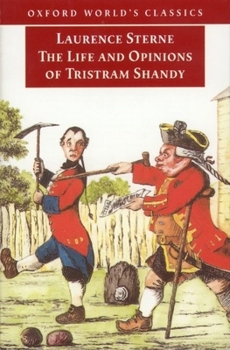
The Life and Opinions of Tristram Shandy

Laurence Sterne

First Publication: December 1759 to January 1767


Category: humorous novel


Sales: ?

Accolades (click on badges to see full lists):

About the Book:

The Life and Opinions of Tristram Shandy, Gentleman was originally published in England in nine volumes acoss five installments from 1759 to 1767. The “great comic novel contains some of the best-known and best-loved characters in English literature – including Uncle Toby, Corporal Trim, Parson Yorick, and Dr. Slop – and boasts one of the most innovative and whimsical narrative styles in all literature.” AZ

The “ingeniously structured novel (about writing a novel)” BN “provoked a literary sensation.” BN “At once endlessly facetious and highly serious” AZ it is “rich in playful double entendres, digressions, formal oddities, and typographical experiments” BN and “fascinates like a verbal game of chess.” BN

It “is the most protean and playful English novel of the eighteenth century and a celebration of the art of fiction.” BN “Its inventiveness anticipates the work of Joyce, Rushdie, and Fuentes in our own century.” BN


Resources and Related Links:

Thursday, April 25, 2019

Daniel Defoe's Robinson Crusoe published 300 years ago today!

First posted 7/6/2020.

Robinson Crusoe

Daniel Defoe

First Publication: April 25, 1719


Category: adventure novel


Sales: 1 million

Accolades (click on badges to see full lists):

About the Book:

Robinson Crusoe is one of the most popular and influential adventure stories of all time” BN and “a pioneering work of realist fiction.” AZ “This classic tale of shipwreck and survival on an uninhabited island was an instant success when first published in 1719 and has inspired countless imitations.” BN “Inspired by the real life story of Alexander Selkirk, a castaway who lived on an island in the Pacific for four years,” AZ “it was widely believed to be a true account of actual events.” AZ

“At the beginning of the novel we find Robinson Crusoe desiring a life at sea, despite the wishes of his parents for him to pursue a more sensible career. Despite numerous disasters and misadventures at sea he is not to be deterred from his life choice. Ultimately he finds himself stranded on a deserted island when his ship is destroyed in a storm.” AZ

Forced to overcome despair, doubt, and self-pity, he struggles to create a life for himself in the wilderness.” BN “He makes do with the supplies that he has salvaged from the wreckage and the resources he finds on the island.” AZ “His many adventures are recounted in vivid detail, including a fierce battle with cannibals and his rescue of Friday, the man who becomes his trusted companion.” BN

“Full of enchanting detail and daring heroics, Robinson Crusoe is a celebration of courage, patience, ingenuity, and hard work.” BN


Resources and Related Links:

Tuesday, October 30, 2018

Don Quixote by Miguel de Cervantes

First published 10/30/2018; last updated 7/5/2020.

Don Quixote

Miguel de Cervantes

First Publication: 1605 (Part 1), 1615 (Part 2)


Category: novel/satire/social commentary


Sales: 500 million

Accolades:

About the Book:

“Neither wholly tragedy nor wholly comedy,” LN Don Quixote has been called the first modern novel. LN It has been translated into English some 20 times” AZ since it first “appeared in two parts in 1605 and 1615.” AZ The book offers “a panoramic view of the 17th-century Spanish society” LN and “has been seen as a veiled attack on the Catholic Church or on the contemporary Spanish politics, or symbolizing the duality of the Spanish character.” LN It was “originally conceived as a comic satire against the chivalric romances. However, Cervantes did not destroy the chivalric ideal of the romances he rejected – he transfigured it.” LN

“Central characters are the elderly, idealistic knight, who sets out on his old horse Rosinante to seek adventure, and the materialistic squire Sancho Panza, who accompanies his master from failure to another. Their relationship, although they argue most fiercely, is ultimately founded upon mutual respect. In the debates they gradually take on some of each other's attributes.” LN

“During his travels, Don Quixote’s overexcited imagination blinds him to reality: he thinks windmills to be giants, flocks of sheep to be armies, and galley-slaves to be oppressed gentlemen. Sancho is named governor of the isle of Barataria, a mock title, and Don Quixote is bested in a duel with the Knight of the White Moon, in reality a student of his acquaintance in disguise. Don Quixote is passionately devoted to his own imaginative creation, the beautiful Dulcinea…The hero returns to La Mancha, and only at his deathbed Don Quixote confesses the folly of his past adventures.” LN


Check out a 2017 movie version here:


Resources and Related Links:

In July 2018, I became the organizer of the Classic Novels Book Club. Check out the Book Club tab here or Meetup for more information. This is our September/October 2018 book.
Questions About Don Quixote:
  1. Don Quixote is often called the first modern novel. Do you agree? Why or why not?

  2. Why do you think this is, according to most estimates, the best-selling novel of all-time?

  3. Lionel Trilling once claimed that “All prose fiction is a variation of the theme of Don Quixote: . . . the problem of appearance and reality.” Discuss.

  4. What was Miguel de Cervantes’s purpose for writing Don Quixote? Critics have debated the question of whether Cervantes’s intention in Don Quixote was to ridicule the chivalric romances…Do you think the book repudiates chivalry?

  5. What is the cause of Don Quixote’s possible madness? Is he even mad or, as Italian literary critic Giovanni Papini suggests, not mad at all, but merely pretending to be?

  6. How does Don Quixote’s perception of reality affect other characters’ perceptions of the world? Does his disregard for social convention change the rules of conduct for the other characters?

  7. Why do you think Sancho Panza sticks with Don Quixote throughout his adventures?

  8. Is there a moral center in Don Quixote? If so, which character occupies the center? If not, why would Cervantes leave this space absent?

  9. What attitude does the novel take toward social class? How is social class a factor in relationships between characters?

  10. What is the role of women as depicted in Part 1 of Don Quixote?
  11. Is Quixote a tragic figure, a comic figure, or both?

  12. Is Don Quixote insane or merely eccentric?

  13. Why does Sancho Panzo follow and remain loyal to such a bumbler as Don Quixote?

  14. Does Don Quixote need Sancho Panza?

  15. What is the function of the invention of Cide Hamet Benengali?

  16. What is the significance of Sancho's self-lashing?

  17. What is the significance of Dulcinea del Toboso?

  18. What is the relationship between the intercalated novel of "The Curious Impertinent" and the main body of Don Quixote?

  19. What qualities does Cervantes consider most important in literary art?

  20. Consider whether you prefer Part I or Part II and why.

  21. Discuss some differences in Cervantes' treatment of Part I and Part II.

  22. Was Don Quixote lying when he told what had happened in the Cave of Montesinos?

  23. How is the cave used as a symbolic device in Don Quixote?

  24. What kind of attitude does Cervantes (as a voice in the book) have towards the Moor?

  25. What is the relation between madness or foolishness and wisdom in Don Quixote and Sancho Panza?

  26. Is there any way in which they seem wise or virtuous because of their oddities?

  27. How do you react toward those who use Don Quixote as an object of amusement (the Duke and Duchess, Don Antonio Moreno, etc.)? Is this different from or similar to your reactions to characters who did the same in Part One?

  28. What view of chivalry emerges from Don Quixote as a whole?

  29. Consider Don Quixote’s final repentance. What reaction did you have to it?

  30. Is it a fitting ending?

Sources for Questions:

Tuesday, April 1, 2008

Kenneth Grahame's The Wind in the Willows published 100 years ago today

First posted 7/4/2020; last updated 7/5/2020.

The Wind in the Willows

Kenneth Grahame

First Publication: April 1, 1908


Category: children’s literature


Sales: 25 million

Accolades (click on badges to see full lists):

About the Book:

“One of the most cherished works of children’s literature ever written.” AZ After Kenneth Grahame “retired…as secretary of the Bank of England, he moved back to Berkshire, where he had lived as a child, and spent his time by the River Thames doing much as the animal characters in his book do – …‘simply messing about in boats’ – and expanding the bedtime stories he had earlier told his son Alastair into a manuscript for the book.” WK

The Wind in the Willows chronicles the adventures of four friends” BN “in a pastoral version of Edwardian England.” WK “The story begins at the arrival of spring where we find the good-natured Mole tired of doing his spring cleaning. Mole decides to abandon his cleaning in order to enjoy the fresh air of spring. He journeys to the river where he meets Rat, whom he quickly befriends. Together the two row down the river eventually meeting up with Toad at Toad Hall. There they discover Toad’s current obsession with his horse-drawn caravan, one which he quickly abandons for a motorcar when his caravan is run off the road by one. A fourth friend enters the story in the form of Badger and when it is discovered that Toad’s obsession is becoming self-destructive, Mole, Rat, and Badger intervene to help protect Toad from himself.” AZ

The novel is notable for its mixture of mysticism, adventure, morality and camaraderie.” WK It was adapted by A.A. Milne for the state in 1929 and as a musical almost a century later. The first of several film adaptions came in 1946. WK


Resources and Related Links: