Showing posts with label top works of fiction. Show all posts

Thursday, November 26, 2015

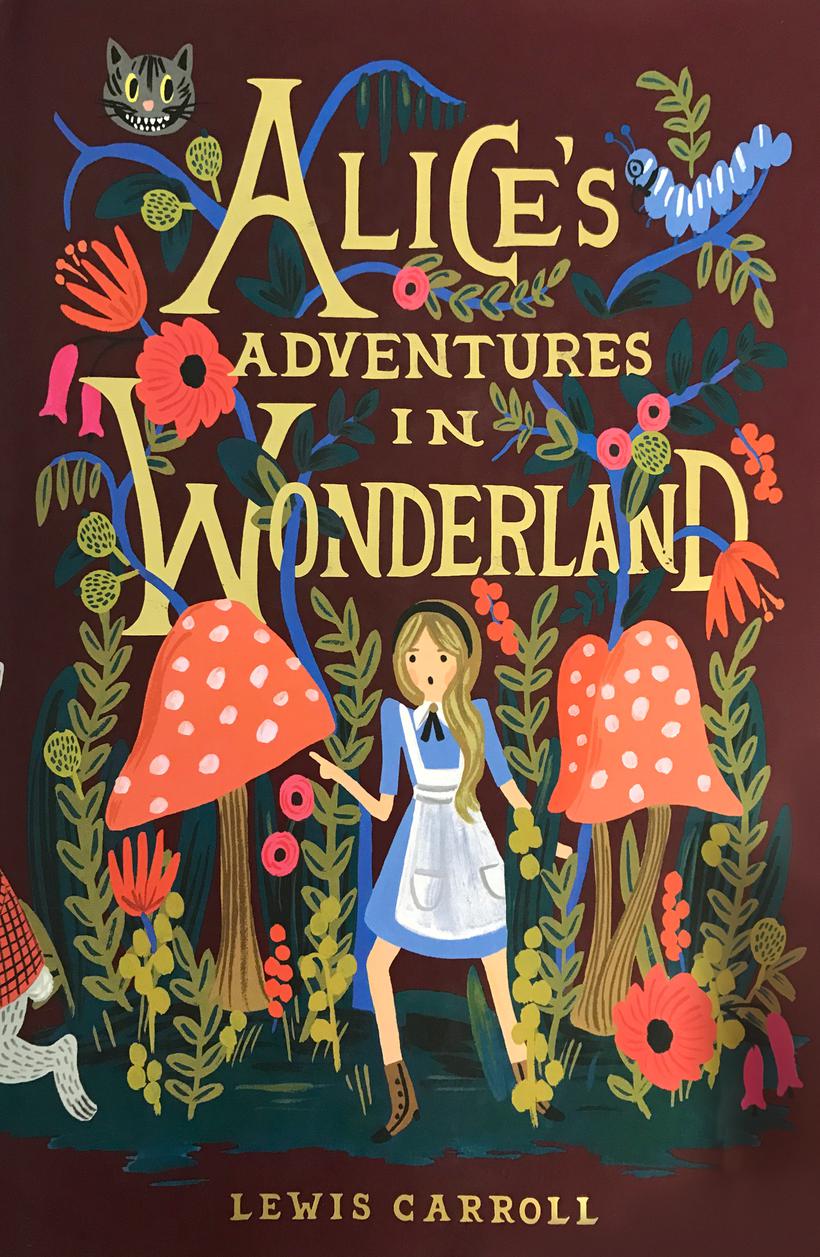
Lewis Carroll Alice’s Adventures in Wonderland: 150th anniversary!

Last updated 7/6/2020..

Alice’s Adventures in Wonderland

Lewis Carroll

First Publication: November 26, 1865


Category: fantasy/children’s novel


Sales: 100 million

Accolades (click on badges to see full lists):

About the Book:

“During a boat trip up the Isis River with Reverend Robinson Duckworth and the three young daughters of Henry Liddell, one of whom is named Alice, Lewis Carroll, the pen name of Charles Lutwidge Dodgson, invents a story about a bored little girl named Alice who goes looking for an adventure. Several years later this tale would be forever immortalized as Alice's Adventures in Wonderland.” AZ

Alice follows a White Rabbit “down the rabbit hole and ends up in the fantasy world of Wonderland,” AZ a place “filled with a plethora of interesting and fantastical creatures.” AZ The reader can watch Alice “take tea with the Mad Hatter and March Hare [and] follow a game of croquet between Alice and the Queen of Hearts.” BN

Alice also “encounters a blue Caterpillar smoking a hookah, the mischievously grinning Cheshire Cat, …a sleepy little Dormouse whom she attends a tea party with, …[and] many other curious characters.” AZ

“Beloved by millions of children and adults ever since its first publication, Alice's Adventures in Wonderland is a classic tale of fantasy that has been cherished by readers ever since its first publication and will surely delight for many years to come.” AZ


Resources and Related Links:

Wednesday, February 2, 1972

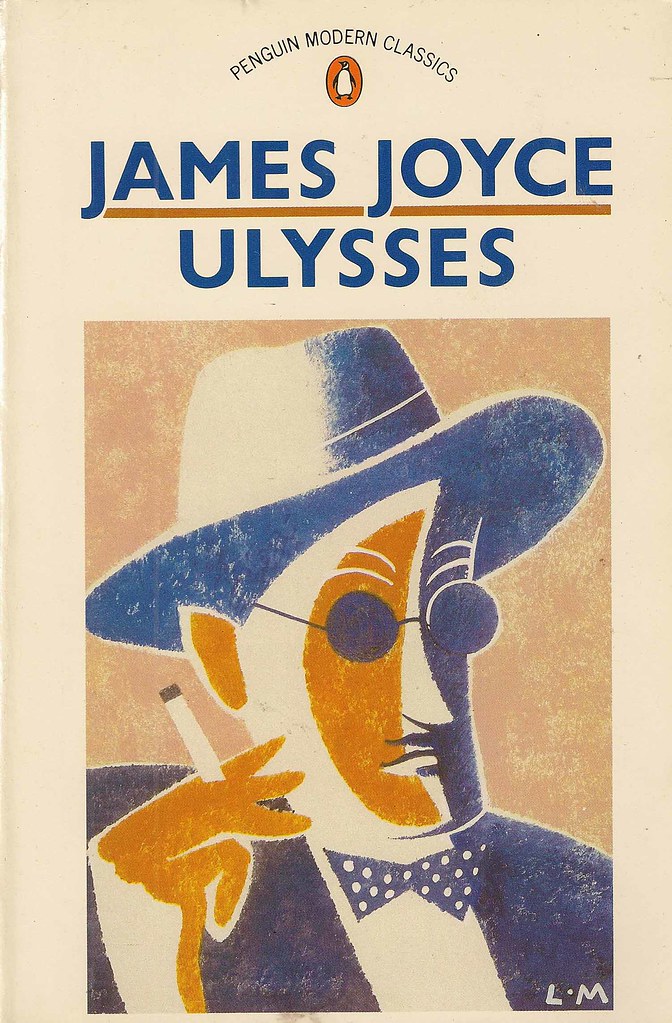
James Joyce Ulysses: Published 50 Years Ago Today

Last updated 7/5/2020.

Ulysses

James Joyce

First Publication: February 2, 1922


Category: modernist novel


Sales: 880,000

Accolades (click on badges to see full lists):

About the Book:

Modern Library ranks Ulysses as the best novel of the 20th century while Time magazine calls it the 20th century’s most influential novel. EW It is considered “a must read for fans of the Modernist genre.” AZ It has, however, also earned a reputation as one of the most difficult novels to read. An unscientific study done in 2014 concluded that less than 2% of people who buy the novel actually read it in its entirety. EW The book is “filled with experimental forms of prose, stream of consciousness, puns, parodies, and allusions that Joyce himself hoped would ‘keep the professors busy for centuries arguing over what I meant.’” AZ “Its stream-of-consciousness narration deters many, but makes enraptured enthusiasts of others.” TG

While the novel may initially appear unstructured, it closely parallels Homer’s ancient Greek poem, The Odyssey in which the protagonist, Odysseus “(Roman name: Ulysses) encounters many perils – including giants, angry gods, and monsters–during his voyage home to Ithaca, Greece, after the Trojan War.” CSG Ulysses contains “containing eighteen episodes that correspond to various parts of Homer’s work,” AZ although Homer “presented the journey of life as a heroic adventure” CSG while Joyce depicts it as “humdrum, dreary, and uneventful.” CSG

Ulysses chronicles the events of a single day in Dublin, Ireland – June 16, 1904. The book is structured in three sections. Section 1 (chapters 1-3) focuss on Stephen Dedalus, a young, aspring writer seeking a father figure to replace his drunken dad. This parallels Telemachus’s search for his father Odysseus in The Odssey. CSG Dedalus “has just returned from Paris. This section presents Stephen's life on a typical day in which he finds Dublin depressing. He is pessimistic about realizing his dream to become a published author.” CSG

Section 2 (chapters 4-15) focus on Leopold Bloom, a Jewish advertising representative of Hungarian origin who lives in Dublin. His character parallels Odysseus in The Odssey. For example, Odysseus visits the underworld, or the land of the undead, known as Hades, while Bloom attends a funeral in the chapter entitled “Hades.” Bloom’s “adventures” aren’t adventurous at all, but the mundane everyday tasks “of getting breakfast, feeding his cat, …doing legwork for his job, visiting pubs or restaurants, and thinking about his unfaithful wife.” CSG Bloom and Dublin are described in detail via “free-flowing thoughts – many of them either about his unfaithful wife, Molly, or other women.” CSG Molly is presented as a contrast to Penelope, the faithful wife of Odysseus. CSG

Section 3 (chapters 16-18) focusses on Stephen, Leopold, and Molly. “Bloom and Dedalus meet each other. Dedalus goes to Bloom’s home and talks with him for several hours. The novel ends with a chapter on Molly…[which] consists of more than 30 pages occupied by seven sentences with no punctuation except for the period at the end of the novel.” CSG

In 1918, extracts from the book were published in The Little Review in the United States. The publishers were fined and charged with obscenity BN “for its depiction of female masturbation.” TG It wasn’t published in book form until 1922 when American Sylvia Beach published it in Paris. It wasn’t until 1934 that the book was legally published in an English-speaking country “when Random House successfully defended Joyce against obscenity charges and published it in the Modern Library.” BN


Resources and Related Links:

In July 2018, I became the organizer of the Classic Novels Book Club. Check out the Book Club tab here or Meetup for more information. This is our June 2019 book.

Sunday, May 31, 1970

To Kill a Mockingbird by Harper Lee Published 10 Years Ago This Month

updated 7/5/2020.

To Kill a Mockingbird

Harper Lee

First Publication: May 1960


Category: Southern, gothic coming-of-age novel


Sales: 40 million

Accolades:

About the Book:

One of the best-loved stories of all time.” AZ Harper Lee’s “masterwork” AZ “was an immediate critical and financial success for its author.” LC It is “a gripping, heart-wrenching, and wholly remarkable tale of coming-of-age in a South poisoned by virulent prejudice.” AZ

“The plot and characters are loosely based on Lee’s observations of her family, her neighbors and an event that occurred near her hometown of Monroeville, Alabama, in 1936, when she was 10 years old. The story is told by the six-year-old Jean Louise Finch;” WK through her eyes, the reader “views a world of great beauty and savage inequities.” AZ

Meanwhile, Atticus Finch, “her father – a crusading local lawyer – risks everything to defend a black man unjustly accused of a terrible crime.” AZ He “one of the most enduring and heroic characters in all of American literature,” LC serving “as a moral hero for many readers and as a model of integrity for lawyers.” WK One critic called him “the most enduring fictional image of racial heroism.’” WK

To Kill a Mockingbird is probably the most widely read book dealing with race in America.” WK It has been translated into over forty languages and was adapted into an Academy Award-winning film in 1962.

“The novel is renowned for its warmth and humor, despite dealing with the serious issues of rape and racial inequality.” WK “Scholars have noted that Lee also addresses issues of class, courage, compassion, and gender roles in the American Deep South. The book is widely taught in schools in the United States with lessons that emphasize tolerance and decry prejudice. Despite its themes, To Kill a Mockingbird has been subject to campaigns for removal from public classrooms, often challenged for its use of racial epithets.” WK


Resources and Related Links: