Showing posts with label The Hobbit. Show all posts

Monday, June 29, 2020

Top 100 Novels for Children and Teens

First posted 2/19/2019; updated 6/29/2020.

Novels for Children and Teens:

The Top 100 of All Time

This is a consolidation of two previous lists: “The Top 50 Children’s Novels” and “The Top 50 Young Adult Books.” It aggregates a dozen lists specific to young adult books, more than 25 general children’s book lists, and another 50+ general book lists.

  1. J.K. Rowling Harry Potter (series, 1997-2007)
  2. E.B. White Charlotte’s Web (1952)
  3. C.S. Lewis The Chronicles of Narnia (series: 1950-1956)
  4. J.R.R. Tolkien The Hobbit (1937)
  5. Madeleine L’Engle A Wrinkle in Time (1962)
  6. Roald Dahl Charlie and the Chocolate Factory (1964)
  7. Lois Lowry The Giver (1994)
  8. Katherine Paterson The Bridge to Terabithia (1977)
  9. A.A. Milne Winnie-the-Pooh (1926) / The House at Pooh Corner (1928)
  10. Suzanne Collins The Hunger Games (trilogy: 2008-10)

  11. Louis Sachar Holes (2000)
  12. Lewis Carroll Alice’s Adventures in Wonderland (1865)
  13. Antoine de Saint-Exupéry The Little Prince (Le Petit Prince) (1943)
  14. S.E. Hinton The Outsiders (1968)
  15. Philip Pullman His Dark Materials (trilogy: 1995-2000)
  16. Frances Hodgson Burnett The Secret Garden (1987)
  17. L.M. Montgomery Anne of Green Gables (1908)
  18. Norton Juster The Phantom Tollbooth (1961)
  19. E.L. Konigsburg From the Mixed-Up Files of Mrs. Basil E. Frankweiler (1967)
  20. Lois Lowry Number the Stars (1990)

  21. Elizabeth George Speare The Witch of Blackbird Pond (1959)
  22. Gary Paulsen Hatchet (1987)
  23. Astrid Lingren Pippi Longstocking (1945)
  24. Shel Silverstein Where the Sidewalk Ends (1974)
  25. Harper Lee To Kill a Mockingbird (1960)
  26. Daniel Handler as Lemony Snicket A Series of Unforunate Events (series: 1999-2006)
  27. Louisa May Alcott Little Women (1869)
  28. Roald Dahl Matilda (1988)
  29. Mildred D. Taylor Roll of Thunder, Hear My Cry (1977)
  30. Louise Fitzhugh Harriet the Spy (1964)

  31. Judy Blume Are You There, God? It’s Me, Margaret (1972)
  32. Natalie Babbit Tuck Everlasting (1975)
  33. Markus Zusak The Book Thief (2005)
  34. Scott O’Dell Island of the Blue Dolphins (1961)
  35. John Green Looking for Alaska (2005)
  36. Laura Ingalls Wilder Little House (series: 1932-1971)
  37. Frank L. Baum The Wonderful Wizard of Oz (1900)
  38. Kate DiCamillo Because of Winn-Dixie (2000)
  39. Mark Haddon The Curious Incident of the Dog in the Night-Time (2003)
  40. Robert C. O’Brien Mrs. Frisby and the Rats of NIMH (1970)

  41. William Grahame The Wind in the Willows (1908)
  42. J.R.R. Tolkien The Lord of the Rings (trilogy: 1954-55)
  43. William Golding Lord of the Flies (1954)
  44. J.D. Salinger The Catcher in the Rye (1951)
  45. E.B. White Stuart Little (1945)
  46. Wilson Rawls Where the Red Fern Grows (1974)
  47. Sharon Creech Walk Two Moons (1994)
  48. Ursula K. Le Guin The Earthsea Cycle (series: 1968-2001)
  49. Sherman Alexie The Absolutely True Diary of a Part-Time Indian (2007)
  50. Roald Dahl James and the Giant Peach (1988)

  51. Rick Riordan Percy Jackson & the Olympians (series: 2005-2009)
  52. Ellen Raskin The Westing Game (1978)
  53. Esther Forbes Johnny Tremain (1943)
  54. Beverly Cleary Ramona (series: 1955-1999)
  55. Neil Gaiman The Graveyard Book (2010)
  56. Jack London The Call of the Wild (1903)
  57. Mark Twain The Adventures of Huckleberry Finn (1885)
  58. Stephen Chbosky The Perks of Being a Wallflower (1999)
  59. John Green The Fault in Our Stars (2012)
  60. Kate DiCamillo The Tale of Despereaux (2003)

  61. Orscon Scott Card Ender’s Game (1968)
  62. Anne Frank The Diary of a Young Girl (aka The Diary of Anne Frank) (1947)
  63. Patricia MacLachlan Sarah, Plain and Tall (1985)
  64. Richard Adams Watership Down (1972)
  65. Jerry Spinelli Maniac Magee (1990)
  66. Robert Louis Stevenson Treasure Island (1883)
  67. Michael Bond A Bear Called Paddington (1960)
  68. Anna Sewell Black Beauty (1877)
  69. Mary Norton The Borrowers (1953)
  70. William H. Armstrong Sounder (1970)

  71. Pam Munoz Ryan Esperanza Rising (2000)
  72. J.M. Barrie Peter Pan (aka Peter and Wendy) (1911)
  73. Roald Dahl The BFG (1982)
  74. Meg Rosoff How I Live Now (2004)
  75. Judy Blume Forever… (1975)
  76. R.J. Palacio Wonder (2012)
  77. Judy Blume Tales of a Fourth Grade Nothing (1972)
  78. Diane Wynne Jones Howl’s Moving Castle (1986)
  79. Laurie Anderson Speak (2011)
  80. Lynne Reid Banks The Indian in the Cupboard (series: 1980-1998)

  81. Christopher Paolini Inheritance (series: 2003-2011)
  82. Rudyard Kipling The Jungle Book (1894)
  83. Douglas Adams The Hitchhiker’s Guide to the Galaxy (1979)
  84. William Goldman The Princess Bride (1973)
  85. Richard Atwater Mr. Popper’s Penguins (1938)
  86. Jean Craighead George Julie of the Wolves (1972)
  87. Gene Luen Yang American Born Chinese (2006)
  88. Brian Selznick The Invention of Hugo Cabret (2007)
  89. Johanna Spyri Heidi (aka Heidi’s Years of Wandering and Learning) (Heidis Lehr - und Wnaderjahre) (1880)
  90. T.H. White The Sword in the Stone (1938)

  91. P.L. Travers Mary Poppins (1934)
  92. Jeff Kinney Diary of a Wimpy Kid (series: 2007-)
  93. Sheila Burnford The Incredible Journey (1984)
  94. Shaun Tan The Arrival (2006)
  95. Jane Austen Pride and Prejudice (1813)
  96. Parick Ness A Monster Calls (2011)
  97. Veronica Roth Divergent (series: 2011-2013)
  98. Janette Sebring Lowrey The Poky Little Puppy (1942)
  99. Christopher Paul Curtis Bud Not Buddy (2000)
  100. anonymous Go Ask Alice (1976)

Resources and Related Links:

Sunday, December 30, 2012

There and Back Again: Lessons Learned from Re-Reading The Hobbit

First posted 12/30/2012; updated 7/5/2020.

The Hobbit

J.R.R. Tolkien

First Publication: September 21, 1937


Category: fantasy novel


Sales: 140.6 million

Accolades:

About the Book:

The New York Times Book Review called The Hobbit “a glorious account of a magnificent adventure, filled with suspense and seasoned with a quiet humor that is irresistible.” AZ

“Bilbo Baggins is a hobbit who enjoys a comfortable, unambitious life…but his contentment is disturbed when the wizard Gandalf and a company of dwarves arrive on his doorstep…to whisk him away on an adventure.” WK They want to raid the treasure hoard of Smaug the dragon. Bilbo encounters the creature Gollum and finds a magic ring. “The story reaches its climax in the Battle of the Five Armies, where many of the characters and creatures from earlier chapters re-emerge to engage in conflict.” WK

The journey brings out Bilbo’s more adventurous nature as he “gains a new level of maturity, competence, and wisdom.” WK “Personal growth and…heroism are central themes of the story, along with motifs of warfare.” WK

“Tolkien’s own experiences during World War I…[were] instrumental in shaping the story. The author’s scholarly knowledge of Germanic philology and interest in mythology and fairy tales are often noted as influences.” WK

The Hobbit was “nominated for the Carnegie Medal and awarded a prize from the New York Herald Tribune for best juvenile fiction.” WK “The publisher was encouraged by the book’s critical and financial success and, therefore, requested a sequel.” WK Tolkien responded with a trilogy, The Lord of the Rings, also in this book. The four books were turned into a series of six movies.


December 30, 2012: Personal Reflection:

I took my 10-year-old son to see The Hobbit. I'm not sure which of us was more excited, although I will confess only one of us went in costume.

my son dressed as a hobbit

I read The Hobbit and the Lord of the Rings trilogy repeatedly through my adolescent years. While I didn't generally read fantasy and was never a particular fan of D&D, the world Tolkien created absolutely enraptured me. I was as ecstatic as the rest of the throngs when Peter Jackson waved his magic wand over his movie treatments of the Lord of the Rings trilogy and proved they could be made into masterful movies.

While my son had not seen any of those movies, he was interested. I decided we might as well start with The Hobbit and work our way through the series logically. We read the book together and I delighted at seeing the story come to life for him. However, I was also troubled. Now that I am regularly writing myself, I nitpicked at certain aspects of Tolkien's writing style - mostly his wordiness.

I have certainly been known to commit that horrid writing sin of serving up too much detail. I'm a believer in coloring a scene and giving some background that might not be integral to the story, but gives it flavor.

Tolkien believes in this philosophy ten-fold. He can spend pages giving background story on a setting or character which is completely unnecessary to the overall tale. While some of this can enrich, it can also infuriate. Readers can reach a point of screaming, well, "Get to the point!"

Jackson was praised by many Tolkien fans (including myself) for his talent at carefully editing some of this detail out the Lord of the Rings. For example, in the original Fellowship of the Rings book, a whole chapter is dedicated to a totally superfluous tale about a character named Tom Bombadil who never figures into the overall plot. Jackson justifiably excised the character from the story.

At the same time, though, Jackson now finds himself criticized for doing exactly the opposite with The Hobbit. He has stretched one book into three movies. While his aim is to obviously link the two trilogies by fleshing out elements of Lord of the Rings which are only hinted at or left untouched in The Hobbit. He has also sought to infuse his movie version of The Hobbit with a darker tone than the book, again to seemingly match it up better with his movie versions of Lord of the Rings.

Now, exactly what point I’m making here, I’m not sure. Oh, right. I’m making the point that even the most celebrated of writers can find themselves distracted, drifting off on a tangent that may not benefit the overall story. Sometimes these diversions can become the essence of why a story becomes beloved, but they can also be the reason a story is despised. With that, I feel I should stop before I babble any longer. Some of you may wish I’d shut up already.

my son in front of the movie poster


Resources and Related Links:

Wednesday, December 31, 2008

Goodreads: Top 150+ Books

First posted 6/24/2020.

Goodreads:

Top 150+ Books

This list was created by aggregating three different lists (links posted at bottom of page) from Goodreads.com and then averaging the rankings of the books on the three lists. Ties were broken by books’ overall ratings in Dave’s Book Database. If more than one book from a series appeared on the list, the entire series was ranked based on the highest book of the series. Here’s the results:


    Books on All 3 Lists:

  1. Harper Lee To Kill a Mockingbird (1960)
  2. George Orwell Animal Farm (1954)
  3. C.S. Lewis The Chronicles of Narnia (series, 1950-1956)
  4. J.R.R. Tolkien The Hobbit (1937)
  5. F. Scott Fitzgerald The Great Gatsby (1925)
  6. J. K. Rowling Harry Potter (series: 1997-2007)
  7. J.R.R. Tolkien The Lord of the Rings (trilogy: 1954-55)
  8. Antoine de Saint-Exupéry The Little Prince (Le Petit Prince) (1943)
  9. Margaret Mitchell Gone with the Wind (1936)
  10. William Golding Lord of the Flies (1954)

  11. Ray Bradbury Fahrenheit 451 (1953)
  12. J.D. Salinger The Catcher in the Rye (1951)
  13. Shel Silverstein The Giving Tree (1964)
  14. John Steinbeck Of Mice and Men (1937)
  15. E.B. White Charlotte’s Web (1952)
  16. Arthur Golden Memoirs of a Geisha (1997)
  17. George Orwell 1984 (1949)
  18. Aldous Huxley Brave New World (1932)
  19. Lois Lowry The Giver (1994)
  20. Gabriel García Márquez One Hundred Years of Solitude (1967)

  21. Paulo Coelho O Alquimista (The Alchemist) (1987)
  22. Dr. Seuss Green Eggs and Ham (1960)
  23. Orson Scott Card Ender’s Game (1968)
  24. Douglas Adams The Hitchhiker’s Guide to the Galaxy (series: 1979-2009)
  25. L.M. Montgomery Anne of Green Gables (1908)
  26. Frances Hodgson Burnett The Secret Garden (1987)
  27. Kurt Vonnegut Slaughterhouse-Five (1969)
  28. Margaret Atwood The Handmaid’s Tale (1986)
  29. Vladimir Nabokov Lolita (1955)
  30. Ken Kesey One Flew Over the Cuckoo’s Nest (1962)

  31. Maurice Sendak Where the Wild Things Are (1963)
  32. S.E. Hinton The Outsiders (1968)
  33. Alice Walker The Color Purple (1982)
  34. 1953: The Old Man and the Sea by Ernest Hemingway (Scribner)
  35. Betty Smith A Tree Grows in Brooklyn (1943)
  36. Stephen King The Stand (1978)
  37. Herman Hesse Siddhartha (1922)
  38. Ayn Rand Atlas Shrugged (1957)
  39. Barbara Kingsolver The Poisonwood Bible (1998)
  40. Anthony Burgess A Clockwork Orange (1962)


    Books on 2 Lists:

  41. Jane Austen Pride and Prejudice (1813)
  42. Anne Frank The Diary of a Young Girl (aka The Diary of Anne Frank) (1947)
  43. Markus Zusak The Book Thief (2005)
  44. Suzanne Collins The Hunger Games (2008)
  45. Charlotte Brontë Jane Eyre (1847)
  46. William Shakespeare Romeo and Juliet (1597)
  47. Emily Brontë Wuthering Heights (1847)
  48. Lewis Carroll Alice’s Adventures in Wonderland (1865) / Through the Looking Glass (1871)
  49. Oscar Wilde The Picture of Dorian Gray (1891)
  50. Victor Hugo Les Misérables (1862)

  51. John Steinbeck The Grapes of Wrath (1939)
  52. Fyodor Dostoyevsky Crime and Punishment (1866)
  53. Elie Wiesel Night (Un di Velt Hot Geshvign) (1958)
  54. Kathryn Stockett The Help (2009)
  55. Khaled Hosseini The Kite Runner (2003)
  56. Madeleine L’Engle A Wrinkle in Time (1962)
  57. Stephenie Meyer Twilight (2005)
  58. Mark Twain The Adventures of Huckleberry Finn (1884)
  59. Louisa May Alcott Little Women (1869)
  60. Khaled Hosseini A Thousand Splendid Suns (2007)

  61. Homer The Odyssey (800 B.C.)
  62. Sylvia Plath The Bell Jar (1963)
  63. Richard Adams Watership Down (1972)
  64. Albert Camus The Stranger (L’Etranger) (1942)
  65. Audrey Niffenegger The Time Traveler’s Wife (2003)
  66. Charles Dickens A Tale of Two Cities (1859)
  67. Yann Martel Life of Pi (2001)
  68. Arthur Conan Doyle The Complete Sherlock Holmes (series of 4 novels and 56 short stories: 1887-1927)
  69. Frank Herbert Dune (1965)
  70. Ken Follett The Pillars of the Earth (1989)

  71. Franz Kafka The Metamorphosis (1915)
  72. Joseph Heller Catch-22 (1961)
  73. Leo Tolstoy Anna Karenina (1877)
  74. Daphne Du Maurier Rebecca (1938)
  75. George R.R. Martin A Game of Thrones (1996)
  76. Mary Shelley Frankenstein (1818)
  77. John Irving A Prayer for Owen Meany (1989)
  78. Daniel Keyes Flowers for Algernon (1958)
  79. Erich Maria Remarque All Quiet on the Western Front (1929)
  80. Frank McCourt Angela’s Ashes (1996)

  81. A.A. Milne Winnie-the-Pooh (1926)
  82. Laura Ingalls Wilder Little House (9-book series: 1932-1971)
  83. Fyodor M. Dostoyevsky The Brothers Karamazov (1880)
  84. Miguel de Cervantes Don Quixote (1615)


    Books on 1 List:

  85. John Green The Fault in Our Stars (2012)
  86. Dan Brown The Da Vinci Code (2004)
  87. Veronica Roth Divergent (2011)
  88. John Steinbeck East of Eden (1952)
  89. Stephen Chbosky The Perks of Being a Wallflower (1999)
  90. Cassandra Clare City of Bones (2008)

  91. Various writers The Holy Bible: King James Version (1451)
  92. J.R.R. Tolkien Tolkien on Fairy Stories (1947)
  93. William Shakespeare Hamlet (1603)
  94. Bram Stoker Dracula (1897)
  95. William Goldman The Princess Bride (1973)
  96. Truman Capote In Cold Blood (1966)
  97. Rick Riordan The Lightning Thief (2005)
  98. Alice Sebold The Lovely Bones (2002)
  99. Dr. Seuss The Cat in the Hat (1957)
  100. Gabriel García Márquez Love in the Time of Cholera (1985)

  101. Charles Dickens A Christmas Carol (1843)
  102. Shel Silverstein Where the Sidewalk Ends (1974)
  103. Milan Kundera The Unbearable Lightness of Being (1984)
  104. Sara Gruen Water for Elephants (2006)
  105. Umberto Eco The Name of the Rose (Il Nome della Rosa) (1980)
  106. Mark Twain The Adventures of Tom Sawyer (1876)
  107. Dr. Seuss The Lorax (1971)
  108. Roald Dahl Charlie and the Chocolate Factory (1964)
  109. Alexandre Dumas The Count of Monte Cristo (1844)
  110. Mikhail Bulgakov The Master and Margarita (1967)

  111. Jack Kerouac On the Road (1957)
  112. Dr. Sess Oh, the Places You’ll Go! (1990)
  113. Ernest Hemingway The Sun Also Rises (1926)
  114. Charles Dickens Great Expectations (1861)
  115. James Joyce Ulysses (1922)
  116. Mitch Alborn Tuesdays with Morrie (1997)
  117. Toni Morrison Beloved (1987)
  118. Pearl Buck The Good Earth (1931)
  119. John Kennedy Toole A Confederacy of Dunces (1980)
  120. Jodi Picoult My Sister’s Keeper (2004)

  121. Diana Gabaldon Outlander (1991)
  122. Nathaniel Hawthorne The Scarlet Letter (1850)
  123. Stieg Larsson The Girl with the Dragon Tattoo (2005)
  124. Amy Tan The Joy Luck Club (1989)
  125. William Faulkner The Sound and the Fury (1929)
  126. William Shakespeare Macbeth (1623)
  127. Roald Dahl Matilda (1988)
  128. Ayn Rand The Fountainhead (1943)
  129. Ernest Hemingway For Whom the Bell Tolls (1940)
  130. John Irving The World According to Garp (1978)

  131. Zora Neale Hurston Their Eyes Were Watching God (1937)
  132. Ernest Hemingway A Farewell to Arms (1929)
  133. Cormac McCarthy The Road (2007)
  134. Ralph Ellison Invisible Man (1952)
  135. Margaret Wise Brown Goodnight Moon (1947)
  136. Wilson Rawls Where the Red Fern Grows (1974)
  137. Leo Tolstoy War and Peace (1869)
  138. C.S. Lewis Mere Christianity (1952)
  139. Richelle Mead Vampire Academy (2007)
  140. Samuel Beckett Waiting for Godot (1953)

  141. Larry McMurtry Lonesome Dove (1985)
  142. Philip Pullman The Golden Compass (1995)
  143. Tim O’Brien The Things They Carried (1990)
  144. Anita Diamant The Red Tent (1997)
  145. Harriet Beecher Stowe Uncle Tom’s Cabin (1852)
  146. William Styron Sophie’s Choice (1979)
  147. Hunter S. Thompson Fear and Loathing in Las Vegas (1971)
  148. Muhammad Qu’ran/Kuran (632 A.D.)
  149. J.D. Salinger Fanny and Zooey (1961)
  150. Nicholas Sparks The Notebook (1996)

  151. Virginia Woolf To the Lighthouse (1927)
  152. James Joyce A Portrait of the Artist as a Young Man (1916)
  153. Edgar Allan Poe The Complete Tales and Poems/Complete Stories and Poems (1849)
  154. Joseph Smith The Book of Mormon: Another Testament of Jesus Christ (1830)
  155. José Saramago & Giovanni Ponteiro Blindness (1995)
  156. Herman Melville Moby-Dick (1851)
  157. Kurt Vonnegut Cat’s Cradle (1963)

Resources and Related Links:

Monday, October 20, 1975

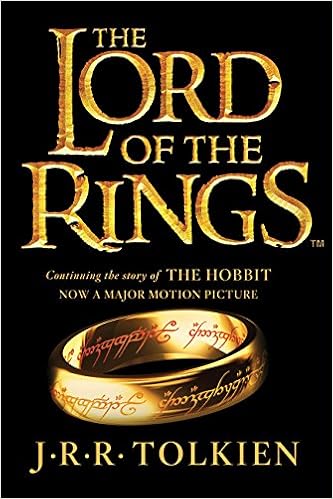
J.R.R. Tolkien The Lord of the Rings: Last Book Published 20 Years Ago Today

Last updated 7/5/2020.

The Lord of the Rings

J.R.R. Tolkien

First Publication: 7/29/1954 (Fellowship of the Ring)

First Publication: 11/11/1954 (The Two Towers)

First Publication: 10/20/1955 (The Return of the King)


Category: fantasy fiction


Sales: 150 million (trilogy)

Accolades (click on badges to see full lists):

About the Book:

The Lord of the Rings was written in stages between 1937 and 1949 as a sequel to The Hobbit (1937). For economic reasons, it was published over the course of a year in three volumes: The Fellowship of the Ring, The Two Towers and The Return of the King. WK The trilogy “has since been reprinted numerous times and translated into 38 languages.” WK

“Lord of the Rings” is a reference “to the story's main antagonist, the Dark Lord Sauron, who had in an earlier age created the One Ring to rule the other Rings of Power as the ultimate weapon in his campaign to conquer and rule all of Middle-earth.” WK “After it was taken from him, he gathered the rest of the rings, but continued to search for the One Ring to complete his dominion.” AZ

“After many ages it fell by chance into the hands of the hobbit Bilbo Baggins,” AZ who, on his eleventy-first birthday, bequeathed it to his nephew Frodo. A party is assembled to “journey across Middle-earth, deep into the shadow of the Dark Lord, and destroy the Ring by casting it into the Cracks of Doom.” AZ Accompanying Frodo are Gandalf the Wizard; the hobbits Merry, Pippin, and Sam; Gimli the Dwarf; Legolas the Elf; Boromir of Gondor; and a tall, mysterious stranger called Strider.” AZ

Tolkien, who “was a professor of Anglo-Saxon at Oxford,” AZ crafted his works out of his interest in classic language as well as “philology, mythology, religion and the author’s distaste for the effects of industrialization, as well as earlier fantasy works and Tolkien's experiences in World War I.” WK “Frodo and friends journey to Mordor to destroy the ring, making the young Hobbit one of the greatest fictional heroes of all time. More than 100 million copies have been sold of the trilogy that brought fantasy to a mainstream literary audience.” TG


Resources and Related Links: