Showing posts with label best novels all time. Show all posts

Wednesday, October 24, 2018

The Great American Read

Updated 10/24/2018.

image from wttw.com

From PBS.org: “The Great American Read was an eight-part series with viewer participation to select America’s favorite novel, told through the prism of America’s 100 best-loved novels. It investigated writers’ fictional worlds, how we as readers are affected by these stories, and what the 100 different books have to say about our diverse nation and our shared human experience.”

The results of the vote are posted here. You can read more about individual books by clicking on titles below or going to the original page at PBS.org.


  1. Harper Lee To Kill a Mockingbird (1960)
  2. Diana Gabaldon Outlander (series, 1991-2014)
  3. J.K. Rowling Harry Potter (series, 1997-2007)
  4. Jane Austen Pride and Prejudice (1813)
  5. J.R.R. Tolkien The Lord of the Rings (trilogy) (1955)
  6. Margaret Mitchell Gone with the Wind (1936)
  7. E.B. White Charlotte’s Web (1952)
  8. Louisa May Alcott Little Women (1869)
  9. C.S. Lewis The Chronicles of Narnia (series, 1950-1956)
  10. Charlotte Brontë Jane Eyre (1847)

  11. L.M. Montgomery Anne of Green Gables (1908)
  12. John Steinbeck The Grapes of Wrath (1939)
  13. Betty Smith A Tree Grows in Brooklyn (1943)
  14. Markus Zusak The Book Thief (2005)
  15. F. Scott Fitzgerald The Great Gatsby (1925)
  16. Kathryn Stockett The Help (2009)
  17. Mark Twain The Adventures of Tom Sawyer (1876)
  18. George Orwell 1984 (1949)
  19. Agatha Christie And Then There Were None (1939)
  20. Ayn Rand Atlas Shrugged (1957)

  21. Emily Brontë Wuthering Heights (1847)
  22. Larry McMurty Lonesome Dove (1985)
  23. Ken Follett The Pillars of the Earth (1989)
  24. Stephen King The Stand (1978)
  25. Daphne Du Maurier Rebecca (1938)
  26. John Irving A Prayer for Owen Meany (1989)
  27. Alice Walker The Color Purple (1982)
  28. Lewis Carroll Alice’s Adventures in Wonderland (1865)
  29. Charles Dickens Great Expectations (1861)
  30. J.D. Salinger The Catcher in the Rye (1951)

  31. Wilson Rawls Where the Red Fern Grows (1974)
  32. S.E. Hinton The Outsiders (1968)
  33. Dan Brown The Da Vinci Code (2004)
  34. Margaret Atwood The Handmaid’s Tale (1986)
  35. Frank Herbert Dune (1965)
  36. Antoine de Saint-Exupéry The Little Prince (1943)
  37. Jack London The Call of the Wild (1903)
  38. Jean M. Auel The Clan of the Cave Bear (1980)
  39. Douglas Adams The Hitchhiker’s Guide to the Galaxy (1979)
  40. Suzanne Collins The Hunger Games (trilogy, 2008-2010)

  41. Alexandre Dumas The Count of Monte Cristo (1844)
  42. Amy Tan The Joy Luck Club (1989)
  43. Mary Shelley Frankenstein (1818)
  44. Lois Lowry The Giver (1994)
  45. Arthur Golden Memoirs of a Geisha (1997)
  46. Herman Melville Moby-Dick (1851)
  47. Joseph Heller Catch-22 (1961)
  48. George R.R. Martin The Game of Thrones (series, 1996-2011)
  49. Isaac Asimov The Foundation Trilogy (series, 1951-1953)
  50. Leo Tolstoy War and Peace (1869)

  51. Zora Neale Hurston Their Eyes Were Watching God (1937)
  52. Michael Crichton Jurassic Park (1990)
  53. Mario Puzo The Godfather (1969)
  54. Gabriel García Márquez One Hundred Years of Solitude (1967)
  55. Oscar Wilde The Picture of Dorian Gray (1891)
  56. Nicholas Sparks The Notebook (1996)
  57. William P. Young The Shack (2007)
  58. John Kennedy Toole A Confederacy of Dunces (1980)
  59. Tom Clancy The Hunt for Red October (1984)
  60. Toni Morrison Beloved (1987)

  61. Andy Weir The Martian (2011)
  62. Robert Jordan Wheel of Time (series, 1990-2013)>
  63. Herman Hesse Siddhartha (1922)
  64. Fyodor Dostoyevsky Crime and Punishment (1866)
  65. Ernest Hemingway The Sun Also Rises (1926)
  66. Mark Haddon The Curious Incident of the Dog in the Night-Time (2003)
  67. John Knowles A Separate Peace (1959)
  68. Miguel de Cervantes Don Quixote (1615)
  69. Alice Sebold The Lovely Bones (2002)
  70. Paulo Coelho O Alquimista (The Alchemist) (1987)

  71. Gary Paulsen Hatchet (1987)
  72. Ralph Ellison Invisible Man (1952)
  73. Stephenie Meyer The Twilight Saga (series, 2005-2008)
  74. Armistead Maupin Tales of the City (series, 1978-2014)
  75. Jonathan Swift Gulliver’s Travels (1726)
  76. Ernest Cline Ready Player One (2011)
  77. Tim LaHaye and Jerry B. Jenkins Left Behind (1995-2007)
  78. Gillian Flynn Gone Girl (2012)
  79. Dean Koontz The Watchers (1987)
  80. John Bunyan The Pilgrim’s Progress (1678)

  81. James Patterson Alex Cross Mysteries (series, 1993-2018)
  82. Chinua Achebe Things Fall Apart (1958)
  83. Joseph Conrad Heart of Darkness (1899)
  84. Marilynne Robinson Gilead (2005)
  85. V.C. Andrews Flowers in the Attic (1979)
  86. E.L. James Fifty Shades (series, 2011-2012)
  87. Kurt Vonnegut The Sirens of Titan (1959)
  88. Frank E. Peretti This Present Darkness (1986)
  89. Chimamanda Ngozi Adichie Americanah (2013)
  90. James Baldwin Another Country (1962)

  91. Rudolfo Anaya Bless Me, Ultima (1972)
  92. John Green Looking for Alaska (2005)
  93. Junot Diaz The Brief Wondrous Life of Oscar Wao (2008)
  94. Robert R. McCammon Swan Song (1987)
  95. Dave Hunt The Mind Invaders (1989)
  96. Zadie Smith White Teeth (2000)
  97. Jason Reynolds Ghost (2016)
  98. Sister Soujah The Coldest Winter Ever (1999)
  99. Colson Whitehead The Intuitionist (1999)
  100. Romulo Gallegos Doña Bárbara (1929)

Wednesday, April 30, 2003

BBC’s “The Big Read”: Top 100

Posted April 2003; updated 2/16/2019.

image from readandsurvive.com

In April 2003 the BBC asked for nominations for the nation’s best-loved novels. The results of “The Big Read” were originally posted here, but are also listed here.

  1. J.R.R. Tolkien The Lord of the Rings (trilogy: 1954-1955)
  2. Jane Austen Pride and Prejudice (1813)
  3. Philip Pullman His Dark Materials (trilogy: 1995-2000)
  4. Douglas Adams The Hitchhiker’s Guide to the Galaxy (1979)
  5. J.K. Rowling Harry Potter and the Goblet of Fire (2000)
  6. Harper Lee To Kill a Mockingbird (1960)
  7. A.A. Milne Winnie-the-Pooh (1926)
  8. George Orwell 1984 (1949)
  9. C.S. Lewis The Lion, the Witch, and the Wardrobe (1970)
  10. Charlotte Brontë Jane Eyre (1847)

  11. Joseph Heller Catch-22 (1961)
  12. Emily Brontë Wuthering Heights (1847)
  13. Sebastian Faulk Birdsong (1993)
  14. Daphne Du Maurier Rebecca (1938)
  15. J.D. Salinger The Catcher in the Rye (1951)
  16. William Grahame The Wind in the Willows (1908)
  17. Charles Dickens Great Expectations (1861)
  18. Louisa May Alcott Little Women (1869)
  19. Louis DeBernieres Captain Corelli’s Mandolin (1994)
  20. Leo Tolstoy War and Peace (1869)

  21. Margaret Mitchell Gone with the Wind (1936)
  22. J.K. Rowling Harry Potter and the Philosopher’s Stone (aka Harry Potter and the Sorcerer’s Stone) (1999)
  23. J.K. Rowling Harry Potter and the Chamber of Secrets (1998)
  24. J.K. Rowling Harry Potter and the Prisoner of Azkaban (1999)
  25. J.R.R. Tolkien The Hobbit (1937)
  26. Thomas Hardy Tess of the d’Urbervilles (1891)
  27. George Eliot Middlemarch, a Study of Provincial Life (1872)
  28. John Irving A Prayer for Owen Meany (1989)
  29. John Steinbeck The Grapes of Wrath (1939)
  30. Lewis Carroll Alice’s Adventures in Wonderland (1865)

  31. Jacqueline Wilson The Story of Tracy Beaker (1991)
  32. Gabriel García Márquez One Hundred Years of Solitude (1967)
  33. Ken Follet The Pillars of the Earth (1989)
  34. Charles Dickens David Copperfield (1850)
  35. Roald Dahl Charlie and the Chocolate Factory (1964)
  36. Robert Louis Stevenson Treasure Island (1883)
  37. Nevil Shute A Town Like Alice (1950)
  38. Jane Austen Persuasion (1818)
  39. Frank Herbert Dune (1965)
  40. Jane Austen Emma (1816)

  41. L.M. Montgomery Anne of Green Gables (1908)
  42. Richard Adams Watership Down (1972)
  43. F. Scott Fitzgerald The Great Gatsby (1925)
  44. Alexandre Dumas The Count of Monte Cristo (1844)
  45. Evelyn Waugh Brideshead Revisited (1945)
  46. George Orwell Animal Farm (1954)
  47. Charles Dickens A Christmas Carol (1843)
  48. Thomas Hardy Far from the Madding Crowd (1874)
  49. Michelle Magorian Goodnight Mister Tom (1981)
  50. Rosamunde Pitcher The Shell Seekers (1987)

  51. Frances Hodgson Burnett The Secret Garden (1987)
  52. John Steinbeck Of Mice and Men (1937)
  53. Stephen King The Stand (1978)
  54. Leo Tolstoy Anna Karenina (1877)
  55. Vikram Seth A Suitable Boy (1993)
  56. Roald Dahl The BFG (1982)
  57. Arthur Ransome Swallows and Amazons (1930)
  58. Anna Sewell Black Beauty (1877)
  59. Eoin Colfer Artemis Fowl (series: 2001-2012)
  60. Fyodor Dostoyevsky Crime and Punishment (1866)

  61. Malorie Blackman Naughts and Crosses (2001)
  62. Arthur Golden Memoirs of a Geisha (1997)
  63. Charles Dickens A Tale of Two Cities (1859)
  64. Colleen McCullough The Thorn Birds (1977)
  65. Terry Pratchett Mort (1987)
  66. Enid Blyton The Magic Faraway Tree (1943)
  67. John Fowles The Magus (1965)
  68. Terry Pratchett & Neil Gaiman Good Omens (1990)
  69. Terry Pratchett Guards! Guards! (1989)
  70. William Golding Lord of the Flies (1954)

  71. Patrick Süskind Perfume (1985)
  72. Robert Tressell The Ragged-Trousered Philanthropists (1914)
  73. Terry Pratchett Night Watch (2002)
  74. Roald Dahl Matilda (1988)
  75. Helen Fielding Bridget Jones’s Diary (1996)
  76. Donna Tartt The Secret History (1992)
  77. Wilkie Collins The Woman in White (1860)
  78. James Joyce Ulysses (1922)
  79. Charles Dickens Bleak House (1853)
  80. Jacqueline Wilson Double Act (1995)

  81. Roald Dahl The Twits (1980)
  82. Dodie Smith I Capture the Castle (1948)
  83. Louis Sachar Holes (1999)
  84. Mervyn Peake Gormenghast (series: 1946-1956)
  85. Arundhati Roy The God of Small Things (1997)
  86. Jacqueline Wilson Vicky Angel (200)
  87. Aldous Huxley Brave New World (1932)
  88. Stella Gibbons Cold Comfort Farm (1932)
  89. Raymond E. Feist Magician (1982)
  90. Jack Kerouac On the Road (1957)

  91. Mario Puzo The Godfather (1969)
  92. Jean M. Auel The Clan of the Cave Bear (1980)
  93. Terry Pratchett The Colour of Magic (1983)
  94. Paulo Coelho O Alquimista (The Alchemist) (1987)
  95. Anya Seton Katherine (1954)
  96. Jeffrey Archer Kane and Abel (1979)
  97. Gabriel García Márquez Love in the Time of Cholera (1985)
  98. Jacqueline Wilson Girls in Love (1997)
  99. Meg Cabot The Princess Diaries (2000)
  100. Salman Rushdie Midnight’s Children (1981)

Thursday, March 1, 1990

Richard Wright's Native Son published 50 years ago today

First posted 6/9/2020; updated 7/6/2020.

Native Son

Richard Wright

First Publication: March 1, 1940


Category: social novel


Sales: ?

Accolades:

About the Book:

“Among the first widely successful novels by an African American, Native Son boldly described a racist society that was unfamiliar to most Americans.” LC “Wright’s powerful novel is an unsparing reflection on the poverty and feelings of hopelessness experienced by people in inner cities across the country and of what it means to be black in America.” AZ As literary critic Irving Howe said in his 1963 essay ‘Black Boys and Native Sons,’ ‘The day Native Son appeared, American culture was changed forever…It made impossible a repetition of the old lies.’” LC

Bigger Thomas is a 20-year-old “African American youth living in utter poverty in a poor area on Chicago’s South Side in the 1930s.” WK “Native Son tells the story of this young black man caught in a downward spiral after he kills a young white woman in a brief moment of panic.” AZ “While not apologizing for Bigger’s crimes, Wright portrays a systemic inevitability behind them. Bigger’s lawyer, Boris Max, makes the case that there is no escape from this destiny for his client or any other black American since they are the necessary product of the society that formed them and told them since birth who exactly they were supposed to be.” WK

“‘No American Negro exists,’ James Baldwin once wrote, ‘who does not have his private Bigger Thomas living in his skull.’ Frantz Fanon discusses the feeling in his 1952 essay, L'expérience vécue du noir (The Fact of Blackness). ‘In the end,’ writes Fanon, ‘Bigger Thomas acts. To put an end to his tension, he acts, he responds to the world’s anticipation.’ The book was a successful and groundbreaking best seller. However, it was also criticized by Baldwin and others as ultimately advancing Bigger as a stereotype, not a real character.” WK


Resources and Related Links:

In July 2018, I became the organizer of the Classic Novels Book Club. Check out the Book Club tab here or Meetup for more information. This is our book for August 2020.

Friday, April 14, 1989

John Steinbeck's The Grapes of Wrath: Published 50 Years Ago Today

Updated 12/7/2020.

The Grapes of Wrath

John Steinbeck

First Publication: April 14, 1939


Category: realist novel


Sales: 15 million

Accolades:

About the Book:

“At once a naturalistic epic, captivity narrative, road novel, and transcendental gospel, Steinbeck’s powerful landmark novel,” AZ it is “perhaps the most American of American Classics.” AZ The book chronicles “what happens when growing things…turn brown and create an ecological disaster;” SS-17 that is, the period during the Great Depression in the 1930s when hundreds of thousands of migrant workers flooded into California looking for work and a new life after drought had decimated their farms and livelihoods.

The novel “probes into the very nature of equality and justice in America.” AZ “Out of their trials and their repeated collisions against the hard realities of an America divided into Haves and Have-Nots evolves a drama that is intensely human yet majestic in its scale and moral vision, elemental yet plainspoken, tragic but ultimately stirring in its human dignity.” AZ

The story focuses on the Joad family, who are driven out of Oklahoma “by drought, economic hardship, agricultural industry changes, and bank foreclosures forcing tenant farmers out of work.” WK They set out for California on “a slow journey toward the dream that America holds out for its people” SS-38 through “jobs, land, dignity, and a future.” WK “Hope for a better life is why the Joads, the salt of the earth, continue to signify an American spirit we don’t want to relinquish. We fervently want to believe that Americans make it over the blue summit.” SS-97

Bruce Springsteen’s 1995 song, “The Ghost of Tom Joad” is about “no home, no job, no peace, no rest” – “a pretty good summary of The Grapes of Wrath.” SS-39 Springsteen said the book “resonated through my whole life.” SS-43

The Title:

“Grapes of wrath” is a phrase from the song “The Battle Hymn of the Republic.” It was Steinbeck’s wife, Carol, who suggested the title. John likened the song’s marching rhythm to the tone he wanted to strike with the book. He also insisted on printing the song lyrics in the book, a move intented to help dissuade accusations that the book promoted radicalism and Communism. SS-98

The Characters:

The novel focuses on Tom Joad when he gets out of prison and goes home, only to find he almost missed his family as they are headed to California. He meets Jim Casy, a former preacher, who is painted as “a Jesus figure…because of his initials, because he goes into the wilderness to consider his faith…and because he leads the twelve Joads out of Oklahoma.” SS-57

His mother, Ma, is a pillar of strength who “voices the book’s major chords – connection, faith, and pride.” SS-69 However, Tom’s sister, Rose of Sharon, can be viewed as a whiner. As author Susan Shillinglaw asserts, however, “she’s pregnant, unhomed, stressed, hungry, and abandoned. That seems reason enough for self-indulgence.” SS-68

The other males in Tom’s family are a mix of beaten-down family men. His brother Noah and brother-in-law Connie both abandon the family. His uncle John is plagued by guilt about the loss of his wife and child. Tom’s father is diligent about keeping the family together, but isn’t exactly a patriarchal figure.

Impact:

“Few novels can claim that their message led to actual legislation, but The Grapes of Wrath did just that.” LC It “ignited a movement in Congress to pass laws benefiting farm workers. When Steinbeck won the Nobel Prize in 1962, the committee specifically cited this novel as one of the main reasons for the award.” LC When he accepted the award, Steinbeck said, “The thing that arouses me to fury more than anything else is the imposition of force by a stronger on a weaker for reasons of self-interest or greed.” SS-92

Background:

Steinbeck “wrote this book for mass culture.” SS-46 “In 1939, many read about poor characters for the first time, others found their lives in a book.” SS-46 “The Joads are…every family family in exile, every family huddling on transitional borders, every family torn from a home.” SS-48

He researched the book for three years and then gave himself 100 days to complete the book, pushing himself to write 2000 words a day. SS-33 A college friend of Steinbeck’s said he “was a journalist at heart, a writer itching to be on the scene, see for himself, listen to dialogue, discover detail.” SS-117 For example, Steinbeck visited one of the government camps in California in 1936. He reported on the conditions of the camp and the efforts of its compassionate director, Tom Collins, to organize the migrants into self-governing units. SS-123 He visited other camps where he “sat in the ditches with the migrant workers, lived and ate with them.” SS-124

He was intent on creating an accurate depiction of live in Hoovervilles, or the shantytowns “atched together of corrugated iron and cardboard and tin, named after President Herbert Hoover, who many Americans though bore responsibility for the Depression.” SS-112

There are details within the book, however, which sound like personal experiences more than research. For example, “there’s authority in the description” SS-3 of Tom Joad skinning a rabbit or removing the oil pan from a car. SS-3 Steinbeck “felt a deep psychological bond with the migrants…because of his own experience as an outsider” SS-49 growing up as an outsider in a town of “haves” where his family were “have nots.”

The Five Layers:

“The Grapes of Wrath amplifies that insistent holistic truth: individuals belong to families, blood families are bound to other family units, and all humans are connected in spirit.” SS-xiii Steinbeck wrote the book with five layers in mind. He was friends with marine biologist Ed Ricketts whose approach to understanding ecology applied to Steinbeck’s approach to writing Grapes:

  1. Observe the details of the environment. SS-10 This one shows itself in how Steinbeck gives vivid descriptions of the settings and the scenes. As he tackled the final draft of the novel, he heeded his wife Carol’s advice to “Stay with the detail.” SS-15 Steinbeck’s “prose if richly visual…he wrote in pictures.” SS-79 This also accounts for the slow pace of the book, something symbolized early on in the novel with a story about a turtle. SS-34

  2. Consider the interactions amongst people and how they band themselves together. SS-10 Ricketts said, “wherein the whole consists of…the community in its environment, the notion of relation being significant.” SS-28 Steinbeck noted that “the group unit is so strong…that it can change the nature of its biological units…Sometimes a terrible natural stimulus will create a group until over night. They are of all sizes, from the camp meeting where the units pool their souls to make one yearning cry, to the whole world who fought the war.” SS-82 Grapes shows “twenty families becoming one family and the loss of home becoming one loss.” SS-83

  3. Consider history. SS-10 While Steinbeck focuses on the plight of the Joads, he also offers commentary on how Oklahoma sharecroppers ignored the land’s natural contours and kept planting cotton and how California growers refused to pay decent wages. He also shows the parallels of how those displaced Okies acquired their land in the first place by displacing native Americans. SS-108

  4. What is basically equivalent in different regions? SS-11 This is where Steinbeck made the Joads’ story universal through “the novel’s insistent metaphorical reach.” SS-128 “The niches that the Joads occupy – Oklahoma sharecroppers, Okie migrants, California field-workers – are linked to niches across space and time, universal and mythic historis of land use, dispossession, and poverty.” SS-129 There are also themes of oppression and prejudice which “lift the Joads story from the 1930s to the present.” SS-133

  5. Emergence – “the belief that humans could ‘break through’ to a larger, broader, spiritual, all-encompassing awareness.” SS-11 “Emergence is a large part of why the book endures.” SS-146 It is the step forward, or call to action, that people can take. This is showcased through Tom Joad’s speech “Whenever men are fightin’ for their rights…that’s where I’m a-gonna be.” SS-41 Steinbeck borrowed the speech from the ballad “Joe Hill,” about a labor organizer, and Woody Guthrie, in turn, created his seventeen-verse ballad “Tom Joad” with those as the closing words. SS-41

The Dialogue:

One of the potentially distracting aspects of the novel is the “salty dialogue” which some find “hokey.” SS-19 Author Susan Shillinglaw asserts that Steinbeck’s effort to capture the sound of the Okies’ voices is “pitch-perfect, concrete and exact, capturing the migrants’ metaphoric speech patterns. Steinbeck’s characters speak with the grittiness he heard from California workers and Oklahoma migrants.” SS-19

Conclusion:

“The Grapes of Wrath is frequently read in American high school and college literature classes due to its historical context and enduring legacy. A celebrated Hollywood film version, starring Henry Fonda and directed by John Ford, was released in 1940.” WK


Resources and Related Links:

In July 2018, I became the organizer of the Classic Novels Book Club. Check out the Book Club tab here or Meetup for more information. This is our December 2020 book.

Friday, March 31, 1989

A Prayer for Owen Meany by John Irving Published This Month

Last updated 7/6/2020.

A Prayer for Owen Meany

John Irving

First Publication: March 1989


Category: novel with religious themes


Sales: ?

Accolades (click on badges to see full lists):

About the Book:

From A Prayer for Owen Meany: “I am doomed to remember a boy with a wrecked voice – not because of his voice, or because he was the smallest person I ever knew, or even because he was the instrument of my mother’s death, but because he is the reason I believe in God; I am a Christian because of Owen Meany.” AZ

The seventh novel from John Irving “tells the story of John Wheelwright and his best friend Owen Meany growing up together in a small New Hampshire town during the 1950s and 1960s.” WK “In the summer of 1953, [the] two eleven-year-old boys…are playing in a Little League baseball game.” AZ Owen hits a foul ball which kills John’s mother. Owen “doesn’t believe in accidents; …[he] believes he is God’s instrument. What happens…after that 1953 foul ball is extraordinary.” AZ

“The novel is also a homage to Günter Grass’ most famous novel, The Tin Drum. Grass was a great influence for John Irving, as well as a close friend. The main characters of both novels, Owen Meany and Oskar Matzerath, share the same initials as well as some other characteristics, and their stories show some parallels. Irving has confirmed the similarities. A Prayer for Owen Meany, however, follows an independent and separate plot.” WK

“The novel deals with serious spiritual issues, such as the importance of faith, matters of social justice, and the concept of fate.” WK “John and Owen both offer criticisms of organized religion and religious hypocrisy,” WK but Owen “is quite certain that he will die because he is an ‘instrument of God’ and thus will serve some good and important purpose.” WK


Resources and Related Links:

In July 2018, I became the organizer of the Classic Novels Book Club. Check out the Book Club tab here or Meetup for more information. This is our January 2019 book.

Monday, October 20, 1975

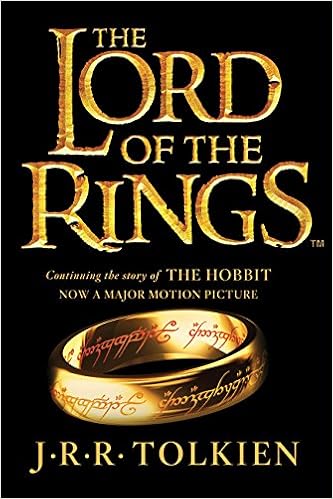
J.R.R. Tolkien The Lord of the Rings: Last Book Published 20 Years Ago Today

Last updated 7/5/2020.

The Lord of the Rings

J.R.R. Tolkien

First Publication: 7/29/1954 (Fellowship of the Ring)

First Publication: 11/11/1954 (The Two Towers)

First Publication: 10/20/1955 (The Return of the King)


Category: fantasy fiction


Sales: 150 million (trilogy)

Accolades (click on badges to see full lists):

About the Book:

The Lord of the Rings was written in stages between 1937 and 1949 as a sequel to The Hobbit (1937). For economic reasons, it was published over the course of a year in three volumes: The Fellowship of the Ring, The Two Towers and The Return of the King. WK The trilogy “has since been reprinted numerous times and translated into 38 languages.” WK

“Lord of the Rings” is a reference “to the story's main antagonist, the Dark Lord Sauron, who had in an earlier age created the One Ring to rule the other Rings of Power as the ultimate weapon in his campaign to conquer and rule all of Middle-earth.” WK “After it was taken from him, he gathered the rest of the rings, but continued to search for the One Ring to complete his dominion.” AZ

“After many ages it fell by chance into the hands of the hobbit Bilbo Baggins,” AZ who, on his eleventy-first birthday, bequeathed it to his nephew Frodo. A party is assembled to “journey across Middle-earth, deep into the shadow of the Dark Lord, and destroy the Ring by casting it into the Cracks of Doom.” AZ Accompanying Frodo are Gandalf the Wizard; the hobbits Merry, Pippin, and Sam; Gimli the Dwarf; Legolas the Elf; Boromir of Gondor; and a tall, mysterious stranger called Strider.” AZ

Tolkien, who “was a professor of Anglo-Saxon at Oxford,” AZ crafted his works out of his interest in classic language as well as “philology, mythology, religion and the author’s distaste for the effects of industrialization, as well as earlier fantasy works and Tolkien's experiences in World War I.” WK “Frodo and friends journey to Mordor to destroy the ring, making the young Hobbit one of the greatest fictional heroes of all time. More than 100 million copies have been sold of the trilogy that brought fantasy to a mainstream literary audience.” TG


Resources and Related Links: