Showing posts with label BBC. Show all posts

Saturday, June 20, 2020

Leo Tolstoy War and Peace

First posted 6/10/2020; updated 7/5/2020.

War and Peace

Leo Tolstoy

First Publication: 1869


Category: historical novel


Sales: 36 million

Accolades:

About the Book:

“The most famous – and perhaps greatest – novel of all time,” BN War and Peace is “both an intimate study of individual passions and an epic history of Russia and its people.” BN The novel is “noted for its mastery of realistic detail and variety of psychological analysis” LN as it details “the metamorphosis of five families, some peasant, some aristocratic” AZ struggling for survival during Napoleon’s invasion of Russia.” BN

“The theme of war, however, is subordinate to the story of family existence, which involves Tolstoy’s optimistic belief in the life-asserting pattern of human existence.” LN “Each individual is immersed in experiences and conversations elucidating Tolstoy’s themes of self-sacrifice and self-indulgence, anguish and ecstasy, diplomacy and deception, and religion and perdition. The complexities of character and plot are sometimes enigmatic, and names are often exhausting to recollect, but the genius of this book is everlasting.” AZ

The impressive dialog sparkles with humor and wit, and the vivid scenes of battle are riveting.” AZ “The novel also sets forth a theory of history, concluding that there is a minimum of free choice; all is ruled by an inexorable historical determinism.” LNWar and Peace is nothing more or less than a complete portrait of human existence.” BN

The book is well known for its length. “Even the author said it couldn't be described as a novel. But the characters of Andrei, Pierre and Natasha – and the tragic and unexpected way their lives intersect – grip you for all 1,400 pages.” TG


Resources and Related Links:

Friday, January 1, 2016

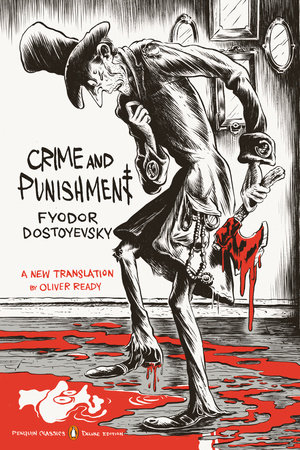
Fyodor Dostoyevsky's Crime and Punishment published 150 years ago this year

Last updated 7/6/2020.

Crime and Punishment

Fyodor M. Dostoyevsky

First Publication: 1866


Category: novel/crime story


Sales: ?

Accolades (click on badges to see full lists):

About the Book:

“Few authors have been as personally familiar with desperation as Fyodor Dostoevsky, and none have been so adept at describing it.” BN In the two years before he wrote Crime and Punishment, his wife and brother died and the magazine he started with his brother collapsed. To try to get out of debt, he gambled away an advance for an unwritten novel AZ and “had to pawn his clothes and beg friends for loans to pay his hotel bill and get back to Russia. One of his begging letters went to a magazine editor, asking for an advance on yet another unwritten novel – …Crime and Punishment.” AZ

The “tour de force of suspense” BN became “one of the most gripping crime stories of all time” BN and “catapulted Dostoyevsky to the forefront of Russian writers and into the ranks of the world’s greatest novelists. Drawing upon experiences from his own prison days, the author recounts…the story of Raskolnikov, an impoverished student tormented by…the struggle between good and evil.” AZ He “reasons that men like himself, by virtue of their intellectual superiority, can and must transcend societal law. To test his theory, he devises the perfect crime – the murder of a spiteful pawnbroker,” BN “an old woman…whom he regards as…good for nothing.” AZ

Raskolnikov soon realizes the folly of his abstractions. Haunted by vivid hallucinations and the torments of his conscience,” BN he “confesses to the crime and goes to prison. There he realizes that happiness and redemption can only be achieved through suffering. Infused with forceful religious, social, and philosophical elements,” AZCrime and Punishment delineates the theories and motivations that underlie a bankrupt morality.” BN


Resources and Related Links:

In July 2018, I became the organizer of the Classic Novels Book Club. Check out the Book Club tab here or Meetup for more information. This is our August 2018 book.

Wednesday, December 23, 2015

Jane Austen's Emma published 200 years ago today

First posted 6/12/2020; updated 7/5/2020.

Emma

Jane Austen

First Publication: December 23, 1815


Category: novel/comedy of manners


Sales: ?

Accolades:

About the Book:

“Virginia Woolf called Jane Austen ‘the most perfect artist among women,’ and Emma Woodhouse is arguably her most perfect creation.” BN “Before she began the novel, Austen wrote, ‘I am going to take a heroine whom no one but myself will much like.’” WK

“The main character, Emma Woodhouse, “is spoiled, headstrong, and self-satisfied.” WK She is “a young girl from a good home that does not need the financial support of a husband and is determined not to marry.” AZ She is a “thoroughly self-deluded young woman who has ‘lived in the world with very little to distress or vex her.’” BN

This doesn’t deter her from playing matchmaker for the locals in the “fictional village of Highbury and the surrounding estates of Hartfield, Randalls, and Donwell Abbey.” WK. However, she “is blind to the dangers of meddling in other people’s lives; and her imagination and perceptions often lead her astray.” WK

At the same time, she considers herself “herself impervious to romance of any kind” BN and “refuses to recognize her own feelings for the gallant Mr. Knightley.” BN “What ensues is a delightful series of scheming escapades in which every social machination and bit of ‘tittle-tattle’ is steeped in Austen's delicious irony.” BN

Emma, the last novel completed and published during Austen’s life, WK is her “most cleverly woven [and] riotously comedic” BN work. “As in her other novels, Austen explores the concerns and difficulties of genteel women living in Georgian–Regency England; she also creates a lively comedy of manners among her characters and depicts issues of marriage, gender, age, and social status.” WK


Resources and Related Links:

Monday, January 28, 2013

Jane Austen's Pride and Prejudice published 200 years ago today

First posted 6/12/2020; updated 7/6/2020.

Pride and Prejudice

Jane Austen

First Publication: January 28, 1813


Category: romantic novel


Sales: 20 million

Accolades:

About the Book:

“‘It is a truth universally acknowledged, that a single man in possession of a good fortune must be in want of a wife.’ So begins Pride and Prejudice, Jane Austen’s witty comedy of manners – one of the most popular novels of all time.” AZ

The basic plot? “Heroine meets hero and hates him. Is charmed by a cad. A family crisis – caused by the cad – is resolved by the hero. The heroine sees him for what he really is and realises (after visiting his enormous house) that she loves him. The plot has been endlessly borrowed, but few authors have written anything as witty or profound as Pride and Prejudice.” TG

In 1894, “renowned literary critic and historian George Saintsbury…declared it the ‘most perfect, the most characteristic, the most eminently quintessential of its author’s works.’” LN In the 20th century, Eudora Welty “described it as ‘irresistible and as nearly flawless as any fiction could be.’” LN

Its “blend of humor, romance, and social satire have delighted readers of all ages.” AZ “In telling the story of Mr. and Mrs. Bennett and their five daughters, Jane Austen creates a miniature of her world, where social grace and the nuances of behavior predominate in the making of a great love story.” BN The story “features splendidly civilized sparring between the proud Mr. Darcy and the prejudiced Elizabeth Bennet as they play out their spirited courtship in a series of eighteenth-century drawing-room intrigues.” AZ


Resources and Related Links:

Sunday, December 30, 2012

There and Back Again: Lessons Learned from Re-Reading The Hobbit

First posted 12/30/2012; updated 7/5/2020.

The Hobbit

J.R.R. Tolkien

First Publication: September 21, 1937


Category: fantasy novel


Sales: 140.6 million

Accolades:

About the Book:

The New York Times Book Review called The Hobbit “a glorious account of a magnificent adventure, filled with suspense and seasoned with a quiet humor that is irresistible.” AZ

“Bilbo Baggins is a hobbit who enjoys a comfortable, unambitious life…but his contentment is disturbed when the wizard Gandalf and a company of dwarves arrive on his doorstep…to whisk him away on an adventure.” WK They want to raid the treasure hoard of Smaug the dragon. Bilbo encounters the creature Gollum and finds a magic ring. “The story reaches its climax in the Battle of the Five Armies, where many of the characters and creatures from earlier chapters re-emerge to engage in conflict.” WK

The journey brings out Bilbo’s more adventurous nature as he “gains a new level of maturity, competence, and wisdom.” WK “Personal growth and…heroism are central themes of the story, along with motifs of warfare.” WK

“Tolkien’s own experiences during World War I…[were] instrumental in shaping the story. The author’s scholarly knowledge of Germanic philology and interest in mythology and fairy tales are often noted as influences.” WK

The Hobbit was “nominated for the Carnegie Medal and awarded a prize from the New York Herald Tribune for best juvenile fiction.” WK “The publisher was encouraged by the book’s critical and financial success and, therefore, requested a sequel.” WK Tolkien responded with a trilogy, The Lord of the Rings, also in this book. The four books were turned into a series of six movies.


December 30, 2012: Personal Reflection:

I took my 10-year-old son to see The Hobbit. I'm not sure which of us was more excited, although I will confess only one of us went in costume.
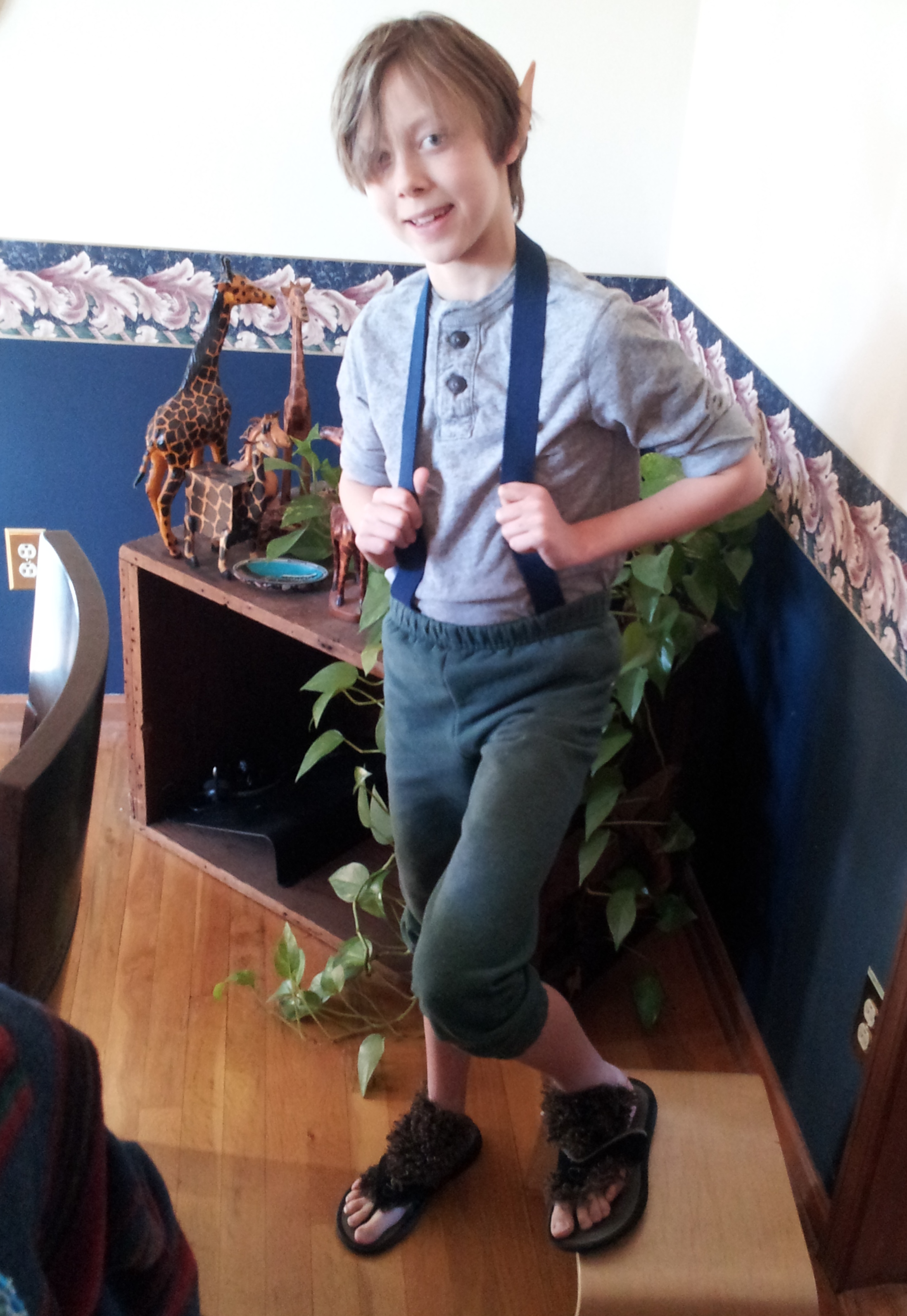
my son dressed as a hobbit

I read The Hobbit and the Lord of the Rings trilogy repeatedly through my adolescent years. While I didn't generally read fantasy and was never a particular fan of D&D, the world Tolkien created absolutely enraptured me. I was as ecstatic as the rest of the throngs when Peter Jackson waved his magic wand over his movie treatments of the Lord of the Rings trilogy and proved they could be made into masterful movies.

While my son had not seen any of those movies, he was interested. I decided we might as well start with The Hobbit and work our way through the series logically. We read the book together and I delighted at seeing the story come to life for him. However, I was also troubled. Now that I am regularly writing myself, I nitpicked at certain aspects of Tolkien's writing style - mostly his wordiness.

I have certainly been known to commit that horrid writing sin of serving up too much detail. I'm a believer in coloring a scene and giving some background that might not be integral to the story, but gives it flavor.

Tolkien believes in this philosophy ten-fold. He can spend pages giving background story on a setting or character which is completely unnecessary to the overall tale. While some of this can enrich, it can also infuriate. Readers can reach a point of screaming, well, "Get to the point!"

Jackson was praised by many Tolkien fans (including myself) for his talent at carefully editing some of this detail out the Lord of the Rings. For example, in the original Fellowship of the Rings book, a whole chapter is dedicated to a totally superfluous tale about a character named Tom Bombadil who never figures into the overall plot. Jackson justifiably excised the character from the story.

At the same time, though, Jackson now finds himself criticized for doing exactly the opposite with The Hobbit. He has stretched one book into three movies. While his aim is to obviously link the two trilogies by fleshing out elements of Lord of the Rings which are only hinted at or left untouched in The Hobbit. He has also sought to infuse his movie version of The Hobbit with a darker tone than the book, again to seemingly match it up better with his movie versions of Lord of the Rings.

Now, exactly what point I’m making here, I’m not sure. Oh, right. I’m making the point that even the most celebrated of writers can find themselves distracted, drifting off on a tangent that may not benefit the overall story. Sometimes these diversions can become the essence of why a story becomes beloved, but they can also be the reason a story is despised. With that, I feel I should stop before I babble any longer. Some of you may wish I’d shut up already.
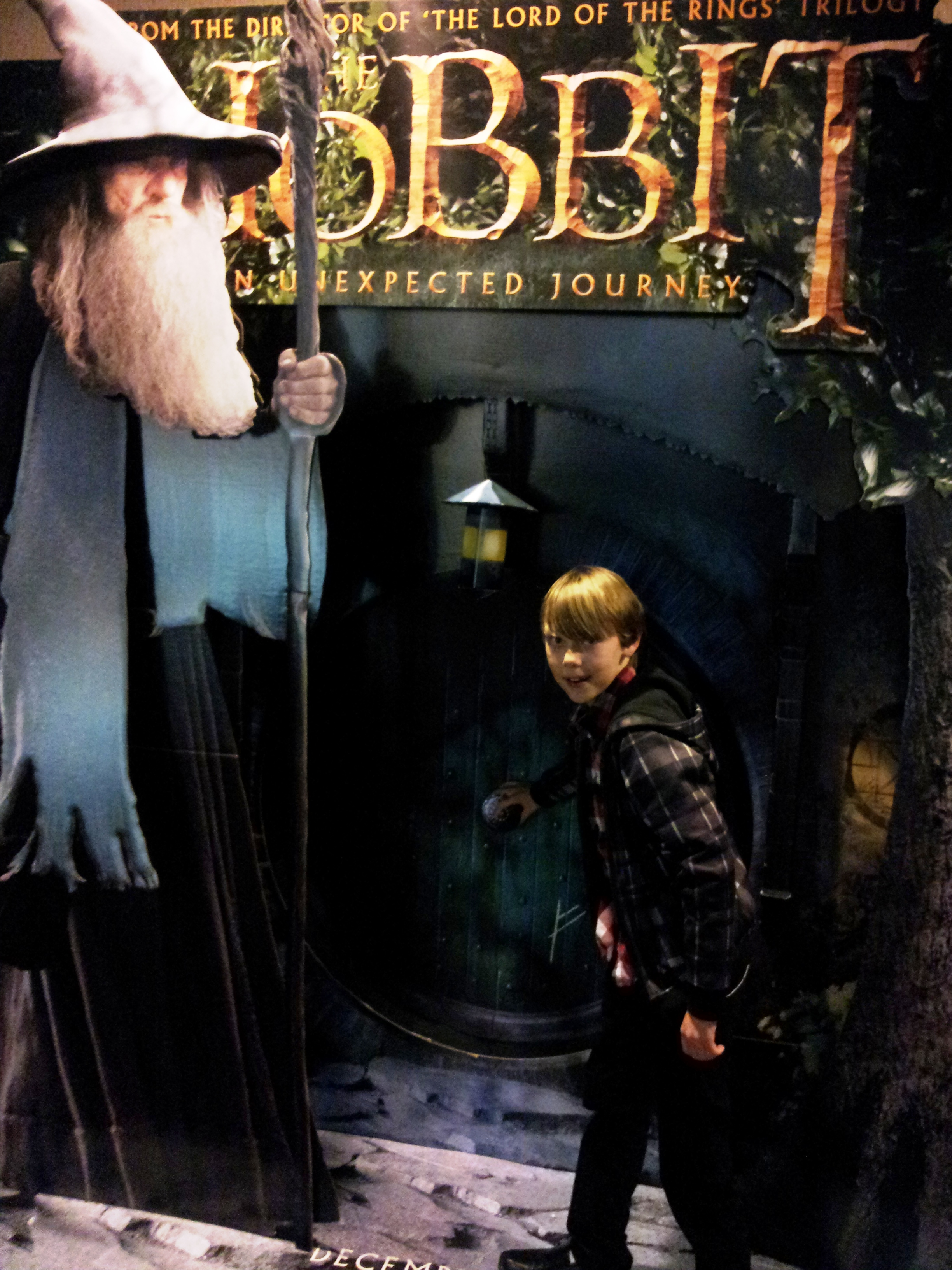
my son in front of the movie poster


Resources and Related Links: