Showing posts with label all time best books. Show all posts

Tuesday, November 11, 2025

All Time Best Books: Top 100

First posted 5/26/2018; updated 11/11/2025.

All-Time Books:

Top 100

Inspired by the 2018 PBS special The Great American Read, I assembled more than 170 best-of-books lists (see sources here) and aggregated them to create one master list of the all-time books. While these are mostly novels, there are some non-fiction books and even a few children’s picture books. Here are the results:

  1. Various writers The Holy Bible: King James Version (1610)
  2. Mao Tse-Tung Quotations from Chairman Mao Tse-tung (aka “Little Red Book”) (1964)
  3. Harper Lee To Kill a Mockingbird (1960)
  4. J.D. Salinger The Catcher in the Rye (1951)
  5. F. Scott Fitzgerald The Great Gatsby (1925)
  6. George Orwell 1984 (1949)
  7. Miguel de Cervantes Don Quixote (1615)
  8. J.R.R. Tolkien The Lord of the Rings (trilogy: 1954-55)
  9. Lewis Carroll Alice’s Adventures in Wonderland (1865)
  10. John Steinbeck The Grapes of Wrath (1939)

  11. Vladimir Nabokov Lolita (1955)
  12. Joseph Heller Catch-22 (1961)
  13. Gabriel García Márquez One Hundred Years of Solitude (1967)
  14. James Joyce Ulysses (1922)
  15. Jane Austen Pride and Prejudice (1813)
  16. Herman Melville Moby-Dick (1851)
  17. Mark Twain The Adventures of Huckleberry Finn (1885)
  18. Emily Brontë Wuthering Heights (1847)
  19. Leo Tolstoy War and Peace (1869)
  20. William Golding Lord of the Flies (1954)

  21. Charlotte Brontë Jane Eyre (1847)
  22. J.K. Rowling Harry Potter (series, 1997-2007)
  23. J.R.R. Tolkien The Hobbit (1937)
  24. Fyodor Dostoyevsky Crime and Punishment (1866)
  25. Toni Morrison Beloved (1987)
  26. Joseph Conrad Heart of Darkness (1899)
  27. Aldous Huxley Brave New World (1932)
  28. Anne Frank The Diary of a Young Girl (aka The Diary of Anne Frank) (1947)
  29. C.S. Lewis The Lion, the Witch, and the Wardrobe (1950)
  30. E.B. White Charlotte’s Web (1952)

  31. Homer The Odyssey (800 B.C.)
  32. Margaret Mitchell Gone with the Wind (1936)
  33. Charles Dickens Great Expectations (1861)
  34. Jack Kerouac On the Road (1957)
  35. Leo Tolstoy Anna Karenina (1877)
  36. William Faulkner The Sound and the Fury (1929)
  37. Charles Dickens A Tale of Two Cities (1859)
  38. Kurt Vonnegut Slaughterhouse-Five (1969)
  39. George Orwell Animal Farm (1945)
  40. Ernest Hemingway The Sun Also Rises (1926)

  41. Louisa May Alcott Little Women (1869)
  42. Muhammad Qu’ran (632 CE)
  43. Marcel Proust In Search of Lost Time, aka Remembrance of Things Past (A La Recherche du Temps Perdu) (series: 1913-1927)
  44. Margaret Atwood The Handmaid’s Tale (1986)
  45. Douglas Adams The Hitchhiker’s Guide to the Galaxy (1979)
  46. Ralph Ellison Invisible Man (1952)
  47. Fyodor M. Dostoyevsky The Brothers Karamazov (1880)
  48. Mary Shelley Frankenstein (1818)
  49. Antoine de Saint-Exupéry The Little Prince (Le Petit Prince) (1943)
  50. Gustave Flaubert Madame Bovary (1857)

  51. Homer The Iliad (800 B.C.)
  52. Alice Walker The Color Purple (1982)
  53. Stephen Hawking A Brief History of Time (1988)
  54. Ray Bradbury Fahrenheit 451 (1953)
  55. George Eliot Middlemarch: A Study of Provincial Life (1872)
  56. Daphne Du Maurier Rebecca (1938)
  57. Nathaniel Hawthorne The Scarlet Letter (1850)
  58. Virginia Woolf To the Lighthouse (1927)
  59. Truman Capote In Cold Blood (1966)
  60. Frank Herbert Dune (1965)

  61. Charles Dickens David Copperfield (1850)
  62. Dante Alighieri The Divine Comedy (Divina Commedia) (1320)
  63. Jonathan Swift Gulliver’s Travels (1726)
  64. Chinua Achebe Things Fall Apart (1958)
  65. Anthony Burgess A Clockwork Orange (1962)
  66. Richard Adams Watership Down (1972)
  67. Victor Hugo Les Misérables (1862)
  68. James Joyce A Portrait of the Artist as a Young Man (1916)
  69. Ernest Hemingway The Old Man and the Sea (1952)
  70. John Steinbeck Of Mice and Men (1937)

  71. Kenneth Grahame The Wind in the Willows (1908)
  72. Albert Camus L’Etranger (The Stranger, aka The Outsider) (1942)
  73. Ernest Hemingway For Whom the Bell Tolls (1940)
  74. Salman Rushdie Midnight’s Children (1981)
  75. Charles Darwin The Origin of Species (1859)
  76. Ayn Rand Atlas Shrugged (1957)
  77. Philip Pullman The Golden Compass (aka Northern Lights) (1995), first book of His Dark Materials series (1995-2000)
  78. Ken Kesey One Flew Over the Cuckoo’s Nest (1962)
  79. Maurice Sendak Where the Wild Things Are (1964)
  80. Niccolo Machiavelli The Prince (1532)

  81. Jack London The Call of the Wild (1903)
  82. Oscar Wilde The Picture of Dorian Gray (1890)
  83. L.M. Montgomery Anne of Green Gables (1908)
  84. Henry David Thoreau Walden, or Life in the Woods (1854)
  85. Plato The Republic (380 B.C.)
  86. Edith Wharton The Age of Innocence (1920)
  87. Alexandre Dumas The Count of Monte Cristo (1844)
  88. Suzanne Collins The Hunger Games (trilogy: 2008-2010)
  89. A.A. Milne Winnie-the-Pooh (1926)
  90. Rachel Carson Silent Spring (1962)

  91. Alex Haley and Malcolm X The Autobiography of Malcolm X (1965)
  92. Daniel Defoe Robinson Crusoe (1719)
  93. Georges Simenon Maigret (series, 1931-1972)
  94. Robert Louis Stevenson Treasure Island (1883)
  95. Markus Zusak The Book Thief (2005)
  96. Sir Arthur Conan Doyle The Adventures of Sherlock Holmes (1887)
  97. Virginia Woolf Mrs. Dalloway (1925)
  98. E.M. Forster A Passage to India (1924)
  99. Zora Neale Hurston Their Eyes Were Watching God (1937)
  100. William Shakespeare Hamlet (1603)

Resources and Related Links:

Thursday, June 11, 2020

Best-Selling Books of All-Time: Top 100

Last updated 6/11/2020.

Best-Selling Books:

All-Time Top 100

While it would seemingly be an easy task to find a list of the top-selling books of all-time, there are multiple sources and varying estimates. By assembling a variety of sources (noted at the bottom of the page), here’s what I’ve come up with as the list of the best-selling books of all-time.

Note: with the exception of The Lord of the Rings (which was intended as one book, but published in three parts), series are not included. However, individual titles can make the list. For example, the Harry Potter series collectively sold 500 million copies, but is listed by individual titles since all 7 books made the list on their own accord.

There are also numerous cases of books, especially references and religious texts, where they have been reprinted and reproduced in multiple editions. The first year of publication is the one cited.

When multiple titles are estimated to have sold the same amount, the books are listed in order of which have the most overall points in my database.

Enough talk. Here are the results:


  1. 6.7 billion: various writers The Holy Bible: King James Version (1451)
  2. 6.5 billion: Mao Zedong Quotations from Chairman Mao Tse-tung (1966)
  3. 800 million: Muhammad Quran (632 A.D.)
  4. 500 million: Miguel de Cervantes Don Quixote (1615)
  5. 400 million: Wei Jiangong (editor) Xinhua Zidian/Xinhua Dictionary (1957)
  6. 200 million: Charles Dickens A Tale of Two Cities (1859)
  7. 150 million: J.R.R. Tolkien The Lord of the Rings (trilogy: 1954-55)
  8. 150 million: Robert Baden-Powell Scouting for Boys (1908)
  9. 142 million: Antoine de Saint-Exupéry The Little Prince (Le Petit Prince) (1943)
  10. 140.6 million: J.R.R. Tolkien The Hobbit (1937)

  11. 125 million: John Bunyan The Pilgrim’s Progress (1678)
  12. 125 million: John Foxe Foxe’s Book of Martyrs (1563)
  13. 125 million: Thomas Cranmer The Book of Common Prayer (1549)
  14. 123 million: Joseph Smith The Book of Mormon (1830)
  15. 120 million: J.K. Rowling Harry Potter and the Philosopher’s Stone (aka Harry Potter and the Sorcerer’s Stone) (1997)
  16. 120 million: Jehovahs’ Witnesses The Truth That Leads to Eternal Life (1982)
  17. 115 million: Mark C. Young The Guinness Book of Records (1955)
  18. 105 million: Jehovah’s Witnesses You Can Live Forever in Paradise on Earth (1982)
  19. 100 million: Lewis Carroll Alice’s Adventures in Wonderland (1865)
  20. 100 million: Agatha Christie And Then There Were None (1939)

  21. 100 million: Ts’ao Hsueh-ch’in The Dream of the Red Chamber (1791)
  22. 100 million: Noah Webster The American Spelling Book/Webster’s Dictionary (1783)
  23. 100 million: H. Rider Haggard She: A History of Adventure (1887)
  24. 85 million: C.S. Lewis The Lion, the Witch, and the Wardrobe (1950)
  25. 80 million: Dan Brown The Da Vinci Code (2004)
  26. 80 million: Carlo Collodi The Adventures of Pinocchio (1881)
  27. 80 million: World Almanac editors World Almanac (1868)
  28. 80 million: Ved Prakash Sharma Vardi Wala Gunda (1992)
  29. 79 million: Kazuko Hosoki Rokusei Senjutsu (Six-Star Astrology Tells Your Fortune) (1986)
  30. 77 million: J.K. Rowling Harry Potter and the Chamber of Secrets (1998)
  31. 70 million: Napoleon Hill Think and Grow Rich (1937)

    65 million:

  32. J.D. Salinger The Catcher in the Rye (1951)
  33. Paulo Coelho O Alquimista (The Alchemist) (1987)
  34. J.K. Rowling Harry Potter and the Prisoner of Azkaban (1999)
  35. J.K. Rowling Harry Potter and the Goblet of Fire (2000)
  36. J.K. Rowling Harry Potter and the Deathly Hallows (2007)
  37. J.K. Rowling Harry Potter and the Order of the Phoenix (2003)
  38. J.K. Rowling Harry Potter and the Half-Blood Prince (2005)

    60 million:

  39. Sir Arthur Conan Doyle The Adventures of Sherlock Holmes (1887)
  40. Jules Verne Twenty Thousand Leagues Under the Sea (1870)
  41. Robert James Waller The Bridges of Madison County (1992)
  42. Ellen G. White Steps to Christ (1892)

    50-55 million:

  43. Merriam-Webster Merriam-Webster’s Collegiate Dictionary (1898)
  44. Vladimir Nabokov Lolita (1955)
  45. Gabriel García Márquez One Hundred Years of Solitude (1967)
  46. E.B. White Charlotte’s Web (1952)
  47. L.M. Montgomery Anne of Green Gables (1908)
  48. Richard Adams Watership Down (1972)
  49. Umberto Eco The Name of the Rose (Il Nome della Rosa) (1980)
  50. Dr. Benjamin Spock The Common Sense Book of Baby and Child Care (1946)

  51. Anna Sewell Black Beauty (1877)
  52. Johanna Spyri Heidi (Heidi's Years of Wandering and Learning) (Heidis Lehr - und Wnaderjahre) (1880)
  53. Lew Wallace Ben-Hur (1880)
  54. J.P. Donleavy The Ginger Man (1955)
  55. Shere Hite The Hite Report on Female Sexuality (1976)
  56. Louise Hay You Can Heal Your Life (1984)
  57. Jack Higgins The Eagle Has Landed (1975)
  58. Johnston McCulley The Curse of Capistrano (aka “The Mark of Zorro”) (1919)

    40-45 million:

  59. Homer The Odyssey (800 B.C.)
  60. Beatrix Potter The Tale of Peter Rabbit (1901)
  61. Richard Bach Jonathan Livingston Seagull (1970)
  62. Eric Carle The Very Hungry Caterpillar (1969)
  63. Harper Lee To Kill a Mockingbird (1960)
  64. E.L. James Fifty Shades of Grey (2011)
  65. Elbert Hubbard A Message to Garcia (1899)
  66. V.C. Andrews Flowers in the Attic (1979)
  67. Jostein Gaardner Sophie’s World (Sofies Verden) (1991)
  68. Hong Sung-Dae The Principle of Mathematics (1966)
  69. Peter Mark Roget Roget’s Thesaurus (1852)

    36-39 million:

  70. Dan Brown Angels and Demons (2000)
  71. Jeffrey Archer Kane and Abel (1979)
  72. Nikolai Ostrovsky How the Steel Was Tempered (Kak Zaalyalas' stal) (1932)
  73. Leo Tolstoy War and Peace (1869)

    32-35 million:

  74. Anne Frank The Diary of a Young Girl (aka The Diary of Anne Frank) (1947)
  75. Hal Lindsey and C.C. Carlson The Late Great Planet Earth (1970)
  76. Wayne Dyer Your Erroneous Zones (1976)
  77. Margaret Mitchell Gone with the Wind (1936)
  78. Colleen McCullough The Thorn Birds (1977)
  79. Khaled Hosseini The Kite Runner (2003)
  80. Jacqueline Susann The Valley of the Dolls (1966)

    30 million:

  81. George Orwell 1984 (1949)
  82. Oxford University Press The Oxford English Dictionary (1948)
  83. Stieg Larsson The Girl with the Dragon Tattoo (2005)
  84. Reverend Charles Monroe Sheldon In His Steps: What Would Jesus Do? (1896)
  85. Bill Wilson Alcoholics Anonymous Big Book (1939)
  86. Rick Warren The Purpose Driven Life (2002)
  87. William Bradford Huie The Revolt of Mamie Stover (1951)
  88. various authors The Michelin Guide: France (1900)
  89. Dan Brown The Lost Symbol (2009)

    25-26 million:

  90. Spencer Johnson Who Moved My Cheese? (1998)
  91. Alexander Alexandrovich Fadeyev The Young Guard (1945)
  92. F. Scott Fitzgerald The Great Gatsby (1925)
  93. Ayn Rand Atlas Shrugged (1957)
  94. William Grahame The Wind in the Willows (1908)
  95. Stephen R. Covey The 7 Habits of Highly Effective People (1989)

    22-24 million:

  96. Mikhail Sholokhov Virgin Soil Upturned (1935)
  97. Suzanne Collins The Hunger Games (2008)
  98. John Green The Fault in Our Stars (2012)
  99. James Refield The Celestine Prophecy (1993)
  100. William P. Young The Shack (2007)

Resources and Related Links:

Thursday, November 26, 2015

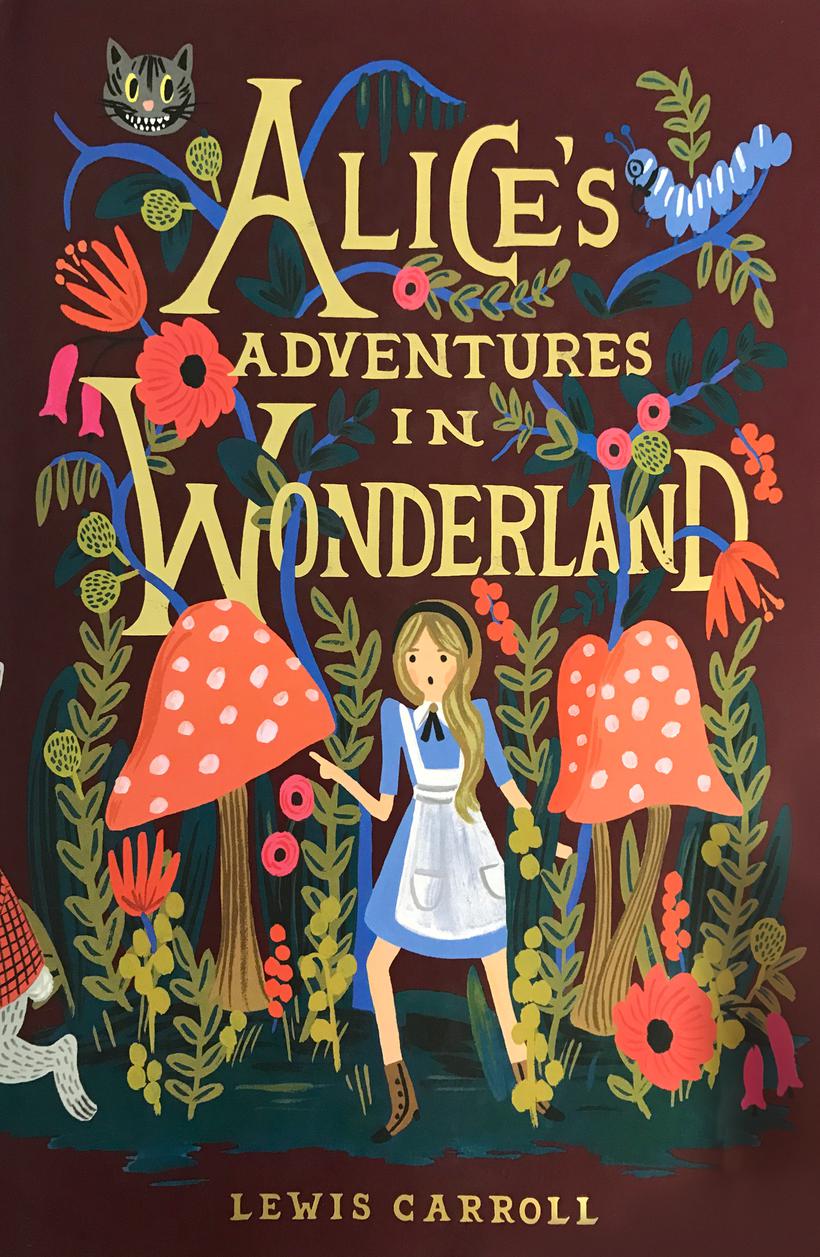
Lewis Carroll Alice’s Adventures in Wonderland: 150th anniversary!

Last updated 7/6/2020..

Alice’s Adventures in Wonderland

Lewis Carroll

First Publication: November 26, 1865


Category: fantasy/children’s novel


Sales: 100 million

Accolades (click on badges to see full lists):

About the Book:

“During a boat trip up the Isis River with Reverend Robinson Duckworth and the three young daughters of Henry Liddell, one of whom is named Alice, Lewis Carroll, the pen name of Charles Lutwidge Dodgson, invents a story about a bored little girl named Alice who goes looking for an adventure. Several years later this tale would be forever immortalized as Alice's Adventures in Wonderland.” AZ

Alice follows a White Rabbit “down the rabbit hole and ends up in the fantasy world of Wonderland,” AZ a place “filled with a plethora of interesting and fantastical creatures.” AZ The reader can watch Alice “take tea with the Mad Hatter and March Hare [and] follow a game of croquet between Alice and the Queen of Hearts.” BN

Alice also “encounters a blue Caterpillar smoking a hookah, the mischievously grinning Cheshire Cat, …a sleepy little Dormouse whom she attends a tea party with, …[and] many other curious characters.” AZ

“Beloved by millions of children and adults ever since its first publication, Alice's Adventures in Wonderland is a classic tale of fantasy that has been cherished by readers ever since its first publication and will surely delight for many years to come.” AZ


Resources and Related Links:

Sunday, December 30, 2012

There and Back Again: Lessons Learned from Re-Reading The Hobbit

First posted 12/30/2012; updated 7/5/2020.

The Hobbit

J.R.R. Tolkien

First Publication: September 21, 1937


Category: fantasy novel


Sales: 140.6 million

Accolades:

About the Book:

The New York Times Book Review called The Hobbit “a glorious account of a magnificent adventure, filled with suspense and seasoned with a quiet humor that is irresistible.” AZ

“Bilbo Baggins is a hobbit who enjoys a comfortable, unambitious life…but his contentment is disturbed when the wizard Gandalf and a company of dwarves arrive on his doorstep…to whisk him away on an adventure.” WK They want to raid the treasure hoard of Smaug the dragon. Bilbo encounters the creature Gollum and finds a magic ring. “The story reaches its climax in the Battle of the Five Armies, where many of the characters and creatures from earlier chapters re-emerge to engage in conflict.” WK

The journey brings out Bilbo’s more adventurous nature as he “gains a new level of maturity, competence, and wisdom.” WK “Personal growth and…heroism are central themes of the story, along with motifs of warfare.” WK

“Tolkien’s own experiences during World War I…[were] instrumental in shaping the story. The author’s scholarly knowledge of Germanic philology and interest in mythology and fairy tales are often noted as influences.” WK

The Hobbit was “nominated for the Carnegie Medal and awarded a prize from the New York Herald Tribune for best juvenile fiction.” WK “The publisher was encouraged by the book’s critical and financial success and, therefore, requested a sequel.” WK Tolkien responded with a trilogy, The Lord of the Rings, also in this book. The four books were turned into a series of six movies.


December 30, 2012: Personal Reflection:

I took my 10-year-old son to see The Hobbit. I'm not sure which of us was more excited, although I will confess only one of us went in costume.

my son dressed as a hobbit

I read The Hobbit and the Lord of the Rings trilogy repeatedly through my adolescent years. While I didn't generally read fantasy and was never a particular fan of D&D, the world Tolkien created absolutely enraptured me. I was as ecstatic as the rest of the throngs when Peter Jackson waved his magic wand over his movie treatments of the Lord of the Rings trilogy and proved they could be made into masterful movies.

While my son had not seen any of those movies, he was interested. I decided we might as well start with The Hobbit and work our way through the series logically. We read the book together and I delighted at seeing the story come to life for him. However, I was also troubled. Now that I am regularly writing myself, I nitpicked at certain aspects of Tolkien's writing style - mostly his wordiness.

I have certainly been known to commit that horrid writing sin of serving up too much detail. I'm a believer in coloring a scene and giving some background that might not be integral to the story, but gives it flavor.

Tolkien believes in this philosophy ten-fold. He can spend pages giving background story on a setting or character which is completely unnecessary to the overall tale. While some of this can enrich, it can also infuriate. Readers can reach a point of screaming, well, "Get to the point!"

Jackson was praised by many Tolkien fans (including myself) for his talent at carefully editing some of this detail out the Lord of the Rings. For example, in the original Fellowship of the Rings book, a whole chapter is dedicated to a totally superfluous tale about a character named Tom Bombadil who never figures into the overall plot. Jackson justifiably excised the character from the story.

At the same time, though, Jackson now finds himself criticized for doing exactly the opposite with The Hobbit. He has stretched one book into three movies. While his aim is to obviously link the two trilogies by fleshing out elements of Lord of the Rings which are only hinted at or left untouched in The Hobbit. He has also sought to infuse his movie version of The Hobbit with a darker tone than the book, again to seemingly match it up better with his movie versions of Lord of the Rings.

Now, exactly what point I’m making here, I’m not sure. Oh, right. I’m making the point that even the most celebrated of writers can find themselves distracted, drifting off on a tangent that may not benefit the overall story. Sometimes these diversions can become the essence of why a story becomes beloved, but they can also be the reason a story is despised. With that, I feel I should stop before I babble any longer. Some of you may wish I’d shut up already.

my son in front of the movie poster


Resources and Related Links:

Sunday, September 1, 2002

Ernest Hemingway's The Old Man and the Sea published 50 years ago today

First posted 6/16/2020; updated 7/5/2020.

The Old Man and the Sea

Ernest Hemingway

First Publication: September 1, 1952


Category: literary fiction


Sales: 13 million

Accolades:

About the Book:

The Old Man and the Sea is one of Hemingway’s most enduring works.” AZ He wrote it in Cuba in 1951. WK “This hugely successful novella confirmed his power and presence in the literary world.” AZ It was the last major work of fiction published during his lifetime. WK

“Told in language of great simplicity and power,” AZ “it tells the story of Santiago, an aging Cuban fisherman,” WK “down on his luck, and his supreme ordeal – a relentless, agonizing battle with a giant marlin” AZ “far out in the Gulf Stream off the coast of Cuba.” WK

“Hemingway recasts, in strikingly contemporary style, the classic theme of courage in the face of defeat, of personal triumph won from loss.” AZ It “served to reinvigorate Hemingway’s literary reputation and prompted a reexamination of his entire body of work…It restored many readers' confidence in Hemingway's capability as an author.” WK “Many critics favorably compared it with such works as William Faulkner’s short story The Bear and Herman Melville’s novel Moby-Dick.” WK

“It was cited by the Nobel Committee as contributing to their awarding of the Nobel Prize in Literature to Hemingway in 1954.” WK


Resources and Related Links:

Thursday, October 14, 1976

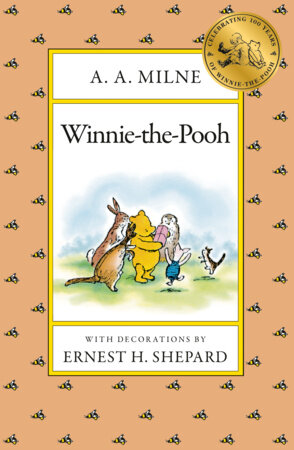
A.A. Milne Winnie-the-Pooh: Published 50 Years Ago Today

Last updated 11/2/2020.

Winnie-the-Pooh

A.A. Milne

First Publication: October 14, 1926


Category: children’s stories


Sales: 2.95 million

Accolades (click on badges to see full lists):

About the Book:

In this classic children’s book, “A.A. Milne created a life philosophy with the trials, triumphs and tiddley-poms of the honey-loving, always kind-hearted” TG teddy bear, Winnie-the-Pooh and his adventures with his friends who include the timid Piglet, the melancholy Eeyore, the wise Owl, the picky Rabbit, and the motherly Kanga looking after her son Roo. The book’s sequel, The House at Pooh Corner, introduced the bouncy Tigger.

“These characters and their stories are timeless treasures of childhood that continue to speak to all of us with the kind of freshness and heart that distinguishes true storytelling.” AZ

In 1926, Saturday Review said: “Winnie-the-Pooh is a joy; full of solemn idiocies and the sort of jokes one weeps over helplessly, not even knowing why they are so funny, and with it all the real wit and tenderness which alone could create a priceless little masterpiece.” AZ

A.A. Milne, “wrote this book for his son, Christopher Robin.” AZ As the illustrator, Ernest H. Shepard “lovingly gave Pooh and his companions shape.” AZ “Portions of the book were adapted from previously published stories. The first chapter, for instance, was adapted from ‘The Wrong Sort of Bees,’ a story published in the London Evening News in its issue for Christmas Eve 1925. The chapters in the book can be read independently of each other, as they are episodic in nature and plots do not carry over from one chapter to the next.” WK


Resources and Related Links:

In July 2018, I became the organizer of the Classic Novels Book Club. Check out the Book Club tab here or Meetup for more information. This is our November 2020 book.