Showing posts with label J.R.R. Tolkien. Show all posts

Tuesday, November 11, 2025

All Time Best Books: Top 100

First posted 5/26/2018; updated 11/11/2025.

All-Time Books:

Top 100

Inspired by the 2018 PBS special The Great American Read, I assembled more than 170 best-of-books lists (see sources here) and aggregated them to create one master list of the all-time books. While these are mostly novels, there are some non-fiction books and even a few children’s picture books. Here are the results:

  1. Various writers The Holy Bible: King James Version (1610)
  2. Mao Tse-Tung Quotations from Chairman Mao Tse-tung (aka “Little Red Book”) (1964)
  3. Harper Lee To Kill a Mockingbird (1960)
  4. J.D. Salinger The Catcher in the Rye (1951)
  5. F. Scott Fitzgerald The Great Gatsby (1925)
  6. George Orwell 1984 (1949)
  7. Miguel de Cervantes Don Quixote (1615)
  8. J.R.R. Tolkien The Lord of the Rings (trilogy: 1954-55)
  9. Lewis Carroll Alice’s Adventures in Wonderland (1865)
  10. John Steinbeck The Grapes of Wrath (1939)

  11. Vladimir Nabokov Lolita (1955)
  12. Joseph Heller Catch-22 (1961)
  13. Gabriel García Márquez One Hundred Years of Solitude (1967)
  14. James Joyce Ulysses (1922)
  15. Jane Austen Pride and Prejudice (1813)
  16. Herman Melville Moby-Dick (1851)
  17. Mark Twain The Adventures of Huckleberry Finn (1885)
  18. Emily Brontë Wuthering Heights (1847)
  19. Leo Tolstoy War and Peace (1869)
  20. William Golding Lord of the Flies (1954)

  21. Charlotte Brontë Jane Eyre (1847)
  22. J.K. Rowling Harry Potter (series, 1997-2007)
  23. J.R.R. Tolkien The Hobbit (1937)
  24. Fyodor Dostoyevsky Crime and Punishment (1866)
  25. Toni Morrison Beloved (1987)
  26. Joseph Conrad Heart of Darkness (1899)
  27. Aldous Huxley Brave New World (1932)
  28. Anne Frank The Diary of a Young Girl (aka The Diary of Anne Frank) (1947)
  29. C.S. Lewis The Lion, the Witch, and the Wardrobe (1950)
  30. E.B. White Charlotte’s Web (1952)

  31. Homer The Odyssey (800 B.C.)
  32. Margaret Mitchell Gone with the Wind (1936)
  33. Charles Dickens Great Expectations (1861)
  34. Jack Kerouac On the Road (1957)
  35. Leo Tolstoy Anna Karenina (1877)
  36. William Faulkner The Sound and the Fury (1929)
  37. Charles Dickens A Tale of Two Cities (1859)
  38. Kurt Vonnegut Slaughterhouse-Five (1969)
  39. George Orwell Animal Farm (1945)
  40. Ernest Hemingway The Sun Also Rises (1926)

  41. Louisa May Alcott Little Women (1869)
  42. Muhammad Qu’ran (632 CE)
  43. Marcel Proust In Search of Lost Time, aka Remembrance of Things Past (A La Recherche du Temps Perdu) (series: 1913-1927)
  44. Margaret Atwood The Handmaid’s Tale (1986)
  45. Douglas Adams The Hitchhiker’s Guide to the Galaxy (1979)
  46. Ralph Ellison Invisible Man (1952)
  47. Fyodor M. Dostoyevsky The Brothers Karamazov (1880)
  48. Mary Shelley Frankenstein (1818)
  49. Antoine de Saint-Exupéry The Little Prince (Le Petit Prince) (1943)
  50. Gustave Flaubert Madame Bovary (1857)

  51. Homer The Iliad (800 B.C.)
  52. Alice Walker The Color Purple (1982)
  53. Stephen Hawking A Brief History of Time (1988)
  54. Ray Bradbury Fahrenheit 451 (1953)
  55. George Eliot Middlemarch: A Study of Provincial Life (1872)
  56. Daphne Du Maurier Rebecca (1938)
  57. Nathaniel Hawthorne The Scarlet Letter (1850)
  58. Virginia Woolf To the Lighthouse (1927)
  59. Truman Capote In Cold Blood (1966)
  60. Frank Herbert Dune (1965)

  61. Charles Dickens David Copperfield (1850)
  62. Dante Alighieri The Divine Comedy (Divina Commedia) (1320)
  63. Jonathan Swift Gulliver’s Travels (1726)
  64. Chinua Achebe Things Fall Apart (1958)
  65. Anthony Burgess A Clockwork Orange (1962)
  66. Richard Adams Watership Down (1972)
  67. Victor Hugo Les Misérables (1862)
  68. James Joyce A Portrait of the Artist as a Young Man (1916)
  69. Ernest Hemingway The Old Man and the Sea (1952)
  70. John Steinbeck Of Mice and Men (1937)

  71. Kenneth Grahame The Wind in the Willows (1908)
  72. Albert Camus L’Etranger (The Stranger, aka The Outsider) (1942)
  73. Ernest Hemingway For Whom the Bell Tolls (1940)
  74. Salman Rushdie Midnight’s Children (1981)
  75. Charles Darwin The Origin of Species (1859)
  76. Ayn Rand Atlas Shrugged (1957)
  77. Philip Pullman The Golden Compass (aka Northern Lights) (1995), first book of His Dark Materials series (1995-2000)
  78. Ken Kesey One Flew Over the Cuckoo’s Nest (1962)
  79. Maurice Sendak Where the Wild Things Are (1964)
  80. Niccolo Machiavelli The Prince (1532)

  81. Jack London The Call of the Wild (1903)
  82. Oscar Wilde The Picture of Dorian Gray (1890)
  83. L.M. Montgomery Anne of Green Gables (1908)
  84. Henry David Thoreau Walden, or Life in the Woods (1854)
  85. Plato The Republic (380 B.C.)
  86. Edith Wharton The Age of Innocence (1920)
  87. Alexandre Dumas The Count of Monte Cristo (1844)
  88. Suzanne Collins The Hunger Games (trilogy: 2008-2010)
  89. A.A. Milne Winnie-the-Pooh (1926)
  90. Rachel Carson Silent Spring (1962)

  91. Alex Haley and Malcolm X The Autobiography of Malcolm X (1965)
  92. Daniel Defoe Robinson Crusoe (1719)
  93. Georges Simenon Maigret (series, 1931-1972)
  94. Robert Louis Stevenson Treasure Island (1883)
  95. Markus Zusak The Book Thief (2005)
  96. Sir Arthur Conan Doyle The Adventures of Sherlock Holmes (1887)
  97. Virginia Woolf Mrs. Dalloway (1925)
  98. E.M. Forster A Passage to India (1924)
  99. Zora Neale Hurston Their Eyes Were Watching God (1937)
  100. William Shakespeare Hamlet (1603)

Resources and Related Links:

Sunday, February 10, 2013

Coffee Table Books

The coffee table in our family living room is littered with reading material, both on top and underneath. Technically, only two of the vast pile meet the criteria of "coffee table book;" that is, books whose primary purpose is to give guests something to thumb through without paying a lot of attention to it. One is a collection of Doonesbury cartoons and the other is a homemade book collecting photos of my wife and 10YO's trip to London to see the 2012 Olympics.

There are plenty of "throwaways," meaning those materials that will only have a temporary home on our table before heading to the recycling bin. There's a USA Today newspaper as well as magazines ranging from The Smithsonian, Rolling Stone, Ranger Rick, KC Studio, and Q (a British music magazine). Mostly, however, the table serves as a cluttered catch-all for the family's collective readings.

My 10YO and I are chugging through J.R.R. Tolkien's Fellowship of the Ring together while Mom has tackled Lois Lowry's The Giver with him and our 7YO. My oldest son is also reading Rick Riordan's The Lost Hero and Brian Selznick's The Invention of Hugo Cabret. My younger son has been reading Kate DiCamillo's Mercy Watson Fights Crime aloud to me while I have read Shel Silverstein's Runny Babbit to him.

My heavy interest in music is showcased by a couple of autobiographies. I've nearly finished Pete Townshend's Who I Am and Neil Young's Waging Heavy Peace is on deck. When I'm just killing a few minutes, I dive into one of the collections of Chuck Klosterman, a music journalist noted for work with Rolling Stone and Spin.

Various "works in progress" squeeze their way into the piles as well. Right now there's a clipboard with my 7Y0's first illustration for a temporarily on-hold book, Wart and Scraggles. Last night, the rough third chapter of my Otter and Arthur sequel found a brief home on the table as I read it to my sons for feedback. My 10YO plans to bring his story, The Vine Clingers, home from school so we can type it up on the computer. It's bound to end up on the coffee table soon.

It all ultimately means one thing - we have a messy coffee table. I wouldn't have it any other way.


Sunday, December 30, 2012

There and Back Again: Lessons Learned from Re-Reading The Hobbit

First posted 12/30/2012; updated 7/5/2020.

The Hobbit

J.R.R. Tolkien

First Publication: September 21, 1937


Category: fantasy novel


Sales: 140.6 million

Accolades:

About the Book:

The New York Times Book Review called The Hobbit “a glorious account of a magnificent adventure, filled with suspense and seasoned with a quiet humor that is irresistible.” AZ

“Bilbo Baggins is a hobbit who enjoys a comfortable, unambitious life…but his contentment is disturbed when the wizard Gandalf and a company of dwarves arrive on his doorstep…to whisk him away on an adventure.” WK They want to raid the treasure hoard of Smaug the dragon. Bilbo encounters the creature Gollum and finds a magic ring. “The story reaches its climax in the Battle of the Five Armies, where many of the characters and creatures from earlier chapters re-emerge to engage in conflict.” WK

The journey brings out Bilbo’s more adventurous nature as he “gains a new level of maturity, competence, and wisdom.” WK “Personal growth and…heroism are central themes of the story, along with motifs of warfare.” WK

“Tolkien’s own experiences during World War I…[were] instrumental in shaping the story. The author’s scholarly knowledge of Germanic philology and interest in mythology and fairy tales are often noted as influences.” WK

The Hobbit was “nominated for the Carnegie Medal and awarded a prize from the New York Herald Tribune for best juvenile fiction.” WK “The publisher was encouraged by the book’s critical and financial success and, therefore, requested a sequel.” WK Tolkien responded with a trilogy, The Lord of the Rings, also in this book. The four books were turned into a series of six movies.


December 30, 2012: Personal Reflection:

I took my 10-year-old son to see The Hobbit. I'm not sure which of us was more excited, although I will confess only one of us went in costume.

my son dressed as a hobbit

I read The Hobbit and the Lord of the Rings trilogy repeatedly through my adolescent years. While I didn't generally read fantasy and was never a particular fan of D&D, the world Tolkien created absolutely enraptured me. I was as ecstatic as the rest of the throngs when Peter Jackson waved his magic wand over his movie treatments of the Lord of the Rings trilogy and proved they could be made into masterful movies.

While my son had not seen any of those movies, he was interested. I decided we might as well start with The Hobbit and work our way through the series logically. We read the book together and I delighted at seeing the story come to life for him. However, I was also troubled. Now that I am regularly writing myself, I nitpicked at certain aspects of Tolkien's writing style - mostly his wordiness.

I have certainly been known to commit that horrid writing sin of serving up too much detail. I'm a believer in coloring a scene and giving some background that might not be integral to the story, but gives it flavor.

Tolkien believes in this philosophy ten-fold. He can spend pages giving background story on a setting or character which is completely unnecessary to the overall tale. While some of this can enrich, it can also infuriate. Readers can reach a point of screaming, well, "Get to the point!"

Jackson was praised by many Tolkien fans (including myself) for his talent at carefully editing some of this detail out the Lord of the Rings. For example, in the original Fellowship of the Rings book, a whole chapter is dedicated to a totally superfluous tale about a character named Tom Bombadil who never figures into the overall plot. Jackson justifiably excised the character from the story.

At the same time, though, Jackson now finds himself criticized for doing exactly the opposite with The Hobbit. He has stretched one book into three movies. While his aim is to obviously link the two trilogies by fleshing out elements of Lord of the Rings which are only hinted at or left untouched in The Hobbit. He has also sought to infuse his movie version of The Hobbit with a darker tone than the book, again to seemingly match it up better with his movie versions of Lord of the Rings.

Now, exactly what point I’m making here, I’m not sure. Oh, right. I’m making the point that even the most celebrated of writers can find themselves distracted, drifting off on a tangent that may not benefit the overall story. Sometimes these diversions can become the essence of why a story becomes beloved, but they can also be the reason a story is despised. With that, I feel I should stop before I babble any longer. Some of you may wish I’d shut up already.

my son in front of the movie poster


Resources and Related Links:

Saturday, December 31, 2005

Time Magazine: Top 100 All-Time Novels

First posted 6/10/2020.

From LincolnLibraries.org: “In 2005, Time® magazine’s literary critics, Lev Grossman and Richard Lacayo selected what they considered to be the top 100 English-language novels published from 1923 to 2005 (1923 being the year Time® began publishing). As usual, with any “top 100” list, these were their subjective choices, and obviously do not reflect the views of any other reader. However, their list inarguably includes numerous works of influential English-languge literature.”

Note: the original list was unranked, presented alphabetically by book titles. The rankings here are based on GoodReads.com.

  1. Harper Lee To Kill a Mockingbird (1960)
  2. George Orwell 1984 (1949)
  3. J.R.R. Tolkien The Lord of the Rings (trilogy: 1954-55)
  4. J.D. Salinger The Catcher in the Rye (1951)
  5. F. Scott Fitzgerald The Great Gatsby (1925)
  6. C.S. Lewis The Lion, the Witch, and the Wardrobe (1950)
  7. William Golding Lord of the Flies (1954)
  8. George Orwell Animal Farm (1954)
  9. Joseph Heller Catch-22 (1961)
  10. John Steinbeck The Grapes of Wrath (1939)

  11. Margaret Mitchell Gone with the Wind (1936)
  12. Kurt Vonnegut Slaughterhouse-Five (1969)
  13. Vladimir Nabokov Lolita (1955)
  14. Ken Kesey One Flew Over the Cuckoo’s Nest (1962)
  15. Anthony Burgess A Clockwork Orange (1962)
  16. Judy Blume Are You There, God? It’s Me, Margaret (1972)
  17. Alan Moore and Dave Gibbons Watchmen (1986)
  18. Kazuo Ishiguro Never Let Me Go (2005)
  19. Ian McEwan Atonement (2001)
  20. Chinua Achebe Things Fall Apart (1958)

  21. Toni Morrison Beloved (1987)
  22. Ralph Ellison Invisible Man (1952)
  23. Virginia Woolf Mrs. Dalloway (1925)
  24. Ernest Hemingway The Sun Also Rises (1926)
  25. Jack Kerouac On the Road (1957)
  26. A.S. Byatt Possession (1990)
  27. Raymond Chandler The Big Sleep (1939)
  28. E.M. Forster A Passage to India (1924)
  29. Robert Graves I, Claudius (1934)
  30. Zora Neal Hurston Their Eyes Were Watching God (1937)

  31. William Faulkner The Sound and the Fury (1929)
  32. Robert Penn Warren All the King’s Men (1946)
  33. Margaret Atwood The Blind Assassin (2000)
  34. Richard Wright Native Son (1940)
  35. Virginia Woolf To the Lighthouse (1927)
  36. E.L. Doctorow Ragtime (1975)
  37. John Fowles The French Lieutenant’s Woman (1969)
  38. Carson McCullers The Heart Is a Lonely Hunter (1940)
  39. William Faulkner Light in August (1932)
  40. William Burroughs Naked Lunch (1959)

  41. John Le Carré The Spy Who Came in from the Cold (1963)
  42. Cormac McCarthy Blood Meridian (1985)
  43. Don DeLillo White Noise (1985)
  44. David Foster Wallace Infinite Jest (1995)
  45. Neal Stephenson Snow Crash (1992)
  46. Richard Yates Revolutionary Road (1961)
  47. Evelyn Waugh Brideshead Revisited (1945)
  48. Salman Rushdie Midnight’s Children (1981)
  49. Muriel Spark The Prime of Miss Jean Brodie (1960)
  50. Willa Cather Death Comes for the Archbishop (1927)

  51. Thornton Wilder The Bridge of San Luis Rey (1928)
  52. William Gibson Neuromancer (1984)
  53. Jonathan Franzen The Corrections (2001)
  54. Philip Roth American Pastoral (1998)
  55. Graham Greene The Power and the Glory (1939)
  56. Thomas Pynchon The Crying of Lot 49 (1966)
  57. Philip Roth Portnoy’s Complaint (1969)
  58. Jean Rhys Wide Saragosso Sea (1966)
  59. Thomas Pynchon Gravity’s Rainbow (1973)
  60. Dashiell Hammett Red Harvest (1929)

  61. John Updike Rabbit, Run (1960)
  62. Zadie Smith White Teeth (2000)
  63. Malcolm Lowry Under the Volcano (1947)
  64. Jerzy Kosinski The Painted Bird (1976)
  65. James Baldwin Go Tell It on the Mountain (1953)
  66. V.S. Naipaul A House for Mr. Biswas (1961)
  67. Joan Didion Play It As It Lays (1970)
  68. Kingsley Amis Lucky Jim (1954)
  69. Philip K. Dick Ubik (1969)
  70. Doris Lessing The Golden Notebook (1962)

  71. Graham Greene The Heart of the Matter (1948)
  72. Vladimir Nabokov Pale Fire (1962)
  73. Walker Percy The Moviegoer (1961)
  74. William Styron The Confessions of Nat Turner (1968)
  75. Henry Miller Tropic of Cancer (1934)
  76. John O’Hara Appointment in Samarra (1934)
  77. Martin Amis Money: A Suicide Note (1984)
  78. James Dickey Deliverance (1970)
  79. Nathanael West The Day of the Locust (1939)
  80. Marilynn Robinson Housekeeping (1981)

  81. Christina Stead The Man Who Loved Children (1940)
  82. John Barth The Sot-Weed Factor (1960)
  83. Saul Bellow The Adventures of Augie March (1953)
  84. Saul Bellow Herzog (1964)
  85. Flann O’Brien At Swim-Two-Birds (1939)
  86. Henry Roth Call It Sleep (1935)
  87. Paul Bowles The Sheltering Sky (1949)
  88. Evelyn Waugh A Handful of Dust (1934)
  89. Richard Ford The Sportswriter (1986)
  90. Christopher Isherwood The Berlin Stories (1945)

  91. James Agee A Death in the Family (1958)
  92. William Gaddis The Recognitions (1955)
  93. Robert Stone Dog Soldiers (1975)
  94. Bernard Malamud The Assistant (1957)
  95. Henry Green Loving (1945)
  96. Iris Murdoch Under the Net (1954)
  97. Anthony Powell A Dance to the Music of Time (1975)
  98. Theodore Dreiser An American Tragedy (1925)
  99. John Cheever Falconer (1977)
  100. Elizabeth Bowen The Death of the Heart (1938)

Resources and Related Links:

Monday, October 20, 1975

J.R.R. Tolkien The Lord of the Rings: Last Book Published 20 Years Ago Today

Last updated 7/5/2020.

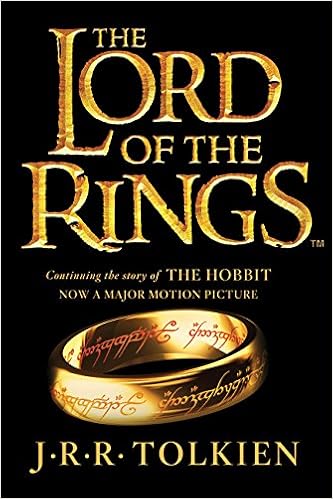
The Lord of the Rings

J.R.R. Tolkien

First Publication: 7/29/1954 (Fellowship of the Ring)

First Publication: 11/11/1954 (The Two Towers)

First Publication: 10/20/1955 (The Return of the King)


Category: fantasy fiction


Sales: 150 million (trilogy)

Accolades (click on badges to see full lists):

About the Book:

The Lord of the Rings was written in stages between 1937 and 1949 as a sequel to The Hobbit (1937). For economic reasons, it was published over the course of a year in three volumes: The Fellowship of the Ring, The Two Towers and The Return of the King. WK The trilogy “has since been reprinted numerous times and translated into 38 languages.” WK

“Lord of the Rings” is a reference “to the story's main antagonist, the Dark Lord Sauron, who had in an earlier age created the One Ring to rule the other Rings of Power as the ultimate weapon in his campaign to conquer and rule all of Middle-earth.” WK “After it was taken from him, he gathered the rest of the rings, but continued to search for the One Ring to complete his dominion.” AZ

“After many ages it fell by chance into the hands of the hobbit Bilbo Baggins,” AZ who, on his eleventy-first birthday, bequeathed it to his nephew Frodo. A party is assembled to “journey across Middle-earth, deep into the shadow of the Dark Lord, and destroy the Ring by casting it into the Cracks of Doom.” AZ Accompanying Frodo are Gandalf the Wizard; the hobbits Merry, Pippin, and Sam; Gimli the Dwarf; Legolas the Elf; Boromir of Gondor; and a tall, mysterious stranger called Strider.” AZ

Tolkien, who “was a professor of Anglo-Saxon at Oxford,” AZ crafted his works out of his interest in classic language as well as “philology, mythology, religion and the author’s distaste for the effects of industrialization, as well as earlier fantasy works and Tolkien's experiences in World War I.” WK “Frodo and friends journey to Mordor to destroy the ring, making the young Hobbit one of the greatest fictional heroes of all time. More than 100 million copies have been sold of the trilogy that brought fantasy to a mainstream literary audience.” TG


Resources and Related Links: