Showing posts with label James Joyce. Show all posts

Tuesday, November 11, 2025

All Time Best Books: Top 100

First posted 5/26/2018; updated 11/11/2025.

All-Time Books:

Top 100

Inspired by the 2018 PBS special The Great American Read, I assembled more than 170 best-of-books lists (see sources here) and aggregated them to create one master list of the all-time books. While these are mostly novels, there are some non-fiction books and even a few children’s picture books. Here are the results:

  1. Various writers The Holy Bible: King James Version (1610)
  2. Mao Tse-Tung Quotations from Chairman Mao Tse-tung (aka “Little Red Book”) (1964)
  3. Harper Lee To Kill a Mockingbird (1960)
  4. J.D. Salinger The Catcher in the Rye (1951)
  5. F. Scott Fitzgerald The Great Gatsby (1925)
  6. George Orwell 1984 (1949)
  7. Miguel de Cervantes Don Quixote (1615)
  8. J.R.R. Tolkien The Lord of the Rings (trilogy: 1954-55)
  9. Lewis Carroll Alice’s Adventures in Wonderland (1865)
  10. John Steinbeck The Grapes of Wrath (1939)

  11. Vladimir Nabokov Lolita (1955)
  12. Joseph Heller Catch-22 (1961)
  13. Gabriel García Márquez One Hundred Years of Solitude (1967)
  14. James Joyce Ulysses (1922)
  15. Jane Austen Pride and Prejudice (1813)
  16. Herman Melville Moby-Dick (1851)
  17. Mark Twain The Adventures of Huckleberry Finn (1885)
  18. Emily Brontë Wuthering Heights (1847)
  19. Leo Tolstoy War and Peace (1869)
  20. William Golding Lord of the Flies (1954)

  21. Charlotte Brontë Jane Eyre (1847)
  22. J.K. Rowling Harry Potter (series, 1997-2007)
  23. J.R.R. Tolkien The Hobbit (1937)
  24. Fyodor Dostoyevsky Crime and Punishment (1866)
  25. Toni Morrison Beloved (1987)
  26. Joseph Conrad Heart of Darkness (1899)
  27. Aldous Huxley Brave New World (1932)
  28. Anne Frank The Diary of a Young Girl (aka The Diary of Anne Frank) (1947)
  29. C.S. Lewis The Lion, the Witch, and the Wardrobe (1950)
  30. E.B. White Charlotte’s Web (1952)

  31. Homer The Odyssey (800 B.C.)
  32. Margaret Mitchell Gone with the Wind (1936)
  33. Charles Dickens Great Expectations (1861)
  34. Jack Kerouac On the Road (1957)
  35. Leo Tolstoy Anna Karenina (1877)
  36. William Faulkner The Sound and the Fury (1929)
  37. Charles Dickens A Tale of Two Cities (1859)
  38. Kurt Vonnegut Slaughterhouse-Five (1969)
  39. George Orwell Animal Farm (1945)
  40. Ernest Hemingway The Sun Also Rises (1926)

  41. Louisa May Alcott Little Women (1869)
  42. Muhammad Qu’ran (632 CE)
  43. Marcel Proust In Search of Lost Time, aka Remembrance of Things Past (A La Recherche du Temps Perdu) (series: 1913-1927)
  44. Margaret Atwood The Handmaid’s Tale (1986)
  45. Douglas Adams The Hitchhiker’s Guide to the Galaxy (1979)
  46. Ralph Ellison Invisible Man (1952)
  47. Fyodor M. Dostoyevsky The Brothers Karamazov (1880)
  48. Mary Shelley Frankenstein (1818)
  49. Antoine de Saint-Exupéry The Little Prince (Le Petit Prince) (1943)
  50. Gustave Flaubert Madame Bovary (1857)

  51. Homer The Iliad (800 B.C.)
  52. Alice Walker The Color Purple (1982)
  53. Stephen Hawking A Brief History of Time (1988)
  54. Ray Bradbury Fahrenheit 451 (1953)
  55. George Eliot Middlemarch: A Study of Provincial Life (1872)
  56. Daphne Du Maurier Rebecca (1938)
  57. Nathaniel Hawthorne The Scarlet Letter (1850)
  58. Virginia Woolf To the Lighthouse (1927)
  59. Truman Capote In Cold Blood (1966)
  60. Frank Herbert Dune (1965)

  61. Charles Dickens David Copperfield (1850)
  62. Dante Alighieri The Divine Comedy (Divina Commedia) (1320)
  63. Jonathan Swift Gulliver’s Travels (1726)
  64. Chinua Achebe Things Fall Apart (1958)
  65. Anthony Burgess A Clockwork Orange (1962)
  66. Richard Adams Watership Down (1972)
  67. Victor Hugo Les Misérables (1862)
  68. James Joyce A Portrait of the Artist as a Young Man (1916)
  69. Ernest Hemingway The Old Man and the Sea (1952)
  70. John Steinbeck Of Mice and Men (1937)

  71. Kenneth Grahame The Wind in the Willows (1908)
  72. Albert Camus L’Etranger (The Stranger, aka The Outsider) (1942)
  73. Ernest Hemingway For Whom the Bell Tolls (1940)
  74. Salman Rushdie Midnight’s Children (1981)
  75. Charles Darwin The Origin of Species (1859)
  76. Ayn Rand Atlas Shrugged (1957)
  77. Philip Pullman The Golden Compass (aka Northern Lights) (1995), first book of His Dark Materials series (1995-2000)
  78. Ken Kesey One Flew Over the Cuckoo’s Nest (1962)
  79. Maurice Sendak Where the Wild Things Are (1964)
  80. Niccolo Machiavelli The Prince (1532)

  81. Jack London The Call of the Wild (1903)
  82. Oscar Wilde The Picture of Dorian Gray (1890)
  83. L.M. Montgomery Anne of Green Gables (1908)
  84. Henry David Thoreau Walden, or Life in the Woods (1854)
  85. Plato The Republic (380 B.C.)
  86. Edith Wharton The Age of Innocence (1920)
  87. Alexandre Dumas The Count of Monte Cristo (1844)
  88. Suzanne Collins The Hunger Games (trilogy: 2008-2010)
  89. A.A. Milne Winnie-the-Pooh (1926)
  90. Rachel Carson Silent Spring (1962)

  91. Alex Haley and Malcolm X The Autobiography of Malcolm X (1965)
  92. Daniel Defoe Robinson Crusoe (1719)
  93. Georges Simenon Maigret (series, 1931-1972)
  94. Robert Louis Stevenson Treasure Island (1883)
  95. Markus Zusak The Book Thief (2005)
  96. Sir Arthur Conan Doyle The Adventures of Sherlock Holmes (1887)
  97. Virginia Woolf Mrs. Dalloway (1925)
  98. E.M. Forster A Passage to India (1924)
  99. Zora Neale Hurston Their Eyes Were Watching God (1937)
  100. William Shakespeare Hamlet (1603)

Resources and Related Links:

Thursday, December 29, 2016

James Joyce's A Portrait of the Artist as a Young Man published 100 years ago

First posted 7/4/2020; last updated 7/5/2020.

A Portrait of the Artist as a Young Man

James Joyce

First Publication: December 29, 1916


Category: semi-autobiographical modernist novel


Sales: ?

Accolades (click on badges to see full lists):

About the Book:

“Widely regarded as the greatest stylist of twentieth-century English literature, James Joyce deserves the term ‘revolutionary.’ His literary experiments in form and structure, language and content, signaled the modernist movement and continue to influence writers today.” BNA Portrait of the Artist as a Young Man is the semi-autobiographical portrayal of James Joyce’s early upbringing as an Irish Catholic in late 19th century and early 20th century Dublin.” AZ

“The novel was originally planned as a 63-chapter autobiographical novel in a realistic style entitled ‘Stephen Hero’ however Joyce reworked the novel into five condensed chapters, dispensing with the strict realism which he originally planned in favor of the use of free indirect speech, a narrative style which allows the reader to peer into the developing mind of the protagonist.” AZ

“Young Stephen Dedalus yearns to be an artist, but first must struggle against the forces of church, school, and society, which fetter his imagination and stifle his soul.” BN His life “is depicted from its various stages starting in childhood and moving through early adulthood. The language of the novel changes throughout the book to correspond with the artistic development of Stephen Dedalus as he ages and matures.” AZA Portrait of the Artist as a Young Man is a masterful depiction of the process of self-discovery and rebellion against authority that is indicative of youth, one which would establish Joyce as a central figure of the modernist literary movement.” AZ


Resources and Related Links:

Tuesday, October 20, 1998

Modern Library: 100 Best Novels

First posted 6/9/2020.

image from the Modern Library
Facebook page

Modern Library:

100 Best Novels

Modern Library assembled top 100 lists of the best novels and non-fiction books based on online votes. The poll for the novels closed on October 20, 1998 with 217,520 votes cast. Here are the results:

  1. James Joyce Ulysses (1922)
  2. F. Scott Fitzgerald The Great Gatsby (1925)
  3. James Joyce A Portrait of the Artist as a Young Man (1916)
  4. Vladimir Nabokov Lolita (1955)
  5. Aldous Huxley Brave New World (1932)
  6. William Faulkner The Sound and the Fury (1929)
  7. Joseph Heller Catch-22 (1961)
  8. Arthur Koestler Darkness at Noon (1940)
  9. D.H. Lawrence Sons and Lovers (1913)
  10. John Steinbeck The Grapes of Wrath (1939)

  11. Malcolm Lowry Under the Volcano (1947)
  12. Samuel Butler The Way of All Flesh (1903)
  13. George Orwell 1984 (1949)
  14. Robert Graves I, Claudius (1934)
  15. Virginia Woolf To the Lighthouse (1927)
  16. Theodore Dreiser An American Tragedy (1925)
  17. Carson McCullers The Heart Is a Lonely Hunter (1940)
  18. Kurt Vonnegut Slaughterhouse-Five (1969)
  19. Ralph Ellison Invisible Man (1952)
  20. Richard Wright Native Son (1940)

  21. Saul Bellow Henderson the Rain King (1959)
  22. John O’Hara Appointment in Samarra (1934)
  23. John Dos Passos U.S.A. (Trilogy) (1936)
  24. Sherwood Anderson Winesburg, Ohio (1919)
  25. E.M. Forster A Passage to India (1924)
  26. Henry James The Wings of the Dove (1902)
  27. Henry James The Ambassadors (1903)
  28. F. Scott Fitzgerald Tender Is the Night (1934)
  29. James T. Farrell The Studs Lonigan Trilogy (1935)
  30. Ford Madox Ford The Good Soldier (1915)

  31. George Orwell Animal Farm (1954)
  32. Henry James The Golden Bowl (1904)
  33. Theodore Dreiser Sister Carrie (1900)
  34. Evelyn Waugh A Handful of Dust (1934)
  35. William Faulkner As I Lay Dying (1930)
  36. Robert Penn Warren All the King’s Men (1946)
  37. Thornton Wilder The Bridge of San Luis Rey (1928)
  38. E.M. Forster Howards End (1910)
  39. James Baldwin Go Tell It on the Mountain (1953)
  40. Graham Greene The Heart of the Matter (1948)

  41. William Golding Lord of the Flies (1954)
  42. James Dickey Deliverance (1970)
  43. Anthony Powell A Dance to the Music of Time (Series) (1975)
  44. Aldous Huxley Point Counter Point (1928)
  45. Ernest Hemingway The Sun Also Rises (1926)
  46. Joseph Conrad The Secret Agent (1926)
  47. Joseph Conrad Nostromo (1904)
  48. D.H. Lawrence The Rainbow (1915)
  49. D.H. Lawrence Women in Love (1920)
  50. Henry Miller Tropic of Cancer (1934)

  51. Norman Mailer The Naked and the Dead (1948)
  52. Philip Roth Portnoy’s Complaint (1969)
  53. Vladimir Nabokov Pale Fire (1962)
  54. William Faulkner Light in August (1932)
  55. Jack Kerouac On the Road (1957)
  56. Dashiell Hammett The Maltese Falcon (1929)
  57. Ford Madox Ford Parade’s End (1928)
  58. Edith Wharton The Age of Innocence (1920)
  59. Max Beerbohm Zuleika Dobson (1911)
  60. Walker Percy The Moviegoer (1961)

  61. Willa Cather Death Comes for the Archbishop (1927)
  62. James Jones From Here to Eternity (1951)
  63. John Cheever The Wapshot Chronicles (1958)
  64. J.D. Salinger The Catcher in the Rye (1951)
  65. Anthony Burgess A Clockwork Orange (1962)
  66. W. Somerset Maugham Of Human Bondage (1915)
  67. Joseph Conrad Heart of Darkness (1899)
  68. Sinclair Lewis Main Street (1920)
  69. Edith Wharton The House of Mirth (1905)
  70. Lawrence Durrell The Alexandria Quartet (1960)

  71. Richard Hughes A High Wind in Jamaica (1929)
  72. V.S. Naipaul A House for Mr. Biswas (1961)
  73. Nathanael West The Day of the Locust (1939)
  74. Ernest Hemingway A Farewell to Arms (1929)
  75. Evelyn Waugh Scoop (1938)
  76. Muriel Spark The Prime of Miss Jean Brodie (1960)
  77. James Joyce Finnegan’s Wake (1941)
  78. Rudyard Kipling Kim (1901)
  79. E.M. Forster A Room with a View (1908)
  80. Evelyn Waugh Brideshead Revisited (1945)

  81. Saul Bellow The Adventures of Augie March (1953)
  82. Wallace Stegner Angle of Repose (1971)
  83. V.S. Naipaul A Bend in the River (1979)
  84. Elizabeth Bowen The Death of the Heart (1938)
  85. Joseph Conrad Lord Jim (1900)
  86. E.L. Doctorow Ragtime (1975)
  87. Arnold Bennett The Old Wives’ Tale (1908)
  88. Jack London The Call of the Wild (1903)
  89. Henry Green Loving (1945)
  90. Salman Rushdie Midnight’s Children (1981)

  91. Erskine Caldwell Tobacco Road (1932)
  92. William Kennedy Ironweed (1983)
  93. John Fowles The Magus (1965)
  94. Jean Rhys Wide Sargasso Sea (1966)
  95. Iris Murdoch Under the Net (1954)
  96. William Styron Sophie’s Choice (1979)
  97. Paul Bowles The Sheltering Sky (1949)
  98. James M. Cain The Postman Always Rings Twice (1934)
  99. J.P. Donleavy The Ginger Man (1955)
  100. Booth Tarkington The Magnificent Ambersons (1919)

Resources and Related Links:

Wednesday, February 2, 1972

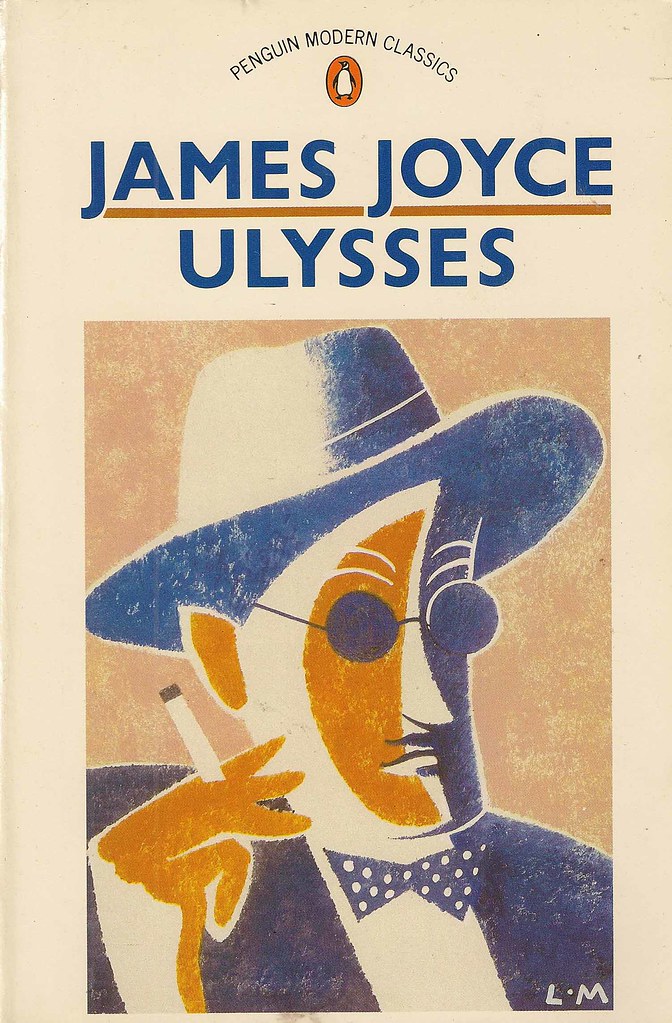
James Joyce Ulysses: Published 50 Years Ago Today

Last updated 7/5/2020.

Ulysses

James Joyce

First Publication: February 2, 1922


Category: modernist novel


Sales: 880,000

Accolades (click on badges to see full lists):

About the Book:

Modern Library ranks Ulysses as the best novel of the 20th century while Time magazine calls it the 20th century’s most influential novel. EW It is considered “a must read for fans of the Modernist genre.” AZ It has, however, also earned a reputation as one of the most difficult novels to read. An unscientific study done in 2014 concluded that less than 2% of people who buy the novel actually read it in its entirety. EW The book is “filled with experimental forms of prose, stream of consciousness, puns, parodies, and allusions that Joyce himself hoped would ‘keep the professors busy for centuries arguing over what I meant.’” AZ “Its stream-of-consciousness narration deters many, but makes enraptured enthusiasts of others.” TG

While the novel may initially appear unstructured, it closely parallels Homer’s ancient Greek poem, The Odyssey in which the protagonist, Odysseus “(Roman name: Ulysses) encounters many perils – including giants, angry gods, and monsters–during his voyage home to Ithaca, Greece, after the Trojan War.” CSG Ulysses contains “containing eighteen episodes that correspond to various parts of Homer’s work,” AZ although Homer “presented the journey of life as a heroic adventure” CSG while Joyce depicts it as “humdrum, dreary, and uneventful.” CSG

Ulysses chronicles the events of a single day in Dublin, Ireland – June 16, 1904. The book is structured in three sections. Section 1 (chapters 1-3) focuss on Stephen Dedalus, a young, aspring writer seeking a father figure to replace his drunken dad. This parallels Telemachus’s search for his father Odysseus in The Odssey. CSG Dedalus “has just returned from Paris. This section presents Stephen's life on a typical day in which he finds Dublin depressing. He is pessimistic about realizing his dream to become a published author.” CSG

Section 2 (chapters 4-15) focus on Leopold Bloom, a Jewish advertising representative of Hungarian origin who lives in Dublin. His character parallels Odysseus in The Odssey. For example, Odysseus visits the underworld, or the land of the undead, known as Hades, while Bloom attends a funeral in the chapter entitled “Hades.” Bloom’s “adventures” aren’t adventurous at all, but the mundane everyday tasks “of getting breakfast, feeding his cat, …doing legwork for his job, visiting pubs or restaurants, and thinking about his unfaithful wife.” CSG Bloom and Dublin are described in detail via “free-flowing thoughts – many of them either about his unfaithful wife, Molly, or other women.” CSG Molly is presented as a contrast to Penelope, the faithful wife of Odysseus. CSG

Section 3 (chapters 16-18) focusses on Stephen, Leopold, and Molly. “Bloom and Dedalus meet each other. Dedalus goes to Bloom’s home and talks with him for several hours. The novel ends with a chapter on Molly…[which] consists of more than 30 pages occupied by seven sentences with no punctuation except for the period at the end of the novel.” CSG

In 1918, extracts from the book were published in The Little Review in the United States. The publishers were fined and charged with obscenity BN “for its depiction of female masturbation.” TG It wasn’t published in book form until 1922 when American Sylvia Beach published it in Paris. It wasn’t until 1934 that the book was legally published in an English-speaking country “when Random House successfully defended Joyce against obscenity charges and published it in the Modern Library.” BN


Resources and Related Links:

In July 2018, I became the organizer of the Classic Novels Book Club. Check out the Book Club tab here or Meetup for more information. This is our June 2019 book.