Showing posts with label Everyman Library Classics. Show all posts

Saturday, January 31, 2026

Geoffrey Chaucer The Canterbury Tales

First posted 1/31/2026.

The Canterbury Tales

Geoffrey Chaucer


First Publication: 1387-1400


Category: collection of stories


Sales: ?

Accolades (click on badges to see full lists):

About the Book:

The Canterbury Tales began “as an ambitious project by the versatile English courtier, diplomat, philosopher, and author Geoffrey Chaucer in the 14th century.” AZ It “follows a group of people on their pilgrimage to the Cathedral of Saint Thomas รก Becket. The Prologue introduces all of the pilgrims in great detail, and through these descriptions Chaucer provides the entire spectrum of social classes and professions of his time.” AZ

“When the group stops at an inn and the innkeeper introduces a competition for a free dinner, the pilgrims begin telling each other stories that reflect their stations, genders, purity, corruption, humor, tragedy, cynicism, and innocence. From the noble Knight and his Squire to the spunky Wife of Bath, from the antagonistic Miller and Reeve to the Prioress, Nun, and Pardoner, Chaucer reveals for modern readers a wonderfully vivid picture of medieval life in an impressive array of literary styles that uphold his reputation as the father of English literature.” AZ

“Beyond its importance as a literary work of unvarnished genius, Geoffrey Chaucer’s unfinished epic poem is also one of the most beloved works in the English language – and for good reason: It is lively, absorbing, perceptive, and outrageously funny. But despite the brilliance of Chaucer's work, the continual evolution of our language has rendered his words unfamiliar to many of us.” BN

“These humorous tales about fictional pilgrims made an important contribution to English literature at a time when court poetry was written in either Anglo-Norman or Latin.” TG


Resources and Related Links:

Wednesday, October 29, 2025

Today in History (1881): Portrait of a Lady published

First posted 11/11/2025.

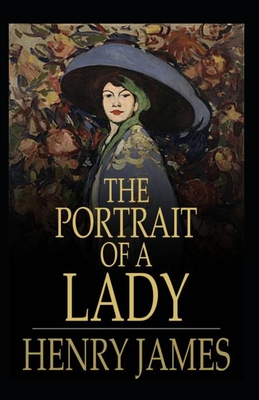
The Portrait of a Lady

Henry James

First Publication: October 29, 1881


Category: romance novel


Sales: ?

Accolades (click on badges to see full lists):

About the Book:

The Portrait of a Lady is “regarded by many as Henry James’ finest work.” BN It is “a lucid tragedy exploring the distance between money and happiness.” BN “In this portrait of a ‘young woman affronting her destiny,’ Henry James created one of his most magnificent heroines, and a story of intense poignancy.” BN It also treats in a profound way the themes of personal freedom, responsibility, and betrayal.” WK

His “mastery of psychology has never been more elegantly expressed nor more gripping than in his tale of Isabel Archer,” TG “a beautiful, spirited American” BN who “is brought to Europe by her wealthy aunt Touchett.” BN The novel “reflects James’ continuing interest in the differences between the New World and the Old, often to the detriment of the former.” WK

Isabel quickly attracts the attention of the neighbor, Lord Warburton, who proposes. She rejects him as well as Caspar Goodwood, “the charismatic son and heir of a wealthy Boston mill owner.” WK Isabel believes that marriage would mean she would sacrifice her freedom and independence.

When her uncle dies and leaves much of his estate to Isabel, she opts to travel. She meets Gilbert Osmond, an American expatriate, in Florence. She is drawn in by his charm and accepts his marriage proposal. However, “beneath his veneer of civilized behaviour” BN is “overwhelming egotism and lack of genuine affection for his wife.” WK Gilbert turns out to be “the ultimate cold fish and one of literature's most repellent villains.” TG An ambiguous ending leaves the reader wondering if Isabel will leave Gilbert or stay with him.


Resources and Related Links:

Wednesday, October 1, 2025

This Month in History (1929): A Farewell to Arms published

First posted 11/11/2025.

A Farewell to Arms

Ernest Hemingway


First Publication: May to October 1929 in Scribner’s magazine


Category: semi-autobiographical war novel


Sales: ?

Accolades:

About the Book:

Written when he was thirty years old, Hemingway’s semi-autobiographical novel is a “gripping…work [which] captures the harsh realities of war and the pain of lovers caught in its inexorable sweep.” AZ “The title is taken from a poem by the 16th-century English dramatist George Peele.” WK It has been “lauded as the best American novel to emerge from World War I.” AZ

The story is “set during the Italian campaign of World War I.” WK “It is a first-person account of an American, Frederic Henry, serving as a lieutenant…in the ambulance corps of the Italian Army.” WK The novel also “describes a love affair between the expatriate Henry and an English nurse, Catherine Barkley.” WK

The story also explores “the profound struggle between loyalty and desertion” AZ as “weary, demoralized men march…in the rain during the German attack on Caporetto.” WK

“The novel has been adapted a number of times, initially for the stage in 1930; as a film in 1932 and again in 1957, and as a three-part television miniseries in 1966. The 1996 film In Love and War, directed by Richard Attenborough and starring Chris O’Donnell and Sandra Bullock, depicts Hemingway’s life in Italy as an ambulance driver in the events prior to his writing of A Farewell to Arms.” WK


Resources and Related Links:

Tuesday, July 1, 2025

This Month in History (1848): Vanity Fair published

First posted 11/11/2025.

Vanity Fair

William Makepeace Thackery

First Publication: July 1848


Category: novel/satire on classism


Sales: 1 million

Accolades (click on badges to see full lists):

About the Book:

“Filled with hilarious dialogue and superb characterizations, Vanity Fair” BN deconstructs “the notions of literary heroism of his era” AZ amidst “a wonderfully satirical panorama of upper-middle-class life and manners in London at the beginning of the nineteenth century.” BN It “is a richly entertaining comedy that asks the reader, ‘Which of us is happy in this world? Which of us has his desire? or, having it, is satisfied?’” BN

The story centers around Becky and Amelia, who “have just completed their studies at Miss Pinkerton’s Academy for Young Ladies and are beginning to embark upon the world. The simple-minded nature of Amelia, who comes from a wealthy family, is contrasted with the strong-willed nature of Becky, who will stop at nothing to climb the social ranks of English society.” AZ

“Becky must use all her wit, charm and considerable sex appeal to escape her drab destiny as a governess. From London’s ballrooms to the battlefields of Waterloo, the bewitching Becky works her wiles on a gallery of memorable characters.” BN

“The novel takes its name from John Bunyan’s Pilgrim’s Progress…in which a town called Vanity is depicted to represent man’s sinful attachment to worldly things. Set against the backdrop of the Napoleonic Wars, Vanity Fair is Thackeray’s classic satire of the societal trappings of Victorian England, self described as a novel without a hero.” AZ


Resources and Related Links:

Saturday, April 26, 2025

Today in History (1925): The Trial published

First posted 11/11/2025.

The Trial

Franz Kafka

First Publication: April 26, 1925


Category: philosophical fiction


Sales: ?

Accolades (click on badges to see full lists):

About the Book:

The Trial was written in 1914 but wasn’t published until 1925, after Franz Kafka’s death. The short novel “exemplifies the term ‘Kafkaesque.’” AZ “Whether read as an existential tale, a parable, or a prophecy of the excesses of modern bureaucracy wedded to the madness of totalitarianism, Kafka’s nightmare has resonated with chilling truth for generations of readers.” BN

It “captures the confusion and distress of suffering persecution by an unseen, unknown and irresistible force. Blending reality and absurdity, violence and hope, this story has endured for a century for good reason.” BN It raises “provocative, ever-relevant issues related to the role of government and the nature of justice.” AZ

It is both an “engrossing” AZ and “terrifying tale” BN “about the human condition plunges an isolated individual into an impersonal, illogical system.” AZ Josef K. is “a respectable bank officer who is suddenly and inexplicably arrested.” BN He endures “a maze of nonsensical rules and bureaucratic roadblocks” AZ in his effort to defend himself of an undisclosed charge on which he can get no information.


Resources and Related Links:

Wednesday, January 1, 2025

This Month in History (1759): Candide published

First posted 11/11/2025.

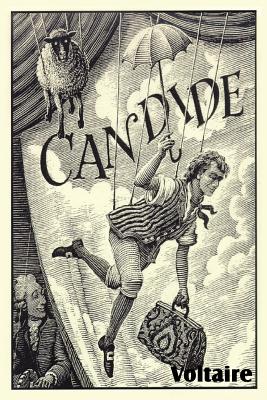
Candide

Francois-Marie de Voltaire

First Publication: January 1759


Category: novella/satire


Sales: ?

Accolades (click on badges to see full lists):

About the Book:

“Caustic and hilarious,” AZ Candide ranks as “one of the finest satires ever written.” BN It “savagely skewers…[optimism] as a shamefully inadequate response to human suffering. The swift and lively tale follows the absurdly melodramatic adventures of the youthful Candide, who is forced into the army, flogged, shipwrecked, betrayed, robbed, separated from his beloved Cunรฉgonde, and tortured by the Inquisition.” BN Candide decides that “contrary to the teachings of his tutor, Dr. Pangloss – all is perhaps not always for the best.” BN

“Indeed, it seemed to be quite the opposite. In brilliantly skewering such naรฏvetรฉ, Voltaire mercilessly exposes and satirizes romance, science, philosophy, religion, and government – the ideas and forces that permeate and control the lives of men.” AZ

When he is reunited with Cunรฉgonde, they retire, along with Dr. Pangloss, to a farm in Turkey where Candide opts for a new approach – cultivating one’s own garden, a “philosophy that rejects excessive optimism and metaphysical speculation in favor of the most basic pragmatism.” BN

“Filled with wit, intelligence, and an abundance of dark humor, Candide is relentless and unsparing in its attacks upon corruption and hypocrisy – in religion, government, philosophy, science, and even romance. Ultimately, this celebrated work says that it is possible to challenge blind optimism without losing the will to live and pursue a happy life.” BN


Resources and Related Links:

Sunday, December 1, 2024

This Month in History (1891): Tess of the d’Urbervilles published

First posted 11/12/2025.

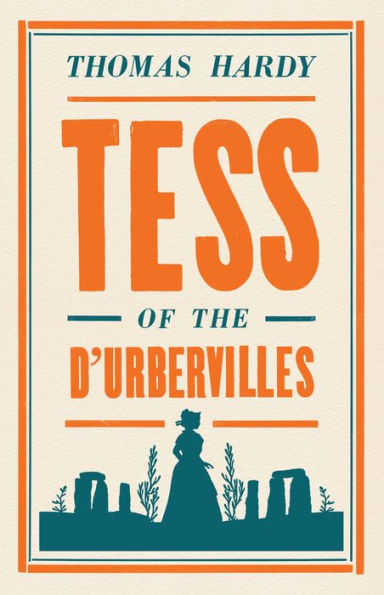
Tess of the d’Urbervilles

Thomas Hardy

First Publication: serialized fom July to December 1891 in The Graphic


Category: Victorian era social novel


Sales: ?

Accolades (click on badges to see full lists):

About the Book:

“This classic novel is a timeless exploration of love, morality, and the struggle for identity in Victorian England.” AZ When first published, the book received a mixed reception because it challenged the sexual morals of the time. The titular character “emerges as a tragic heroine, incapable of escaping the hypocrisy of Victorian society.” TG

Tess is “a young woman living in rural Victorian England. After learning of her family’s noble d’Urberville lineage, Tess sets out to restore her family’s fortunes.” AZ She spurns the advances of Alec d’Urberville, “a seductive yet dangerous man from her family’s past,” AZ eventually returning home. However, she is “disgraced by an illegitimate child” AZ and “tainted with shame and guilt.” AZ

When she meets Angel Clare, “an idealistic young man from a well-off family,” AZ she falls in love. Scared about how he’ll accept her past, she initially rejects his marriage proposals. When she eventually relents, she reveals her secret to him and he bolts for Brazil. By the time he gets his act together and returns, it’s too late.


Resources and Related Links:

Thursday, April 25, 2019

Daniel Defoe's Robinson Crusoe published 300 years ago today!

First posted 7/6/2020.

Robinson Crusoe

Daniel Defoe

First Publication: April 25, 1719


Category: adventure novel


Sales: 1 million

Accolades (click on badges to see full lists):

About the Book:

“Robinson Crusoe is one of the most popular and influential adventure stories of all time” BN and “a pioneering work of realist fiction.” AZ “This classic tale of shipwreck and survival on an uninhabited island was an instant success when first published in 1719 and has inspired countless imitations.” BN “Inspired by the real life story of Alexander Selkirk, a castaway who lived on an island in the Pacific for four years,” AZ “it was widely believed to be a true account of actual events.” AZ

“At the beginning of the novel we find Robinson Crusoe desiring a life at sea, despite the wishes of his parents for him to pursue a more sensible career. Despite numerous disasters and misadventures at sea he is not to be deterred from his life choice. Ultimately he finds himself stranded on a deserted island when his ship is destroyed in a storm.” AZ

Forced to overcome despair, doubt, and self-pity, he struggles to create a life for himself in the wilderness.” BN “He makes do with the supplies that he has salvaged from the wreckage and the resources he finds on the island.” AZ “His many adventures are recounted in vivid detail, including a fierce battle with cannibals and his rescue of Friday, the man who becomes his trusted companion.” BN

“Full of enchanting detail and daring heroics, Robinson Crusoe is a celebration of courage, patience, ingenuity, and hard work.” BN


Resources and Related Links:

Thursday, December 29, 2016

James Joyce's A Portrait of the Artist as a Young Man published 100 years ago

First posted 7/4/2020; last updated 7/5/2020.

A Portrait of the Artist as a Young Man

James Joyce

First Publication: December 29, 1916


Category: semi-autobiographical modernist novel


Sales: ?

Accolades (click on badges to see full lists):

About the Book:

“Widely regarded as the greatest stylist of twentieth-century English literature, James Joyce deserves the term ‘revolutionary.’ His literary experiments in form and structure, language and content, signaled the modernist movement and continue to influence writers today.” BN “A Portrait of the Artist as a Young Man is the semi-autobiographical portrayal of James Joyce’s early upbringing as an Irish Catholic in late 19th century and early 20th century Dublin.” AZ

“The novel was originally planned as a 63-chapter autobiographical novel in a realistic style entitled ‘Stephen Hero’ however Joyce reworked the novel into five condensed chapters, dispensing with the strict realism which he originally planned in favor of the use of free indirect speech, a narrative style which allows the reader to peer into the developing mind of the protagonist.” AZ

“Young Stephen Dedalus yearns to be an artist, but first must struggle against the forces of church, school, and society, which fetter his imagination and stifle his soul.” BN His life “is depicted from its various stages starting in childhood and moving through early adulthood. The language of the novel changes throughout the book to correspond with the artistic development of Stephen Dedalus as he ages and matures.” AZ “A Portrait of the Artist as a Young Man is a masterful depiction of the process of self-discovery and rebellion against authority that is indicative of youth, one which would establish Joyce as a central figure of the modernist literary movement.” AZ


Resources and Related Links: